The Surface Is the Easy Part
A paver patio is one of those projects where almost everything that determines success happens before a single paver is laid. The pattern, the border, the color: those are the fun decisions, and they are also the ones least likely to cause trouble in five years. What decides whether the surface is still flat and draining in 2040 is the excavation, the base, and where the water goes.
That is where we spend the effort.
What Goes Under a Patio
A properly built paver or stone surface is a stack, and each layer has a job:
- Excavation to depth. Topsoil and organic material come out. Organics under paving hold water and break down, which is how a patio develops soft spots.
- Compacted base, placed in lifts. Angular crushed rock compacted in layers, not dumped and raked. This is the structural layer that carries traffic and spreads load.
- Bedding layer. A consistent setting bed that lets each unit sit true without rocking.
- Edge restraint. Without a solid edge, pavers migrate outward over the years and joints open up. It is a small line item that prevents a very visible failure.
- Joint treatment. Sand or polymeric material that locks units together and resists weeds and washout.
Depth and material change with the soil, the drainage, and whether anything heavier than foot traffic will cross the surface. That is a judgment made on site, not from a catalog.
Surfaces We Build
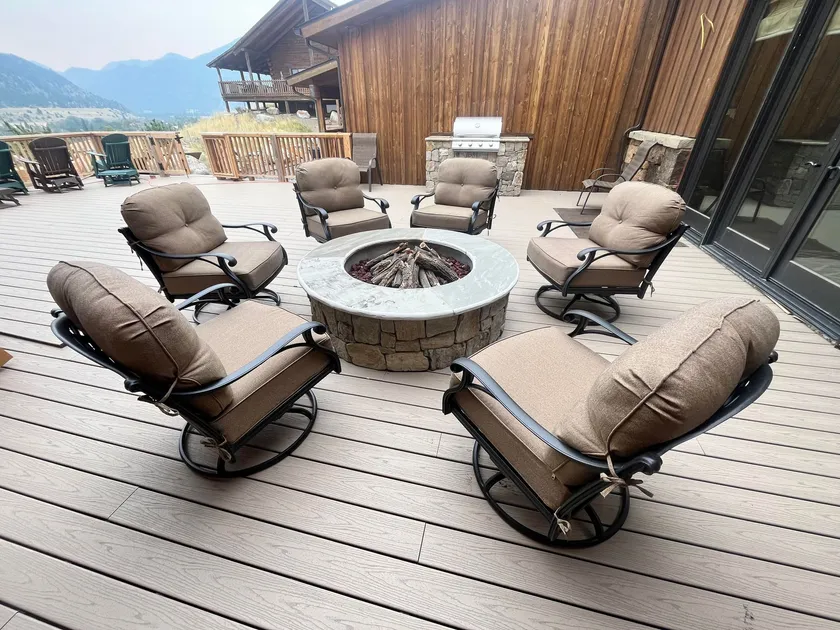
Patios and gathering areas. Dining space, seating around a fire feature, or a simple flat area off the back door that turns unusable slope into somewhere to sit.
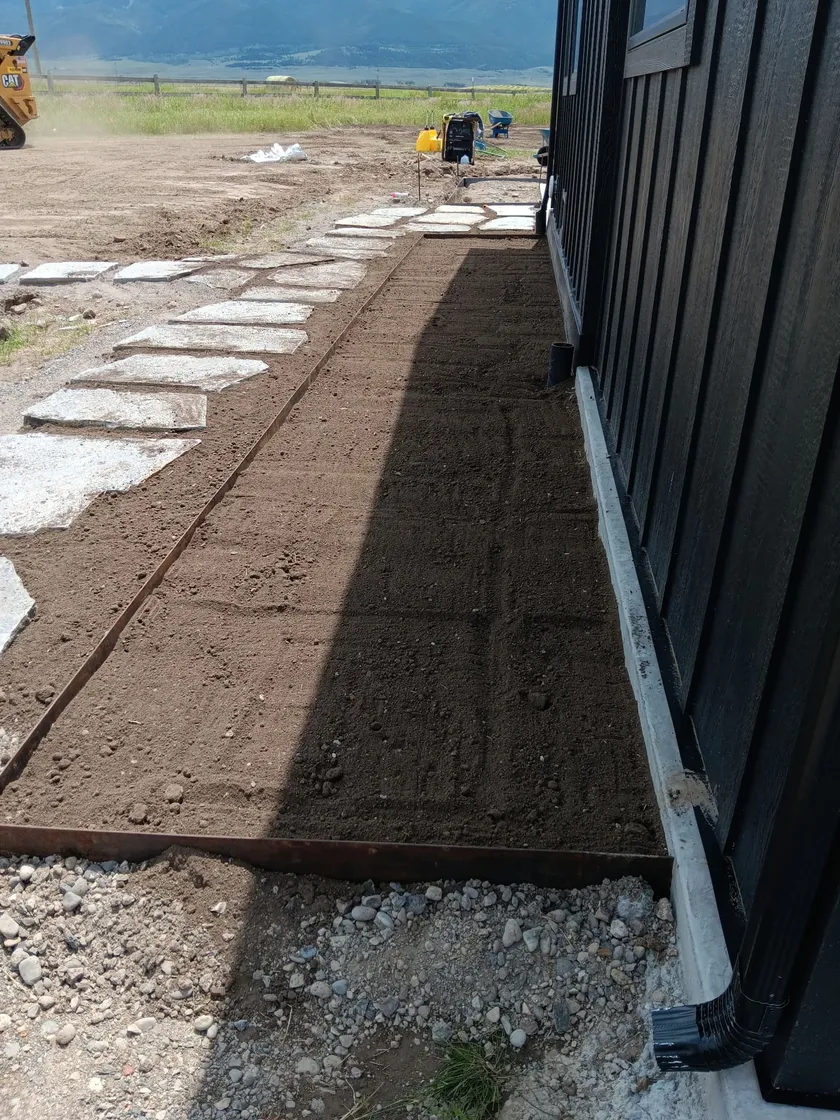
Walkways and garden paths. From the drive to the door, house to shop, or a path through the landscape. Width, surface texture, and how the path handles snow removal all matter more than people expect.
Entry courtyards. The transition from parking to front door, where the surface is one of the first things a visitor experiences.
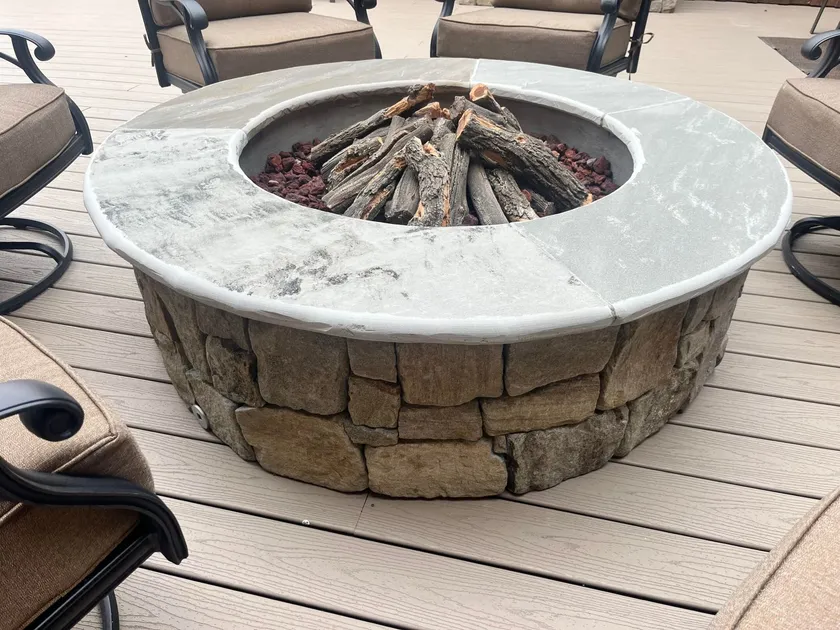
Fire pit and hot tub surrounds. Level, well-drained surfaces sized for the furniture and the traffic that actually circulates around them. Fire features themselves fall under our stone masonry work.
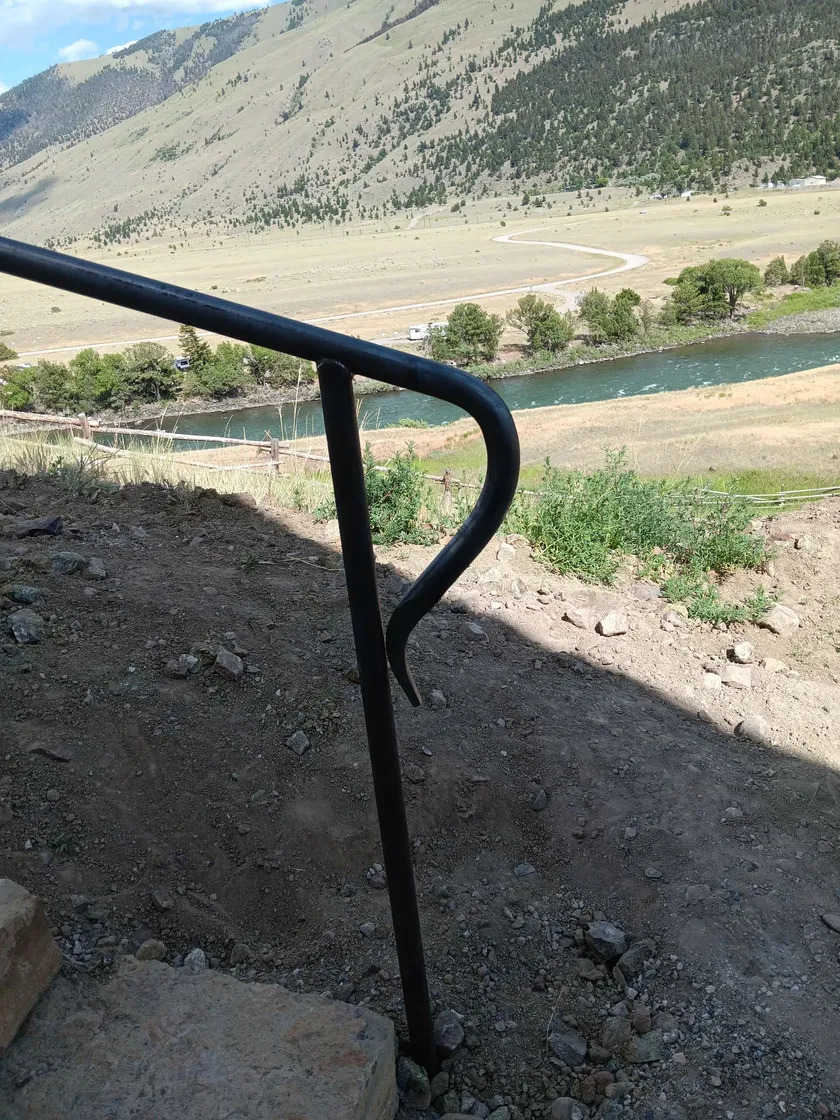
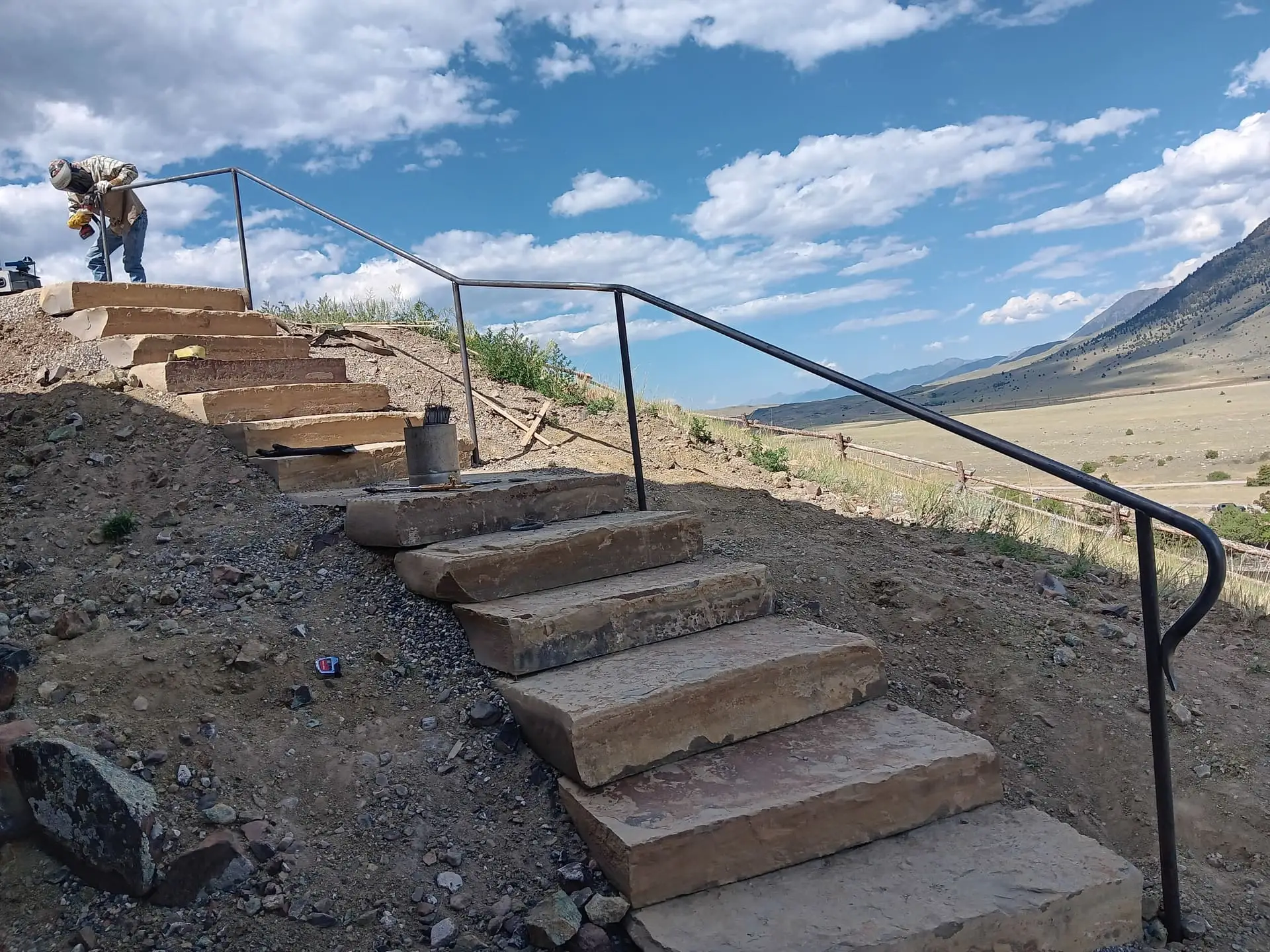
Steps and grade transitions. Where slope demands it, paving connects to steps. On steeper ground that becomes a flagstone or paver staircase, which is its own craft.
Natural Stone or Manufactured Pavers
We work in both, and they suit different properties.
Manufactured pavers are dimensionally consistent, which makes tight patterns, crisp borders, and even joints straightforward. They come in a wide range of colors and shapes, and their uniformity makes repairs and additions predictable.
Natural flagstone varies in shape, thickness, and color, so the finished surface reads more organic and settles into a Montana landscape naturally. It pairs especially well where the property already has stone, whether that is veneer on the house, entrance columns, or existing masonry.
Plenty of projects use both, with stone where it is seen and pavers where consistency helps.
Montana Considerations
Drainage first. Water needs to leave the surface and leave the area, sloped away from the house and toward somewhere it can go. This is the single most common cause of patio trouble we get called about.
Freeze-thaw. Our winters lift anything that holds moisture. Base material that drains and a surface that sheds are the defense.
Snow removal. How you will clear the surface affects the design. Some finishes and patterns handle a shovel or blower better than others, and the route matters.
Sun, wind, and use. Which corner gets afternoon sun, where the wind comes off the bench, and how people actually move between the house and the space, all shape where paving belongs.
Built Alongside the Rest of the Project
Most of these surfaces are part of something larger. Patios connect to decks, walkways run to entrances, and stone paving sits alongside masonry and concrete work. Because all of that is work our crews do, the transitions between materials get designed rather than negotiated between separate contractors on separate schedules.
If you are weighing a patio against a deck or poured concrete, our outdoor living hub lays out where each one fits.