Built for the View You Bought the Place For
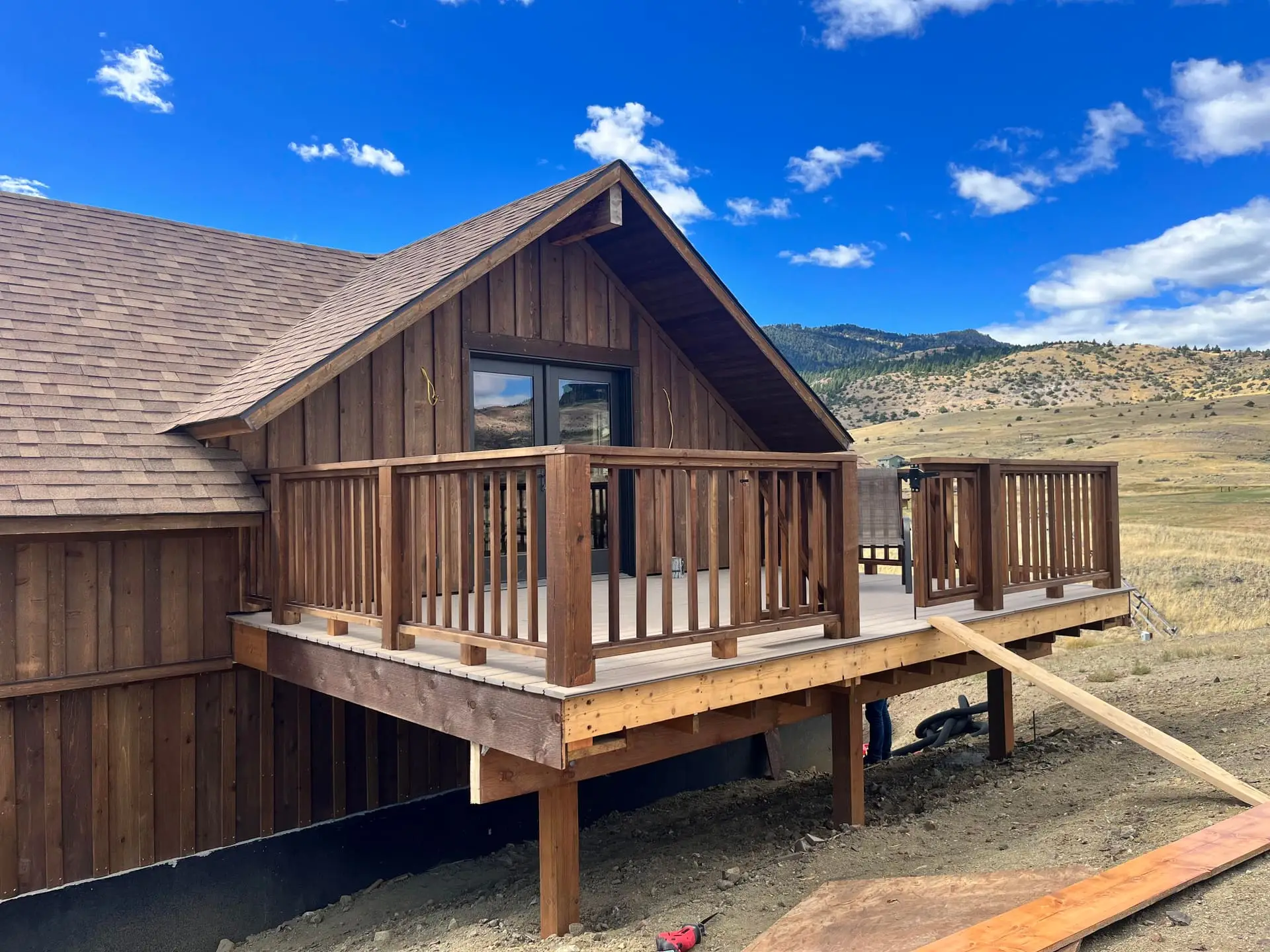
Montana summers are short and spectacular — a well-built deck is where you spend them. We design and build custom decks from Livingston to Bozeman, Big Sky to White Sulphur Springs: honest structures, beautiful surfaces, and railings that frame the view instead of blocking it.
A deck here has a harder job than a deck most places. It carries snow for months, sits on ground that freezes deep and thaws unevenly, and takes high-altitude UV all summer. Building for that is not a matter of heavier boards — it is a matter of getting the structure, the footings, and the drainage right before anyone talks about surface color.
Decking Options, Compared Honestly
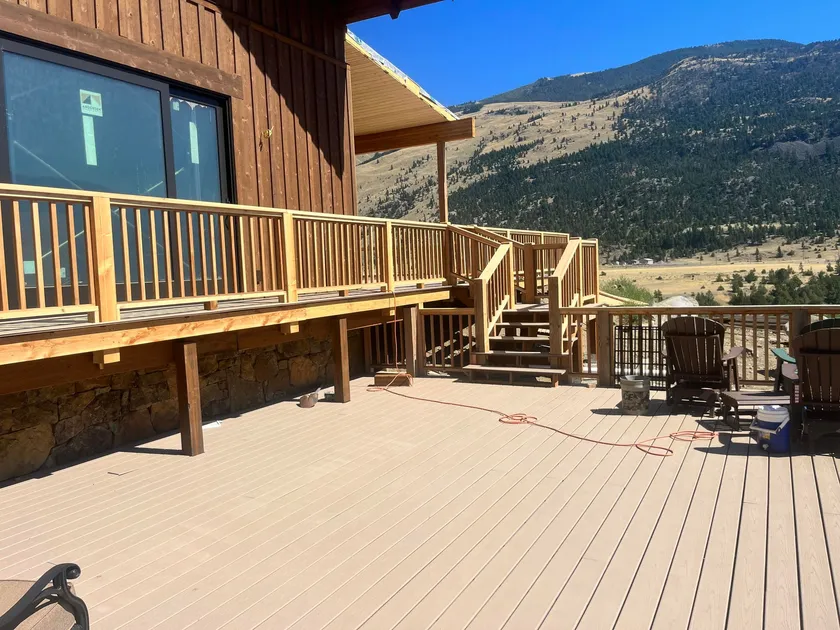
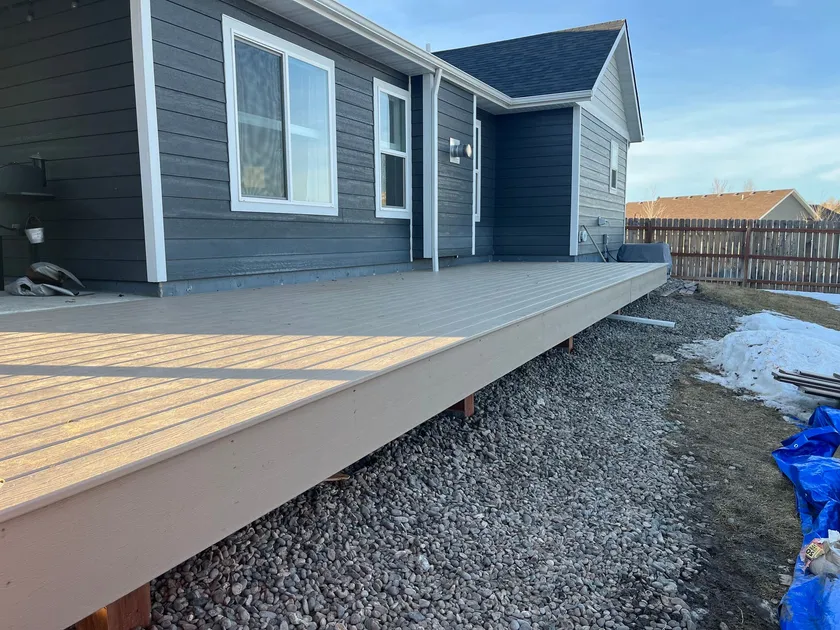
Trex / composite — the low-maintenance choice. Resists fading, staining, and weathering with essentially zero upkeep; ideal for Montana’s UV and freeze-thaw. The honest caveats: dark colors get hot in full sun, and composite has its own span and gapping rules that have to be followed for it to stay flat.
Cedar — natural warmth and rot resistance at a friendly price point, from wood that fits this landscape. (Some of ours comes off our own sawmill.) Left alone it weathers to grey; keeping the warm tone means refinishing on a cycle, and our UV is hard on finishes. Know which look you want before you choose it.
Ipe — the exotic hardwood benchmark: incredibly hard, decay-resistant, and luxurious underfoot. It costs more to install because it works like the dense material it is — pre-drilled fasteners, heavier structure, more labor.
Premium hardwoods — mahogany, teak, and other species for signature outdoor spaces.
Deciding between them is mostly a question of how much maintenance you will honestly do and whether you want the surface to hold a color or weather naturally. Our deck material comparison walks through how each one actually behaves here, year after year.
Engineered Like a Structure, Because It Is One
The part of a deck that decides its lifespan is the part you never see:
- Footings below frost depth so the deck never heaves out of level. Frost depth is the number behind every footing we pour.
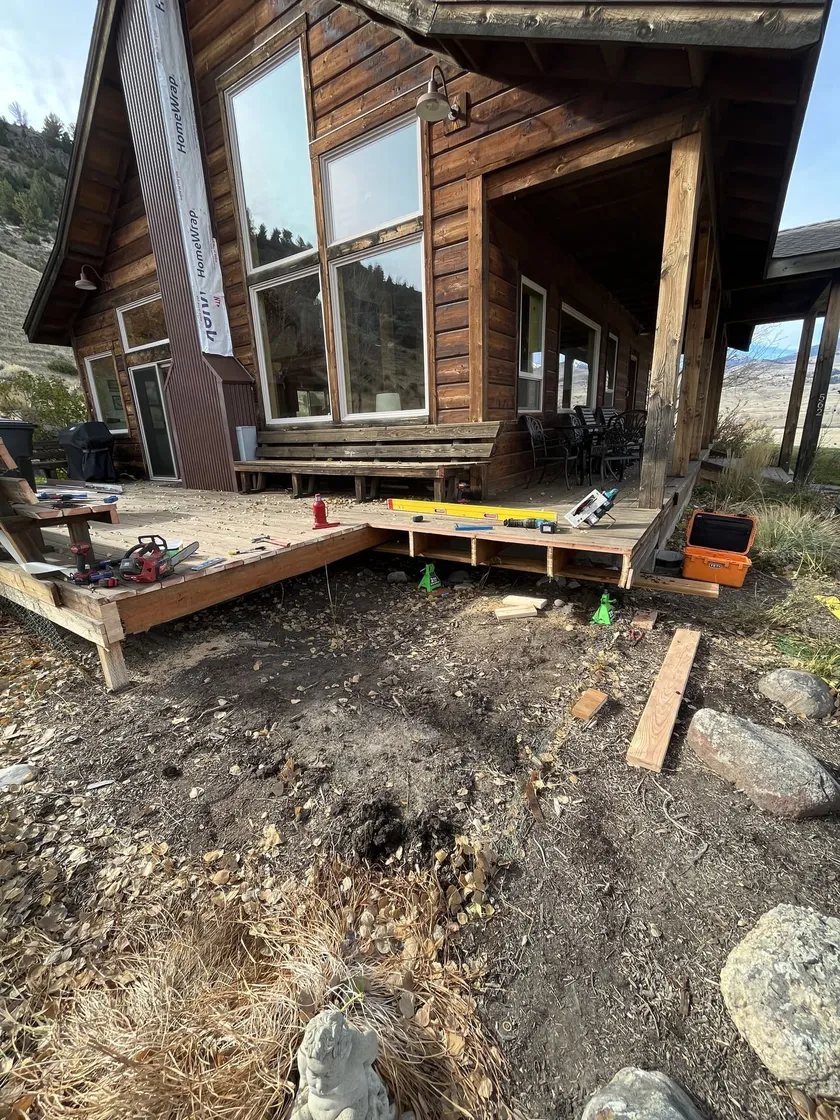
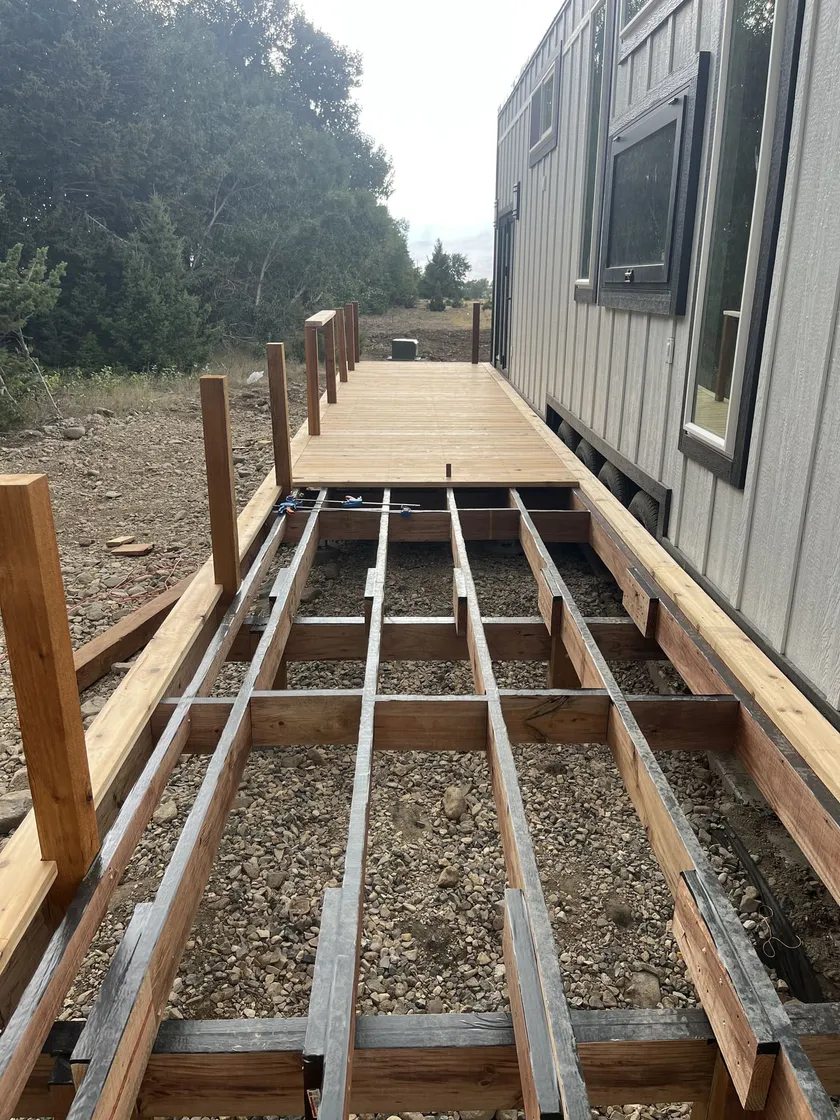
- Snow-load-rated framing — a Montana deck carries real weight five months a year, and at elevation that load shapes every member from the boards down to the posts. If you’re building up toward Big Sky, snow load changes the whole design.
- Roof-shed awareness — a metal roof that dumps onto a deck is a design input, not a surprise for February.
- Proper flashing and drainage at the house connection, where bad decks fail first, and ventilation underneath so framing dries instead of rotting under a perfect-looking surface.
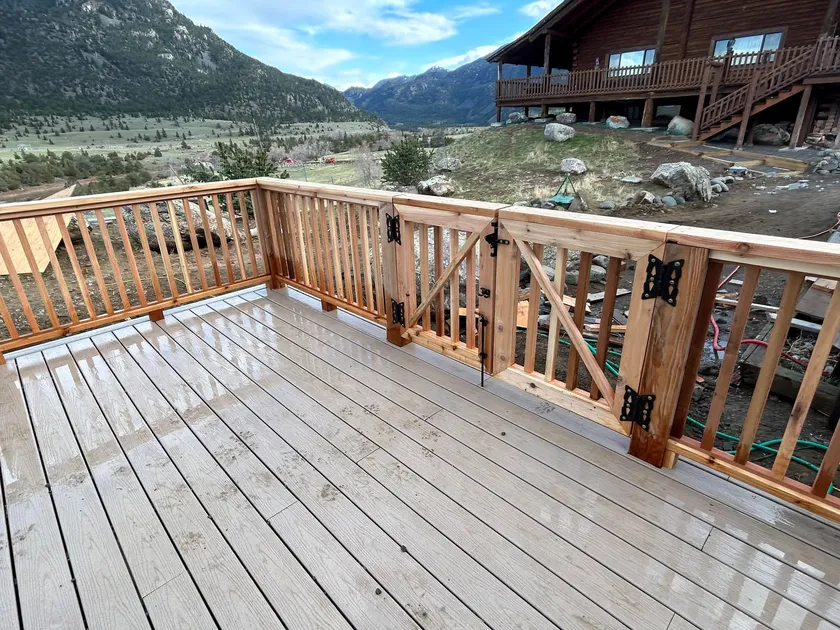
- Custom railings in wood, metal, or cable — including steel railings fabricated by our own welding crew — plus stairs, benches, and multi-level layouts.
Hot Tubs, Additions, and Matching What’s There
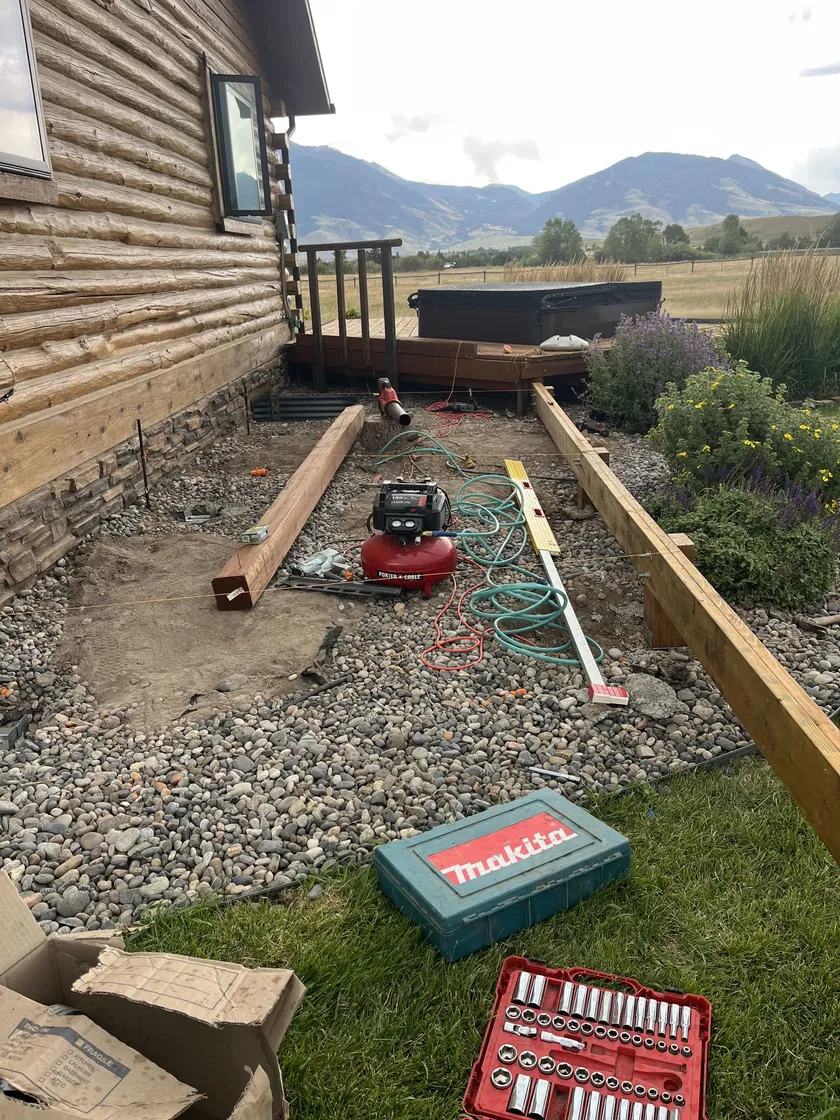
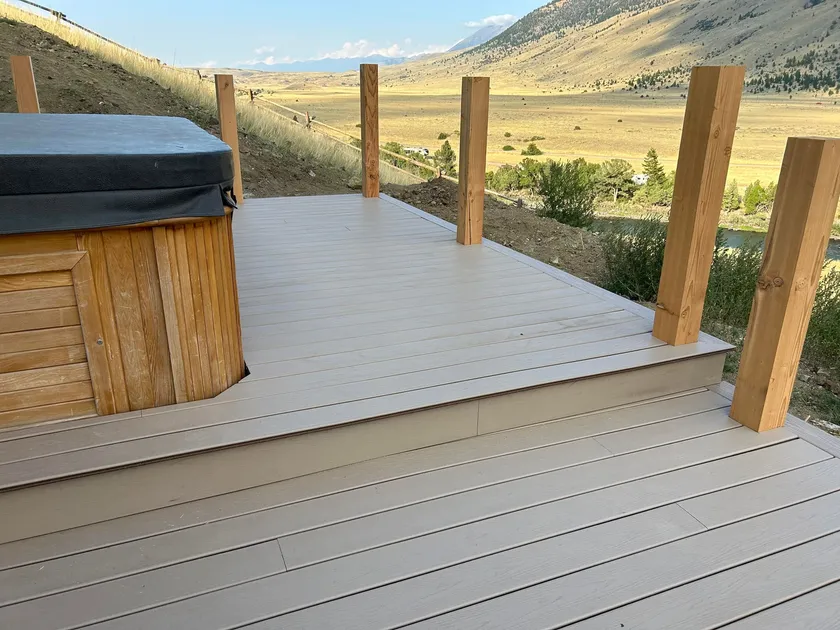
A filled hot tub is one of the heaviest things a residential deck ever carries, concentrated in a small footprint. We frame platforms specifically for that load — see the East River Road deck and hot tub platform in Paradise Valley for how that comes together on a real cabin, matched to the existing structure so old and new read as one build. If you’re weighing where the tub should go, our guide to planning a deck or hot tub pad on a mountain property covers the decisions in order.
Deck, Patio, or Both?
Where the ground falls away from the house, a deck is usually the answer. Where it’s level with the door, a patio often serves better — and on the rolling lots common around Bozeman and Paradise Valley, the best answer is frequently a deck at door level with steps down to a paver patio where the yard flattens out. If you’re not sure which your site is asking for, this comparison sorts it out, or we’ll tell you on the free site walk.
One Crew, Full Scope
Deck, railing, stairs, concrete patio below, paver steps down the slope, a pergola over the seating area, or an outdoor kitchen built into the surface — we build the whole outdoor space, not just the platform. Because the timber, stone, steel, and concrete are all in-house, the pieces get designed together instead of assembled by separate trades on separate schedules.
Free estimates with honest material comparisons — including the times cedar at half the price is the better answer for your property.