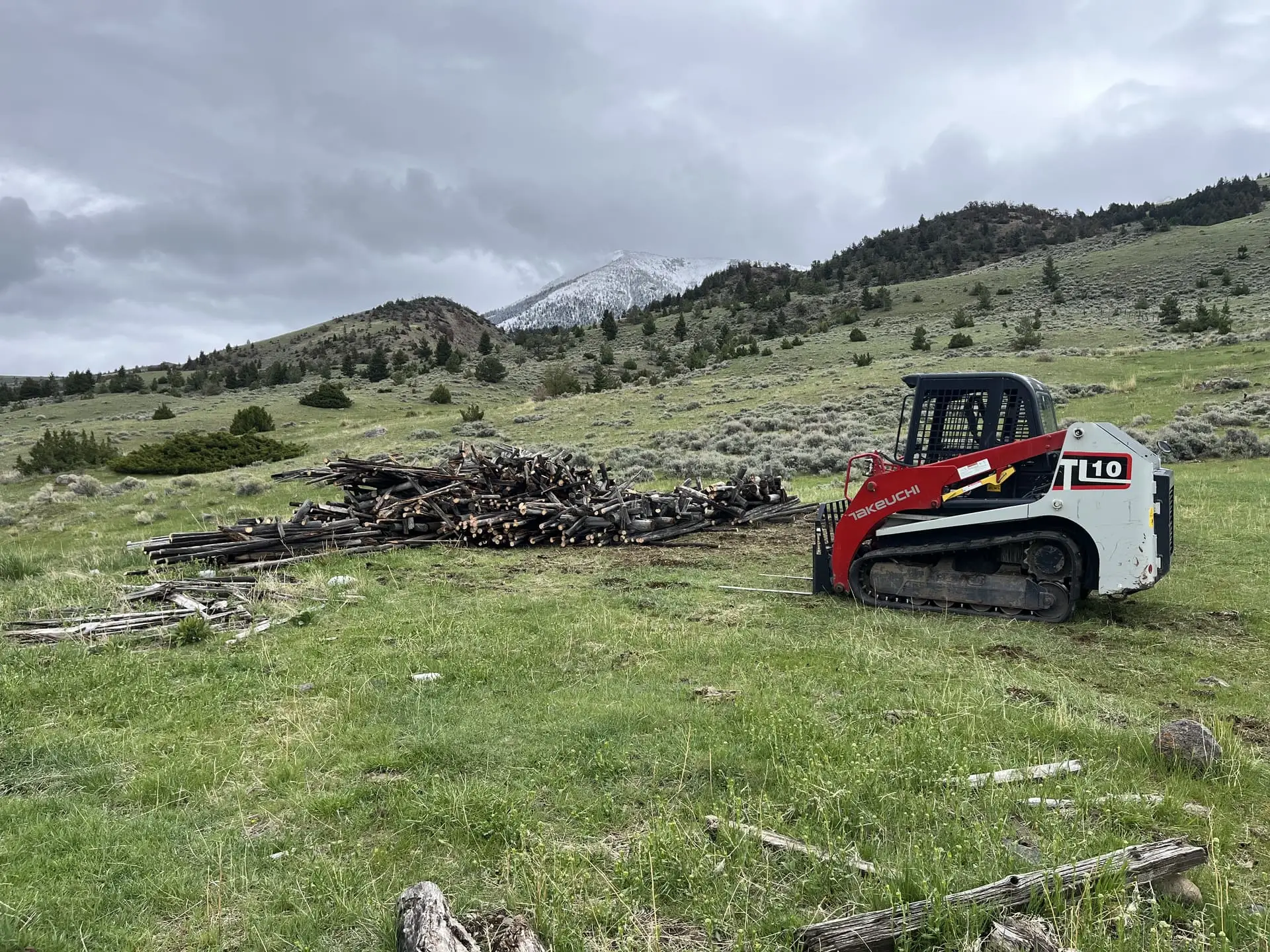
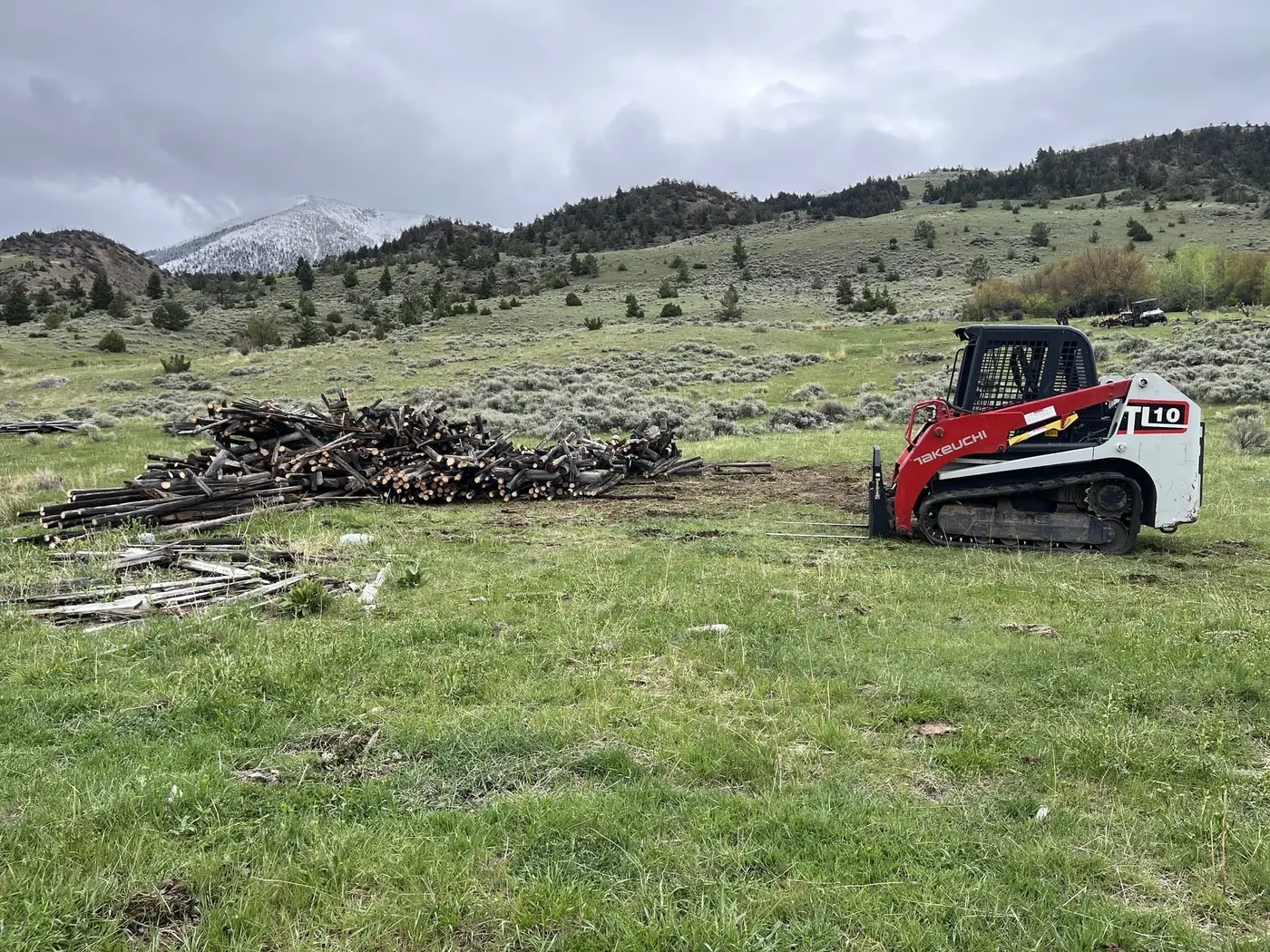
The property at Six Mile Creek had decades of tired jackleg — leaning, rotted at the ground line, patched past the point of patching. The job was not "build a fence." It was clear the old line completely, then build a fence.
Why the teardown is half the job
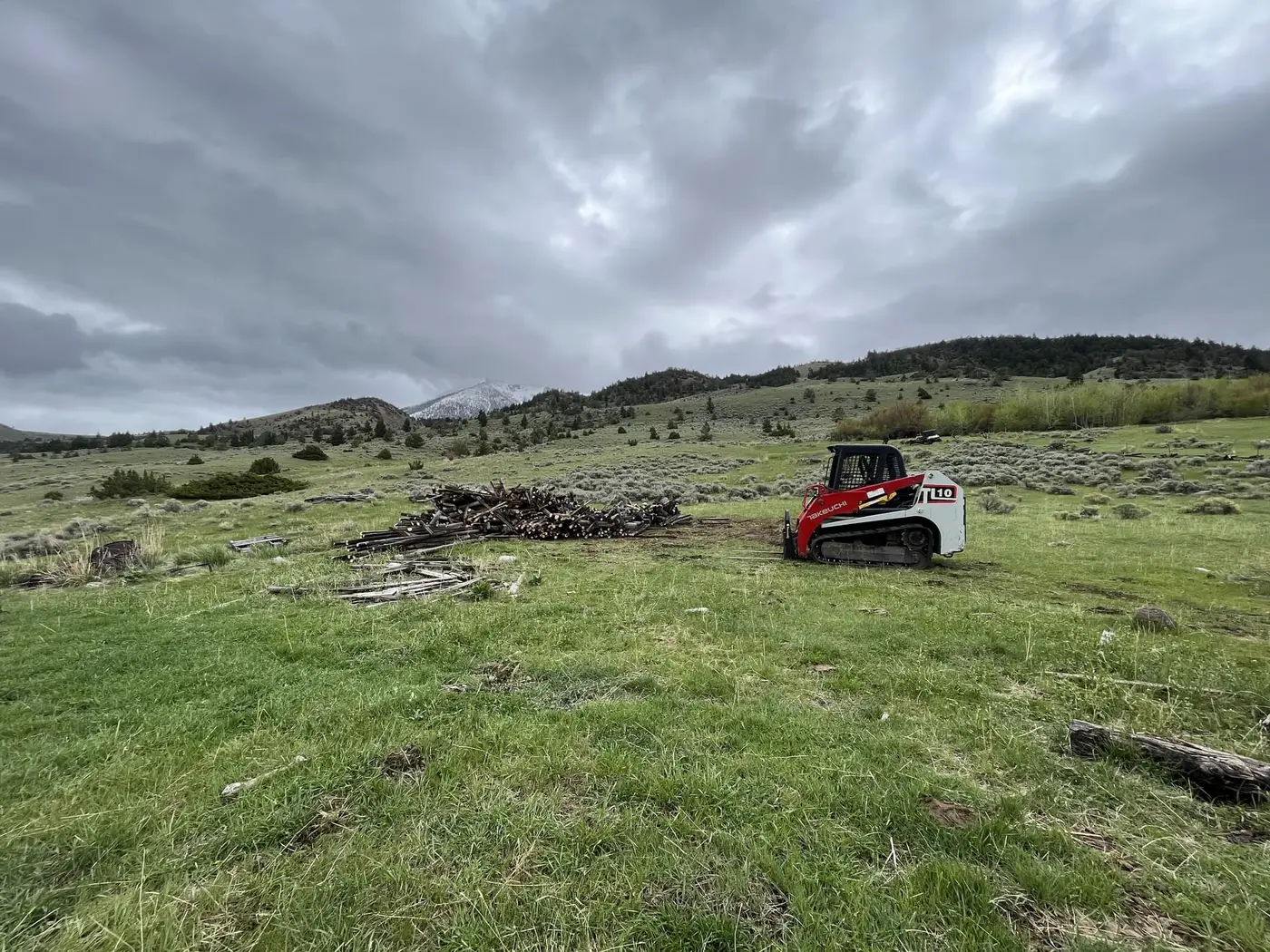
Old fence left in place, buried, or shoved into a coulee is the rural equivalent of sweeping dirt under the rug — it resurfaces as tangled wire in a swather, a horse injury, or a property-line argument. At Six Mile Creek the old jackleg was pulled, stacked, and hauled clean off the property before any new material arrived.
A clean teardown also tells the truth about the line. With the old fence gone you can see the ground as it actually is — where water crosses, where the rock is, where the old builders cheated a corner — and the new fence gets designed to the ground instead of inheriting the old fence's compromises.
Jackleg again — on purpose
The replacement is jackleg, same as the original, and that is not nostalgia. Jackleg is the fence this ground asks for: it stands on the surface, so shallow rock and frozen season are irrelevant; it follows broken terrain without fighting it; and it looks like it grew here, because around Bozeman it more or less did.
The difference between a jackleg fence that lasts decades and one that fails early is almost entirely in the build — leg angles, rail overlap, and treated ground contact where it counts. Replacing a fence that failed with the same fence built correctly is a perfectly good answer.
One crew, both halves
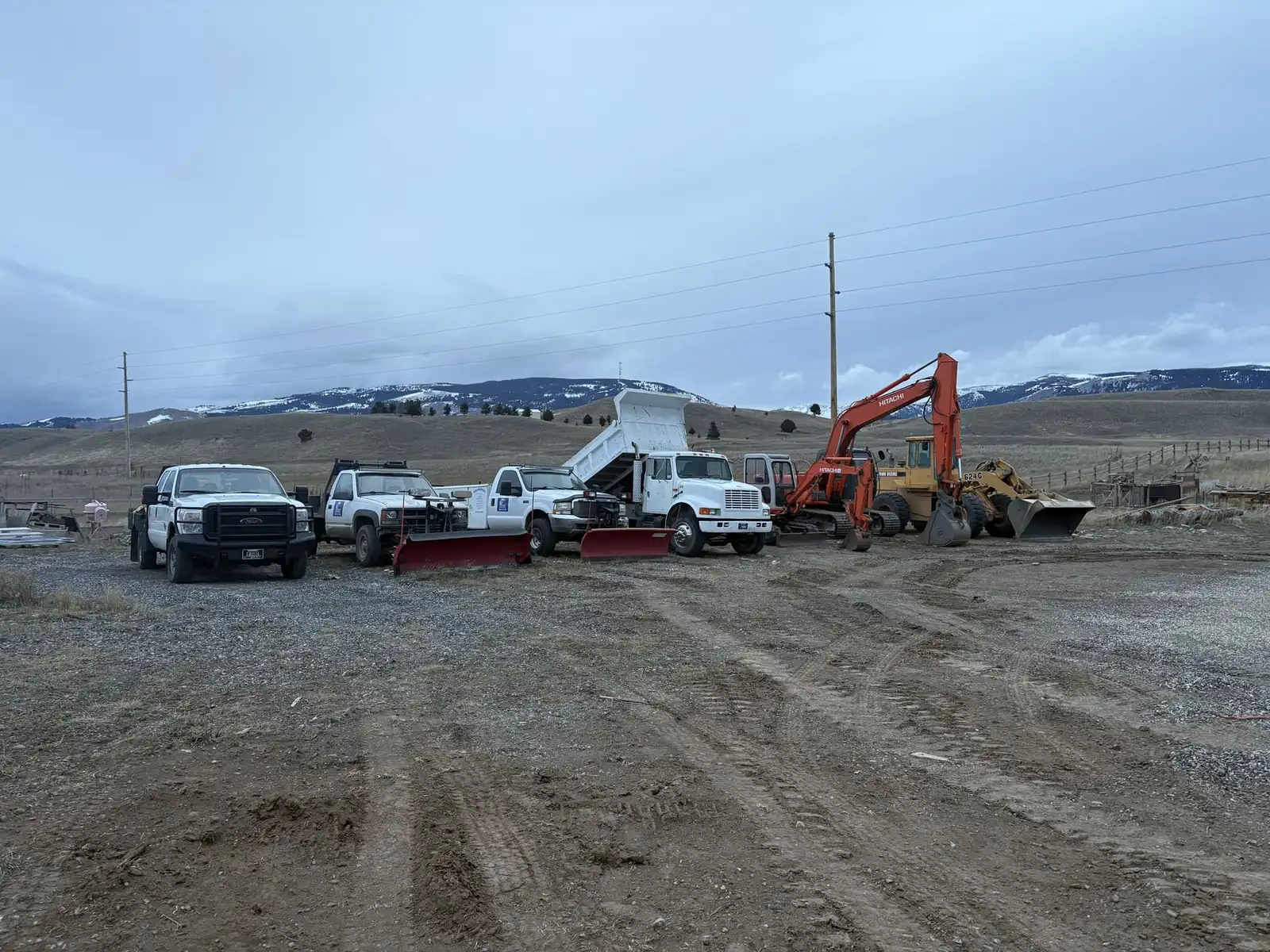
Demolition, hauling, and new construction came from the same crew, which is what keeps a replacement from stalling in the ugly middle stage where the old fence is half down and the new one is not started. The property went from failing fence to finished fence in one continuous piece of work.
More From This Project