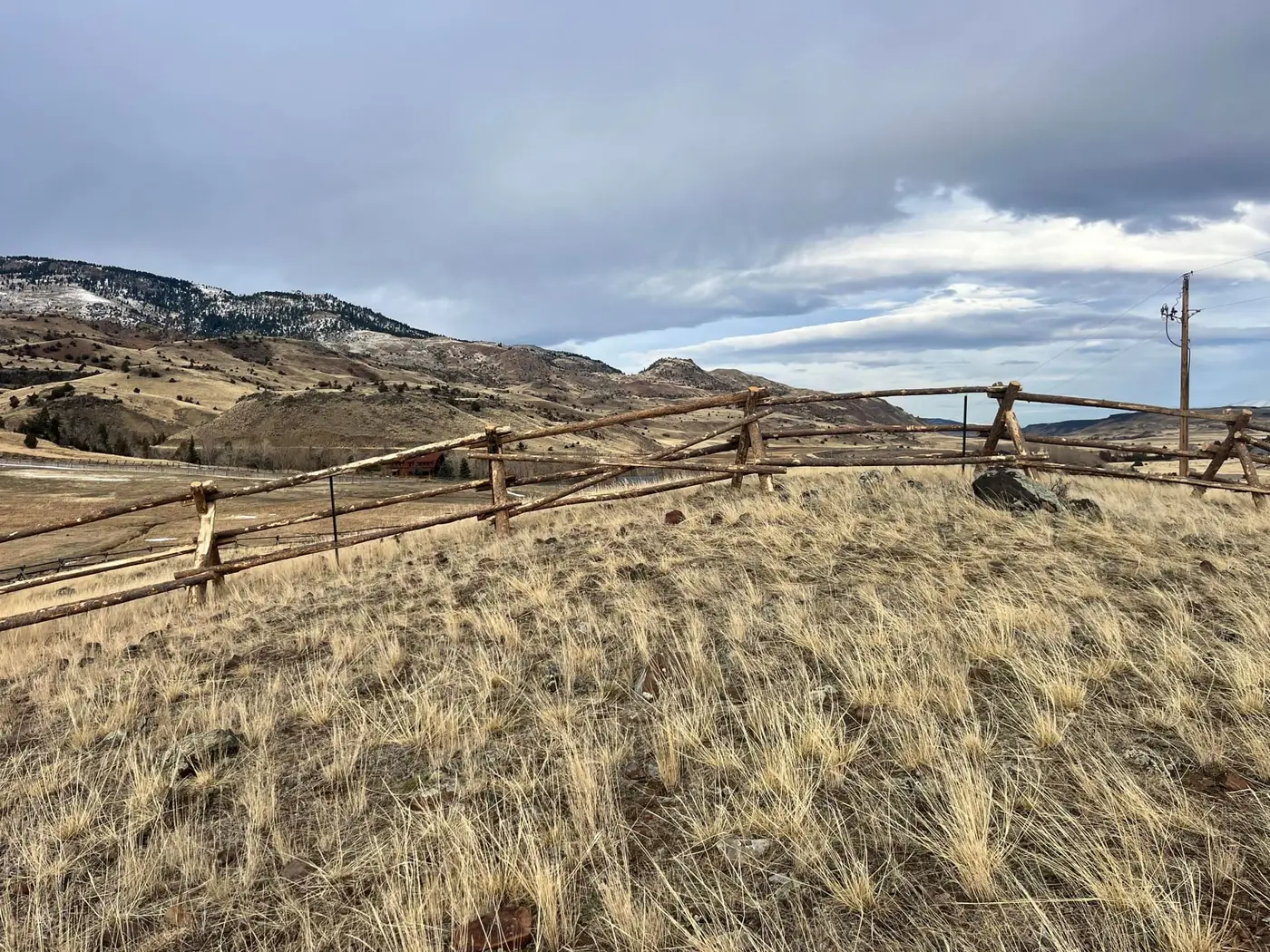
Walk any old fence line looking for trouble and you’ll find it in the same place almost every time: the corners. The straight runs will be doing fine while the corner post leans drunkenly toward the pull of the wire, the brace has popped loose, and the whole assembly is slowly surrendering. There’s a reason for this, and understanding it explains most of what separates a fence that lasts from one that doesn’t.
Corners do all the work
Here’s the physics in one sentence: every straight post just holds the wire up, but the corner posts hold the wire tight. All the tension in a stretched fence, sometimes thousands of pounds across a long run, ends at the corners and gates. The line posts are along for the ride. The corners are in a tug-of-war that never ends, day and night, through every temperature swing, for the life of the fence.
That’s why a fence is only as good as its corners, and why an experienced builder spends a surprising share of the budget on assemblies you might think of as just “the ends.” Skimp on the wire and you get a fence that sags. Skimp on the corners and you get a fence that fails.
How an H-brace actually works
The standard answer to the corner problem is the H-brace, and it’s worth understanding because it’s the difference-maker.
An H-brace uses two posts: the corner (or end) post that takes the wire tension, and a second post set back along the line. A horizontal brace rail connects them near the top, forming the crossbar of an “H.” Then a diagonal brace wire runs from the top of the second post down to the bottom of the corner post, twisted tight.
When the fence pulls on the corner post, that force wants to tip its top toward the line. The brace rail transfers the push to the second post, and the diagonal wire ties the whole thing into a rigid triangle that resists the tip. Done right, the pull of the fence actually tightens the assembly against itself. It’s a genuinely clever piece of old engineering, and it works, but only if every part is right.
Where corners go wrong
Corners fail for a short list of reasons, and every one is preventable:
The posts aren’t deep or solid enough. A corner post fighting constant tension needs real depth and grip, which ties back to how the post is set. A shallow or loosely set corner post loses before it starts.
The brace is too short. A stubby H-brace doesn’t form a strong enough triangle. The horizontal rail needs enough length relative to post height, or the geometry works against you.
Frost heaves the assembly. This is the Montana special. Freeze-thaw lifts a corner post a little each winter, loosening everything, until the once-tight brace wire hangs slack and the post starts to walk. Depth below frost and proper setting are the defense.
The diagonal is on the wrong side, or slack. The brace wire has to run in the direction that opposes the pull, and it has to stay tight. A brace wire on the wrong diagonal does nothing, and one that was never properly tensioned does nothing for long.
Double-H for the long pulls. Very long runs and heavy fences need a double-span brace, essentially two H’s in series, because a single assembly can’t hold that much tension alone. Under-bracing a big pull is a slow-motion failure.
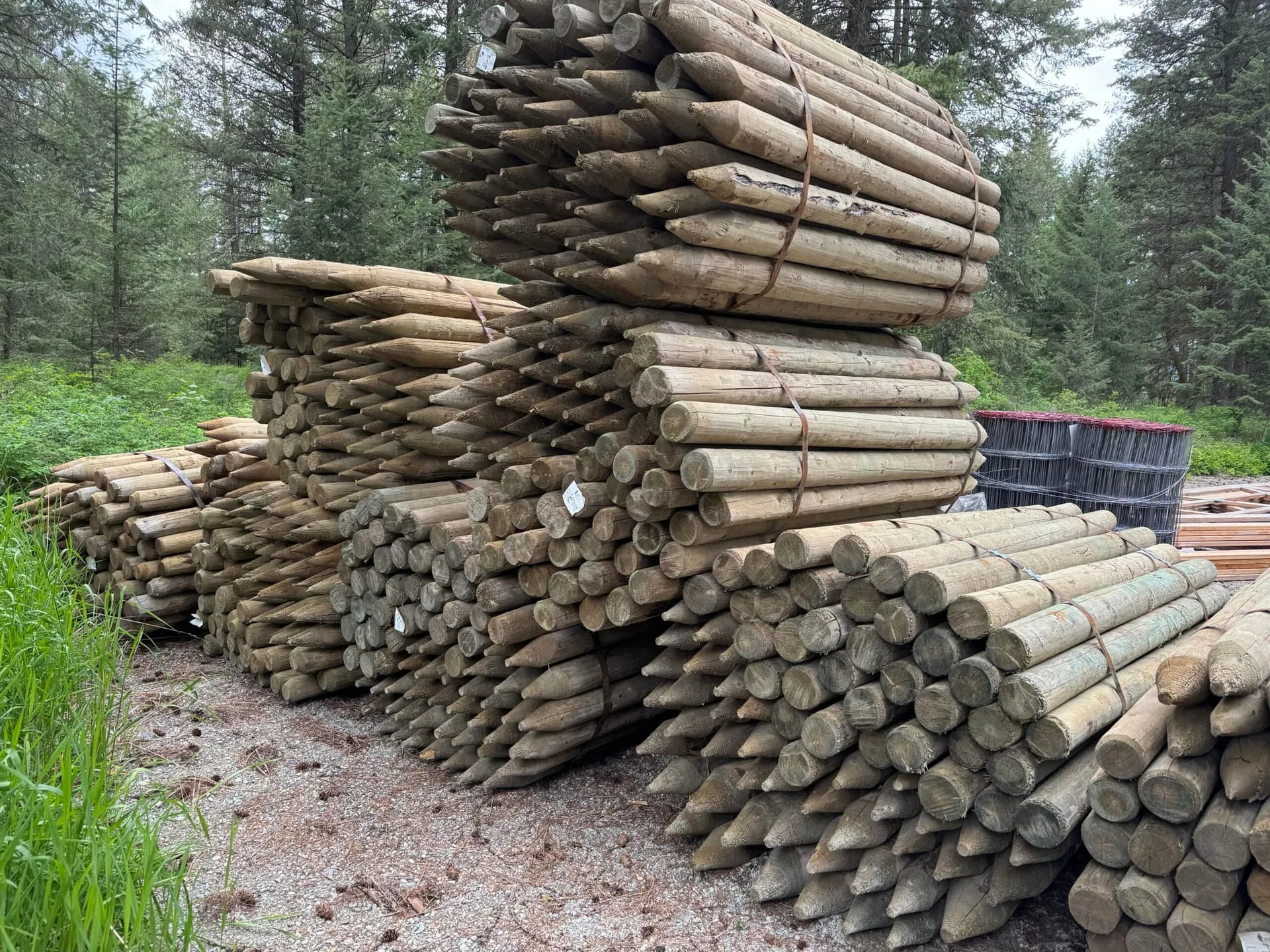 Line posts hold the wire up; the corner and brace assembly holds it tight.
Why this matters when you’re getting an estimate
When you compare fence estimates, the corners are where a cheaper number often hides. A bid that saves money by under-building corners and gates looks identical on paper to one that builds them right, and then diverges completely at year five. It’s one of the reasons we say a fence has to be priced from a walk of the actual line, because the number of corners, the length of the runs, and the tension they’ll carry are real cost drivers, not fine print.
If you’re looking at an aging fence trying to decide between repair and replacement, the corners tell you a lot. Sound corners with tired wire is a re-stretch. Leaning, heaved, popped corners usually mean the fence has reached the end of the line, and replacement is the honest call.
The takeaway
You don’t need to build your own corners to benefit from understanding them. You need to know that they’re where fences fail, that a proper H-brace is doing quiet, constant work, and that a builder who takes corners seriously is a builder worth hiring. When we spec a fence, the assemblies get sized to the runs and the tension they’ll actually carry, because that’s the part that decides whether you’re calling us again in five years or driving past a straight fence in twenty-five.
When you’re ready: plan your fence project and we’ll build it to hold, corners first. Free measurements across Gallatin and Park counties.