If you read enough of our project guides, you’ll notice the same phrase keeps surfacing: footings below frost depth. It shows up in the entrance guide, the deck guide, the masonry guide, and the fence-post explainer. It isn’t a verbal tic. It’s the single most important number in Montana construction, and it explains why so much of what we build starts underground where nobody will ever see it.
Here’s what frost depth is, why it wrecks shallow work, and which projects live or die on getting it right.
What frost heave actually does
When the ground freezes, any moisture in the soil freezes with it, and freezing water expands. In fine-grained, moist soils, that expansion doesn’t happen evenly. It forms lenses of ice that grow and lift the soil above them, sometimes by inches. This is frost heave, and it’s a powerful, patient force.
Now put a post or a footing in that ground. If the bottom of it sits within the zone that freezes, the heaving soil grabs it and lifts. Then spring comes, the ice melts, and the object settles back, but not always all the way, and not always evenly. Repeat every winter. A little more lift, a little uneven settling, year after year, and the gate post leans, the deck racks out of level, the stone column tilts, and the sidewalk cracks.
That slow ratcheting is behind a huge share of the failures we get called to fix. And nearly every one traces back to work that didn’t go deep enough.
The defense: get below the frost
The fix is conceptually simple. Put the bottom of the footing below the depth to which the ground reliably freezes. Down there, the soil holds a steady temperature and doesn’t freeze, so there’s nothing to heave. The footing sits on stable ground and stays put.
How deep is that in Montana? Deeper than most people expect, and it varies by location, elevation, and soil, which is exactly why frost-depth requirements are set locally rather than nationally. The practical point for a property owner isn’t the exact number, it’s understanding that “deep enough” here is a real, non-negotiable depth, and that anyone offering to set your gate posts or pour your footings shallow to save a day is selling you next decade’s repair.
Two other pieces work alongside depth:
- Drainage. Frost heave needs moisture. Ground that drains well freezes with less water in it and heaves less. Good footing design keeps water away from the base, which is why drainage keeps coming up in every masonry and entrance conversation.
- The right footing shape and grip. Undisturbed ground, adequate bearing, and in some designs a footing wider at the base all help resist both heave and settling.
Which projects live or die on this
Not everything needs a frost-depth footing, but the list that does is long and important:
- Entrance columns and archways. A leaning entrance column can’t be quietly straightened, so its footings are the whole project. Our stone and timber entrance guide treats this as the design constraint it is.
- Automatic gate posts. A gate operator tolerates zero movement. A heaved gate post throws off the geometry and fights the opener all winter, as the cold-weather gate guide explains.
- Decks and hot-tub pads. Deck footings that don’t reach frost depth ratchet the whole structure out of level a winter at a time.
- Stone masonry, columns, and walls. Mass makes the failure worse, not better, because a heavy element that heaves and tilts is that much harder to fix.
- Fence corners and gates. Even fencing feels frost, which is why corner assemblies and set posts need depth, and why jackleg that sets nothing in the ground sidesteps the problem entirely.
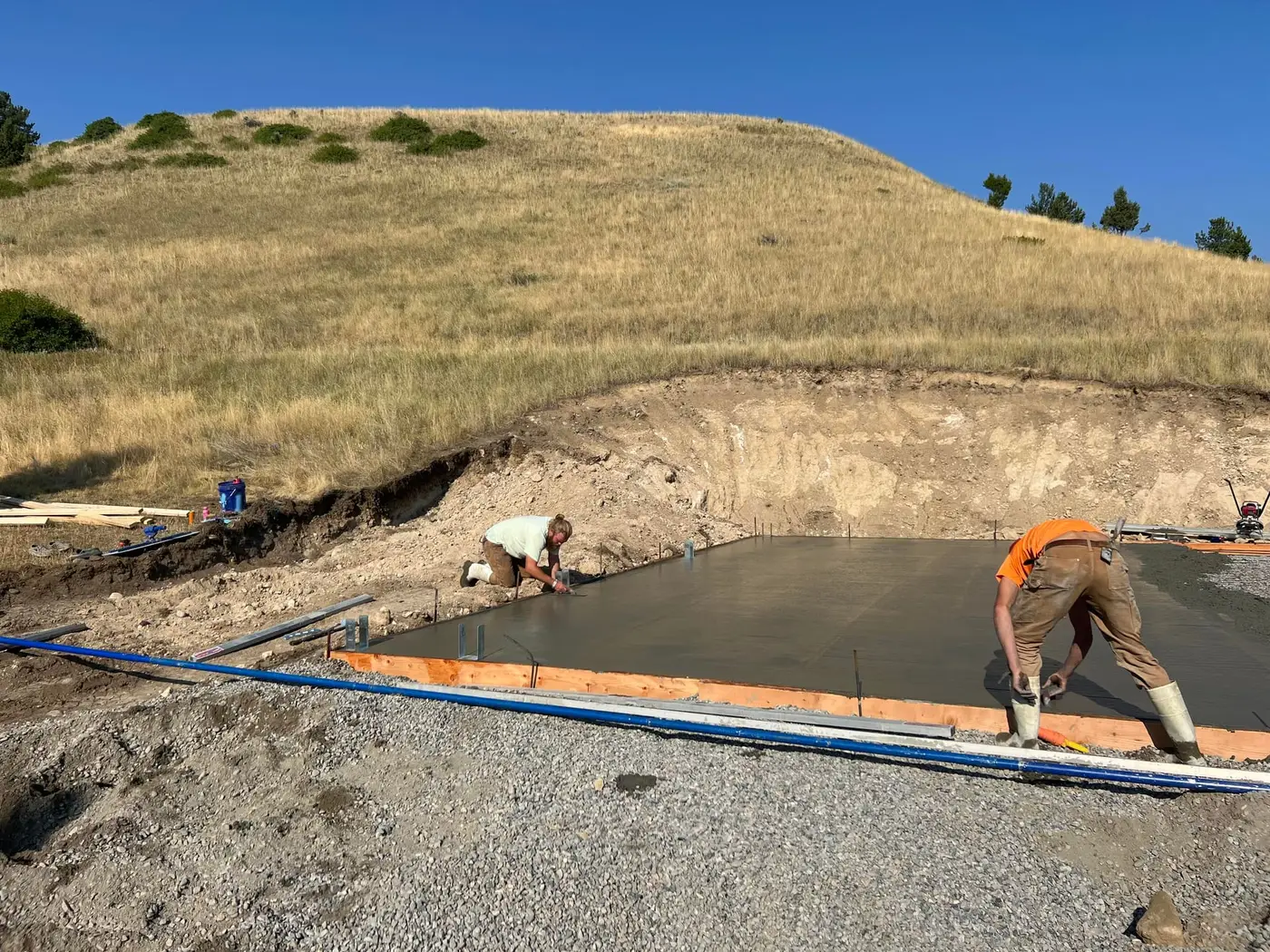
 The footing goes in below frost, where nobody will ever see it, and that’s the point.
Signs your existing footings went in too shallow
If you’ve bought a place with existing structures, or you’re wondering about work a previous owner had done, frost heave leaves fingerprints. You can often spot a too-shallow footing without digging:
- A gate that binds or drags at the same time every year. If it swings fine in summer and fights the latch in deep winter, then recovers in spring, the posts are heaving and settling seasonally.
- A column, post, or pier that’s out of plumb. Sight down a fence corner, a deck post, or an entrance column against a vertical reference. A lean that wasn’t there when it was built, especially one that appeared over a few winters, points to heave.
- Cracks in flatwork that open and close with the seasons. A sidewalk or slab crack that’s tight in July and gaping in January is being worked by frost underneath.
- A deck or porch that feels different underfoot year to year, or doors and gaps that go in and out of square seasonally.
- The classic tell: it got worse over time, not all at once. Settling from a one-time cause stabilizes. Frost heave ratchets, a little more each freeze-thaw cycle, so a problem that keeps progressing winter after winter is usually frost.
None of these is a guarantee on its own, and some have other causes worth a professional’s eye. But a pattern of seasonal movement that worsens over years is the signature of work that didn’t reach stable ground. The good news is that it’s diagnosable, and knowing what you’re looking at turns a vague worry into a specific question you can get answered before it tilts any further.
Why this is worth understanding as a buyer
You’ll never inspect your own footings after they’re poured. So the value of understanding frost depth is knowing what to ask and what to be wary of. A contractor who talks about frost depth, drainage, and proper footings without prompting is telling you they build for the climate. A bid that’s cheaper because the footings are shallower is not a deal, it’s a loan against the future, repaid with interest in tilted columns and racked decks.
The invisible work is the product here. It’s the least glamorous line in any estimate and the one that decides whether the visible part is still standing straight in twenty years.
Building something that has to stay put? Tell us about your project and we’ll build it from the frost line up. Free evaluations across Gallatin and Park counties.