Excavation is where a project meets reality. Plans, drawings, and budgets all assume things about what’s underground, and the dig is when the ground votes. On rural and mountain properties around Bozeman and Paradise Valley, that vote involves rock, water, access, and utilities in combinations that town lots rarely see.
Good excavation planning doesn’t eliminate surprises. It shrinks them to the size of line items instead of project-stoppers.
Know why you’re digging — precisely
“Excavation” covers very different jobs with different equipment, tolerances, and sequencing:
- Building pads: cut, fill, and compaction to a level plane that will carry a structure; compaction quality here is the foundation’s foundation
- Foundation and footing digs: precise depths and clean bottoms, coordinated tightly with the concrete work that follows
- Utility trenches: waterline below frost depth, power at required burial, communications; long runs across rural parcels are their own discipline
- Site clearing and grading: reshaping ground for drainage, access, or usable space
- Driveway and road cuts: covered separately in our road planning guide
Defining the end state (final grades, what gets built on it, where water should go afterward) is the whole game. “Dig it out” is not a scope.
The three Montana surprises, and how planning defuses them
Rock. Glacial till, river cobble, and shallow bedrock are standard issue here. Sometimes rock changes the method; sometimes it changes the design (a walkout basement becomes a crawlspace, a trench route bends). Test holes in questionable ground before committing to designs are the cheapest insurance in earthwork.
Water. Spring seeps, perched water tables, and seasonal flows that don’t exist in September. Digging into unexpected water turns a two-day job into a dewatering project. Local seasonal knowledge (and direct questions about what the ground does in May) matters more than any soil map.
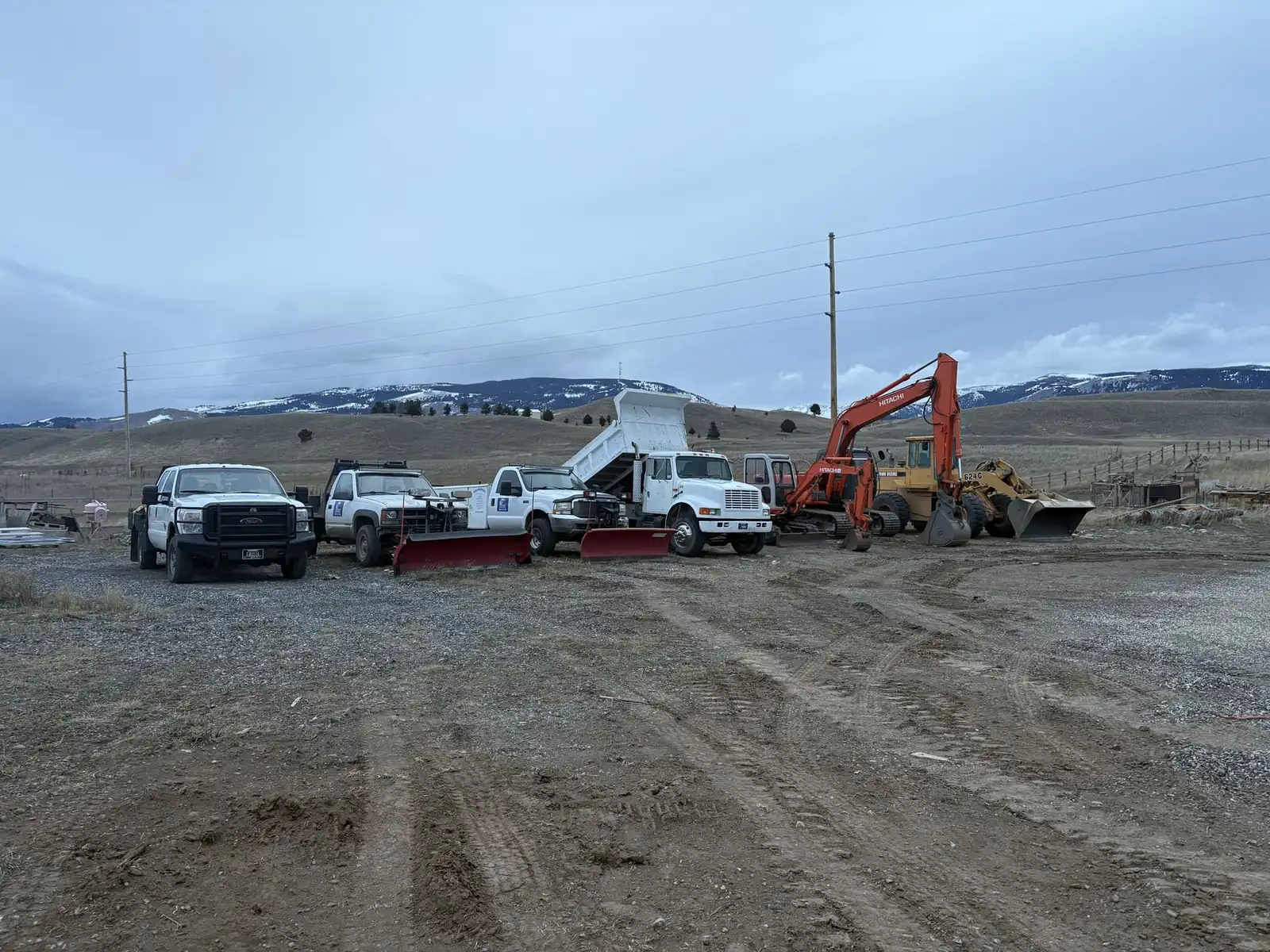
Access. The excavator has to reach the work, and so do the dump trucks behind it. Steep approaches, soft meadows, tight tree lanes, and ditch crossings decide equipment size, which decides production rate, which decides cost. Sometimes the first excavation task is building the temporary road to the excavation.
Utility locates: the non-negotiable
Before any digging: utility locates, every time, the buried power to the well, the gas service, the fiber someone trenched in years ago. Public locate services mark utility-owned lines, but private lines (house-to-shop power, irrigation mains, septic laterals) are the property owner’s knowledge to contribute. Walking the site with old photos, well logs, and memory is genuinely part of excavation planning. Hitting a line is dangerous, expensive, and almost always preventable.
This is professional-equipment territory generally: slopes, trench depths, and utility proximity carry real hazards, and OSHA trench-safety rules exist because soil is heavier and faster than it looks. Educational understanding is great; the digging itself belongs with insured operators.
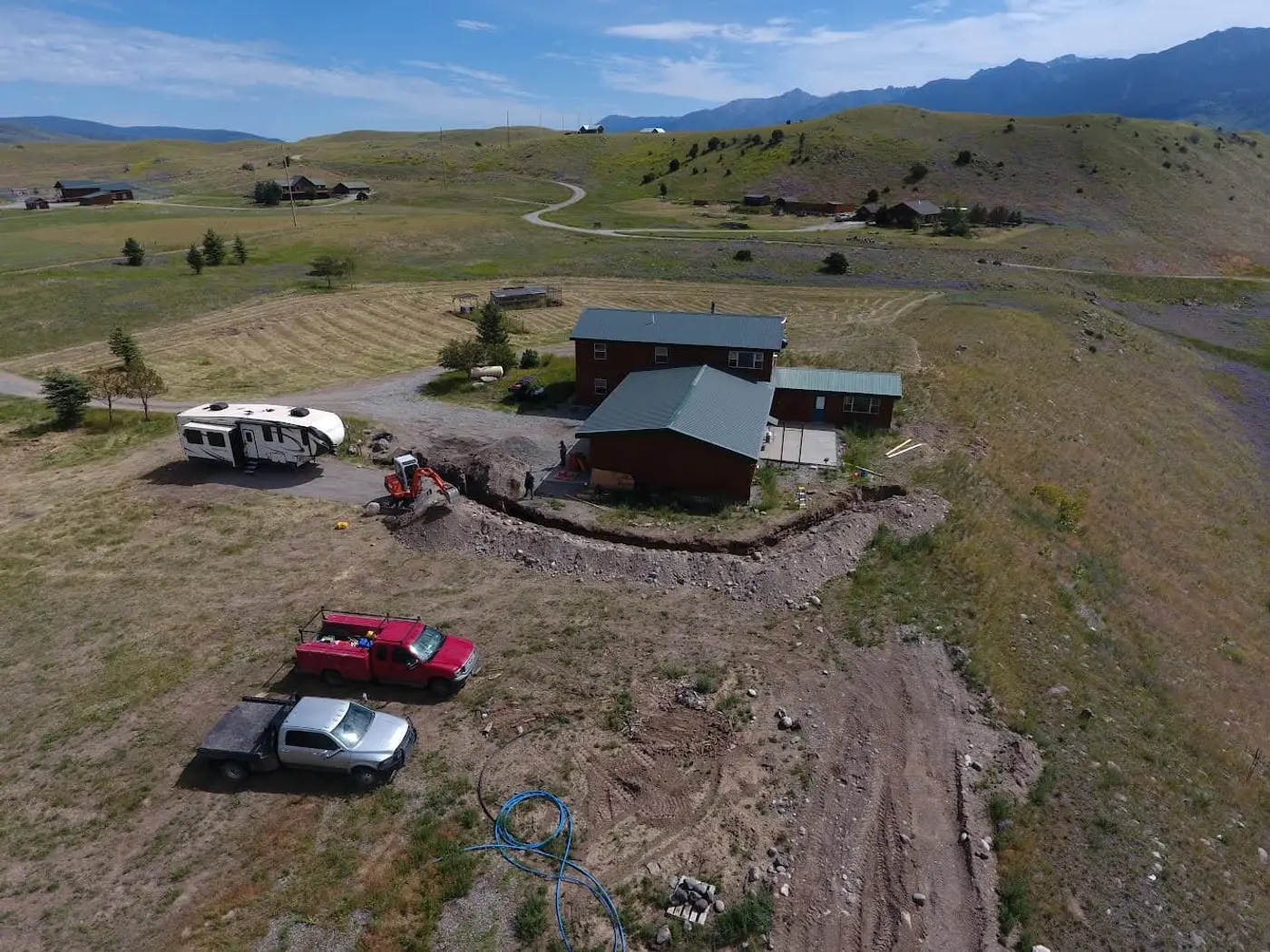
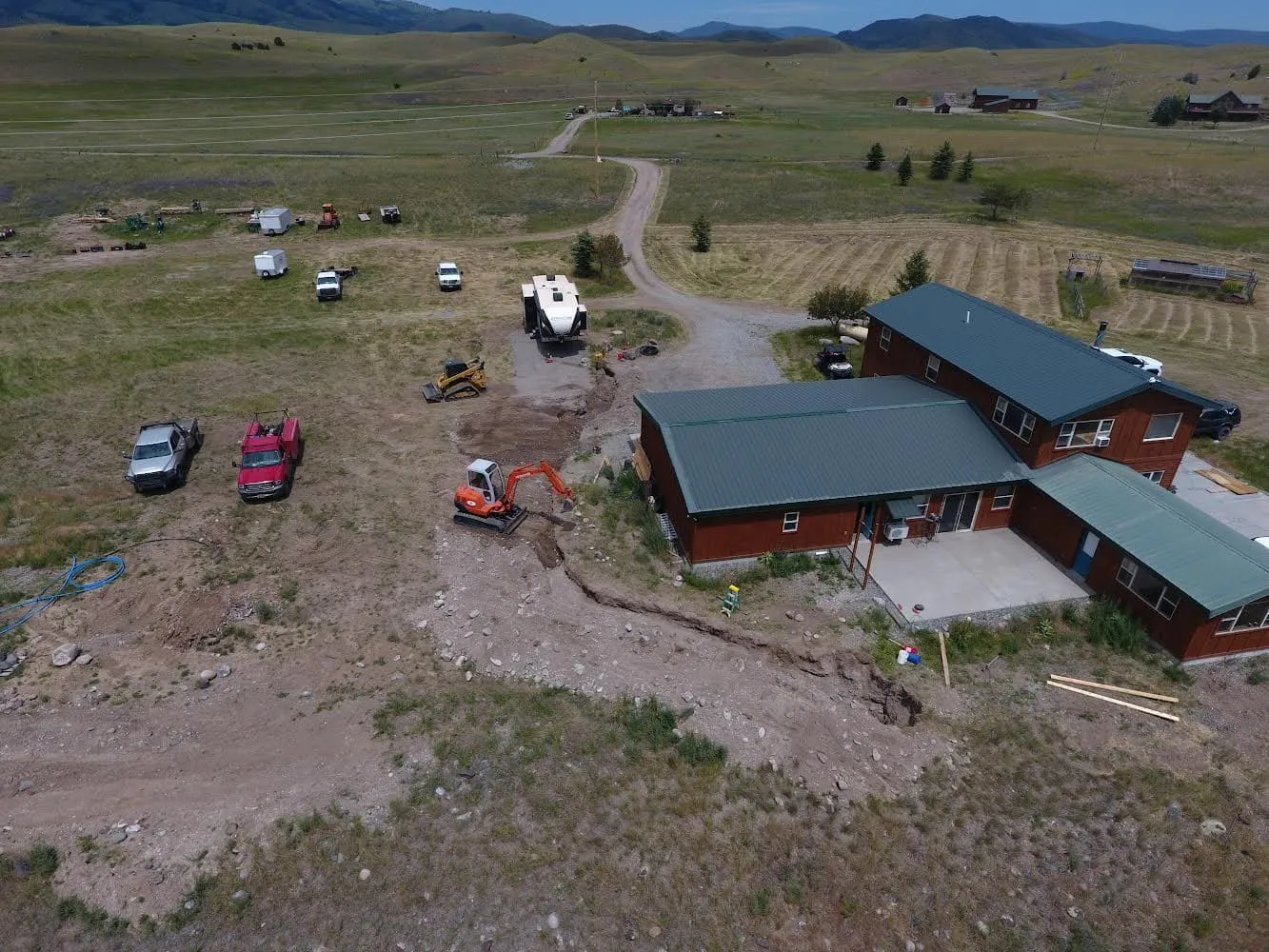 Utility trenching from the gallery — water, power, and communications below frost, before surfacing.
Sequencing: excavation touches everything
Earthwork is usually the first trade on-site, which makes its schedule everyone’s schedule:
- Demolition first where old structures occupy the footprint — one mobilization can often clear and cut
- Trenching before surfacing: utilities cross under future driveways before the gravel is placed, never after
- Spoils have a destination: good topsoil is an asset worth stockpiling deliberately; excess subsoil needs a plan that isn’t “a pile you’ll deal with later”
- Season windows: frozen ground slows digging, spring saturation stops it, and compaction quality depends on moisture; the calendar is a real input
Topsoil, reclamation, and what the site looks like afterward
A dig doesn’t end when the hole is the right shape. What happens to the disturbed ground afterward is part of the job, and it’s the part that decides whether your property looks healed or scarred a year later.
Topsoil is an asset, not spoil. The dark, living top layer stripped off before a dig is worth saving deliberately, stockpiled separately from the subsoil below it. At the end of the project it becomes the finish grading and the seedbed, so the disturbed areas can be reseeded and grown back in. Topsoil mixed into the general spoil pile or hauled off is topsoil you’ll buy back later.
Bare, disturbed ground erodes. Freshly excavated slopes and cuts have no root structure holding them, and Montana’s spring melt and summer downpours find them fast. Reclamation, meaning reshaping to stable slopes, respreading topsoil, and reseeding, is how a site stabilizes instead of washing into the nearest ditch or road. On steeper disturbed ground, temporary erosion control until vegetation takes hold matters.
The finish grade should shed water on purpose. Good excavation leaves the site draining the way you want it to, away from buildings, footings, and roads, rather than ponding in the low spot the machine happened to leave. This is the same drainage discipline that governs every project we build, applied to the dirt itself.
The reason to think about this before the dig starts, not after, is that it’s cheap to plan and expensive to retrofit. Stockpiling topsoil is a decision made in the first hour of work. Buying it back and regrading a scarred, eroding site is a second project. A dig planned with its own cleanup in mind ends with ground that’s ready for what’s next, which is the whole point of moving the dirt in the first place.
What drives excavation cost (no invented numbers)
The variables that matter: volume of material moved, digging conditions (rock, water), haul distance for spoils or import, equipment access, mobilization distance, required compaction and testing, and how many separate visits the sequencing demands. This is why our excavation estimates follow a site visit — two identical-looking digs can be different projects entirely once the ground opens.
Excavation questions owners ask
When’s the best season to dig here? Late spring through fall for most work — after saturation drains, before freeze-up. Compaction quality (the invisible half of every dig) depends on soil moisture being in range, which is a summer phenomenon at elevation.
What happens if you hit rock? The plan changes tools or the design flexes — sometimes both. What matters is that the contract anticipated the possibility: rock clauses and test holes exist precisely so a boulder is a line item instead of a dispute.
Can topsoil really be reused? Usually, and it’s worth planning: stripped topsoil stockpiled properly becomes the finish grading and reseeding material at the end — free material you’d otherwise buy back.
Does a small project really need locates? Yes. Depth of danger doesn’t scale with project size — a fence post auger finds a buried power line as effectively as an excavator. Every dig, every time.
Pre-estimate checklist
- Final use: pad, trench, grading, road — and to what finished grades?
- Any known rock, seeps, or old fill on the footprint?
- Where are the private utility lines — best guess counts?
- Can a truck-and-trailer reach the site today? If not, what’s in the way?
- Where can spoils and topsoil live?
- What follows the dig (concrete, structure, road) and when?
Next step: Plan your excavation — we evaluate site access, ground conditions, and sequencing on the walk-through. Equipment and site work from around Paradise Valley is in the project gallery.