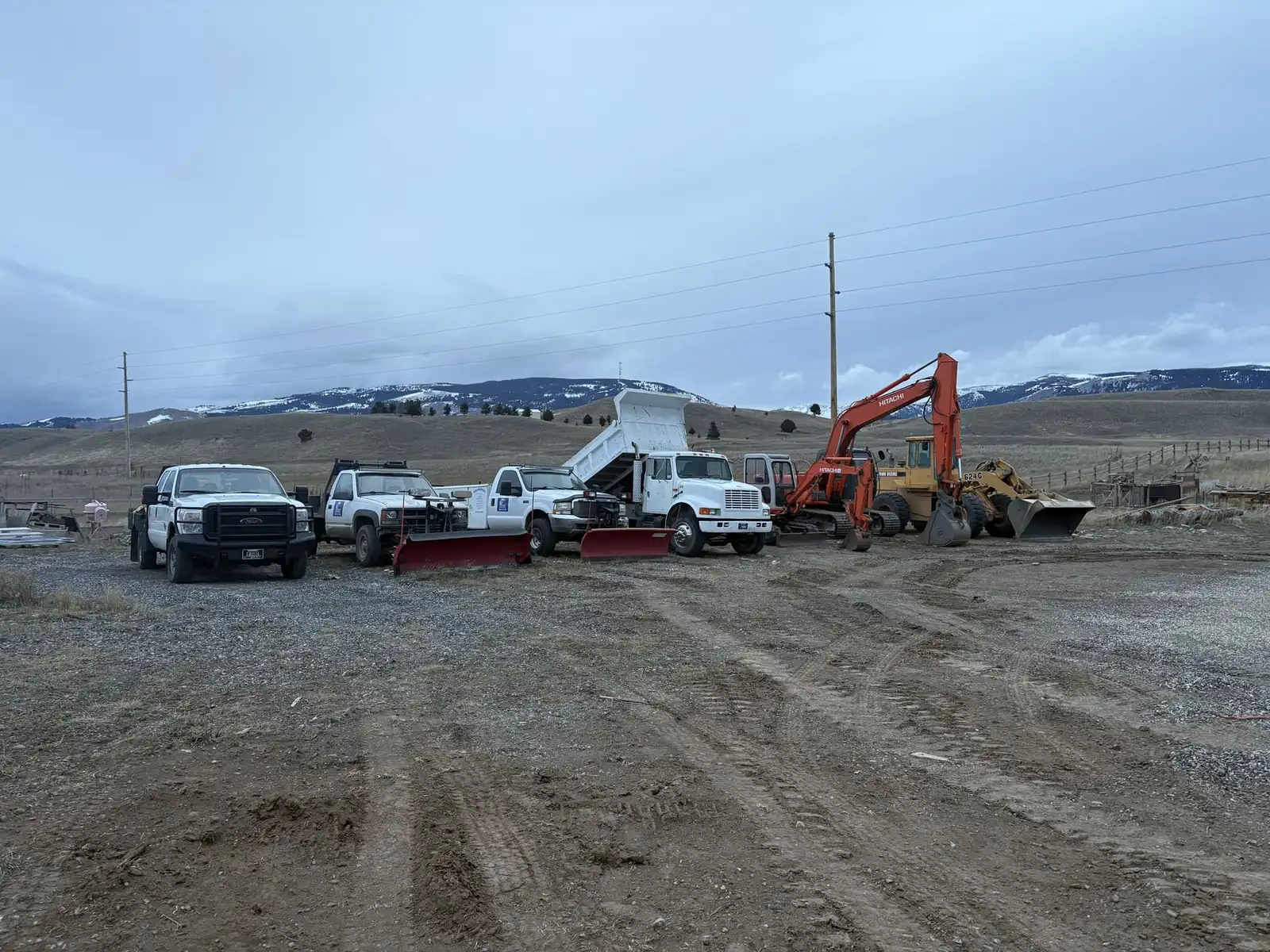
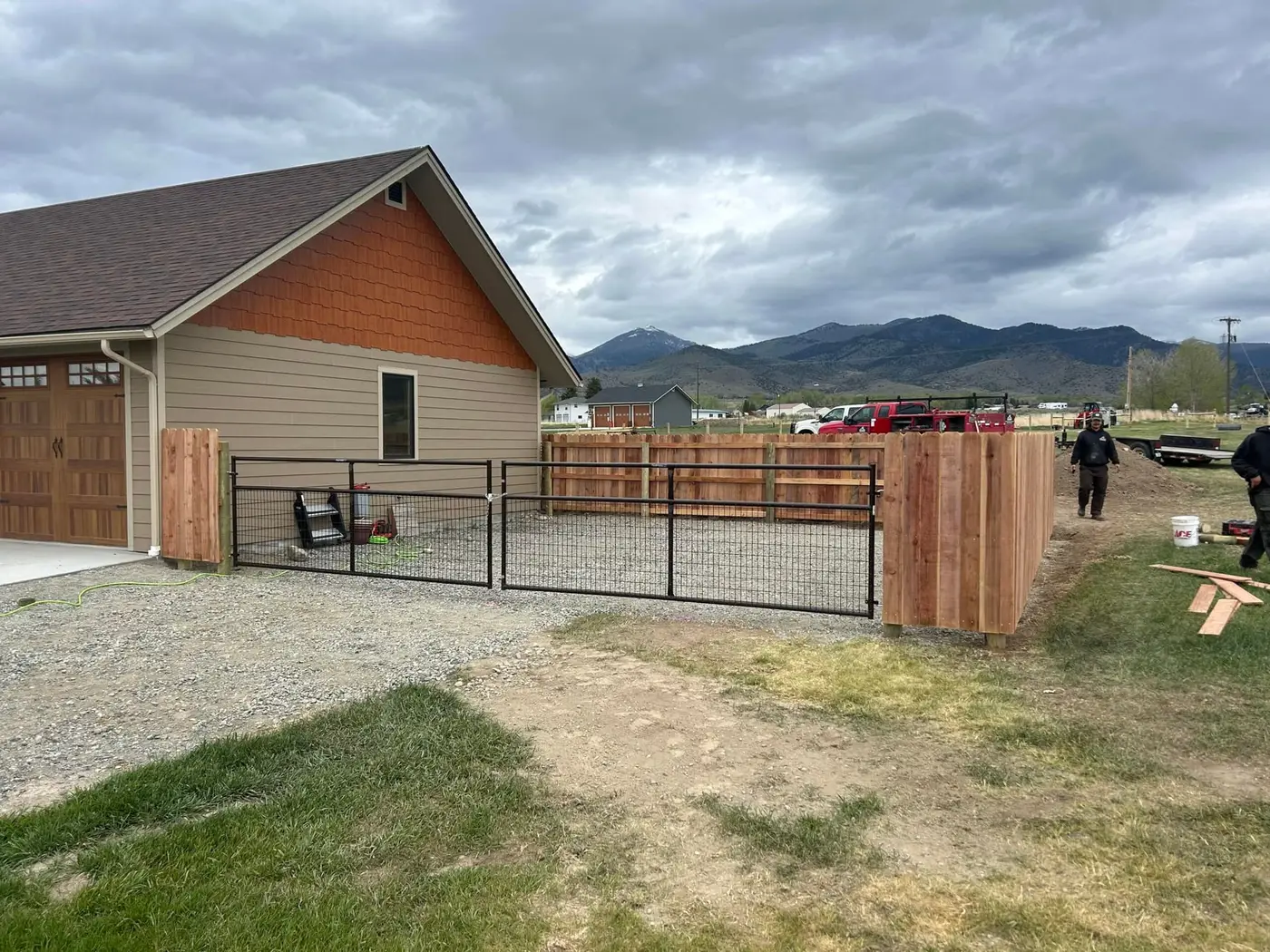
Here’s the frustrating truth about ranch project pricing, stated plainly: any number quoted before someone walks your ground is a guess dressed as an answer. Websites that publish per-foot fence prices or per-mile road prices are quoting a project — just not yours. Two properties can order the identical fence and receive legitimately different invoices, and both were priced fairly.
What we can do (more usefully) is show you the variables. When you understand what actually moves project numbers, you can read your own property, anticipate the estimate conversation, and spot which decisions are yours to control.
The universal variables (every project type)
Scale. Linear feet of fence, length of road, square feet of slab or structure. Obvious — but note that cost rarely scales linearly. Mobilization and setup spread across a bigger job; tiny projects carry the same trucks and travel as medium ones.
Terrain. Slope, rock, and broken ground slow every trade. A fence line across a flat hay meadow and the same footage over a rocky ridge are different projects. Roads and excavation feel terrain even more sharply.
Access. Can equipment and material trucks reach the work? Distance from staging to worksite, soft ground that needs matting or dry weather, tight gates and tree lanes — access friction converts directly into hours.
Ground and water. High water tables, spring seeps, and frost-prone soils demand deeper footings, more base material, and sometimes design changes. Water is the most expensive thing on a property that doesn’t appear on the deed.
What’s already there. Old fence to tear out and haul, structures to demolish, stumps and brush to clear. Removal is real scope — and skipping it (building over or around the problem) is borrowed money at bad interest.
Season. Frozen ground helps some work (firm access for demolition and tear-out) and stops other work (post driving, earthwork compaction, concrete without protection). Timing a project into its right season is free money; forcing it into the wrong one is the opposite.
Mobilization and location. Distance from crew and equipment base, number of separate trips the phasing demands. Bundling related work into one mobilization (the fence and the gate and the culvert) is the most reliable saving in rural contracting.
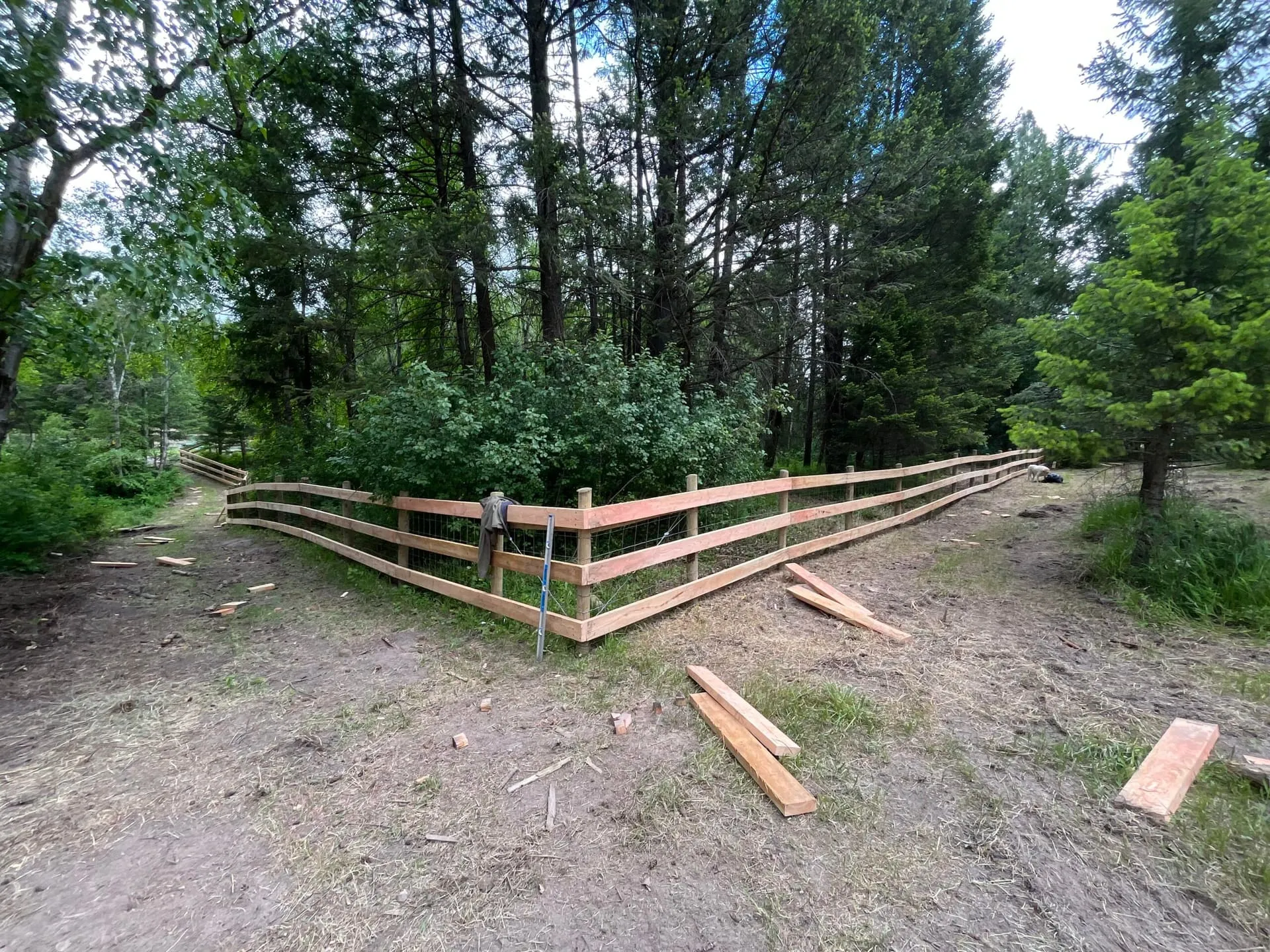 Scale, terrain, access — the universal variables, photographed.
Project-specific variables
Fencing: fence type (materials and labor differ genuinely — see the comparison table), post setting method (driven, set, or surface bucks), rail count and height, gate count and size, wire additions, and corner/brace complexity. Gates deserve emphasis: hardware, posts, and hanging time make each one a small project inside the fence.
Gates and entrances: manual vs. automated (operator, power, access control), power availability vs. solar sizing vs. trenching distance, gate weight and span, column or archway construction, signage, and fabrication complexity for custom steel.
Roads: the repair-vs-rebuild question (covered candidly here), base depth demanded by soils, drainage structures (culverts, ditching), gravel source and haul distance, and clearing along the route.
Structures: footprint and height, enclosed vs. open (the barn/shed/shelter comparison), concrete floors, doors and windows, snow-load engineering, and site/pad preparation.
Craftsmanship work (masonry, custom welding, stairs): design complexity and skilled-labor hours dominate — these are priced as the bespoke work they are.
How to be a well-priced customer
Practical moves that genuinely improve your number:
- Bundle related work into one project and one mobilization
- Decide before, not during: mid-project changes cost more than the same decision made on paper
- Flex on season if you can; the contractor’s shoulder season is your friend
- Do the groundwork prep: know your property lines, mark what you know about buried lines, clear your own brush if you’re equipped to
- Share the real budget range. It isn’t negotiating leverage you’re surrendering — it’s design information that lets a builder scope toward what’s achievable instead of guessing twice
 Conceptual planning illustration — the variables live on the property, not in a price list.
How to read an estimate when you get one
A useful estimate should let you see the variables above reflected in its structure. Reading one, look for:
- Scope described in your property’s terms: footage measured (not guessed), gates counted, removal named. Vague scope is where surprises live.
- Materials specified: fence type, post spec, gate hardware class. “Fence, installed” isn’t a spec; “4-rail treated jackleg with 12’ galvanized gate” is.
- What’s excluded stated plainly — if rock digging, dewatering, or permit costs are contingencies, better to see them named than discover them
- Phasing options where the project is large — a good contractor will tell you which halves stand alone sensibly
- Season and schedule assumptions: a summer number and a “squeeze it into November” number can differ legitimately
Comparing two estimates? Make sure they describe the same project. The cheaper number is sometimes a smaller scope wearing the same project name — less base under the road, lighter posts, removal left out. Aligning scopes first makes price differences meaningful instead of misleading.
A worked example: why two “identical” fences cost different amounts
Picture two neighbors, each fencing a quarter mile of new boundary, each choosing the same fence type. On paper they ordered the same thing. In practice the invoices land in different places, and every dollar of the gap is legitimate. Here is where it comes from, without a single price attached:
Property A sits on a flat hay meadow with deep, diggable soil. The line runs dead straight from corner to corner. The build truck parks on the county road and the whole fence is within easy reach. There’s no old fence to remove, and the job runs in July on firm ground.
Property B is the same quarter mile, but the line climbs a rocky bench, dips through a wet swale at the bottom, and turns twice to follow the actual property boundary. Equipment has to travel a soft two-track to reach the far end. An ancient wire fence sags along part of the route and has to come out first. The owner needs it done in late fall as the ground is turning.
Same footage. Now count the deltas:
- Terrain: Property B’s rock means some posts can’t be set the easy way, and the wet swale needs a section built to handle it. Property A’s soil cooperated everywhere.
- Layout: B’s two corners are two braced assemblies A never had to build.
- Access: A’s crew walked ten steps from the truck; B’s carried materials down a two-track that itself slowed everything.
- Removal: B paid to tear out and haul the old wire before building; A started on clean ground.
- Season: B’s late-fall timing narrowed the working window and added weather risk A’s July build never faced.
None of that is anyone padding a bill. It is the same fence meeting two different pieces of Montana. This is exactly why a per-foot number quoted from the road is close to meaningless, and why the honest answer to “what does fence cost” is a walk of the actual line. The variables above are not fine print. They are the price.
The useful takeaway for your own property: before you ask for a number, look at your line the way Property B’s owner should have. The rock, the wet spot, the corners, the old fence, and the calendar are the estimate, told in advance.
What an on-site estimate actually settles
A property walk converts every variable above from assumption to fact: measured footage, observed ground, access walked, removal scoped, season discussed. That’s why our estimates and measurements are free — the walk is where a real number becomes possible, for both of us.
Next step: Plan your project (fence, gate, road, structure, or several at once) and we’ll turn this article’s variables into your property’s actual answers. Or see what finished projects look like in the gallery.