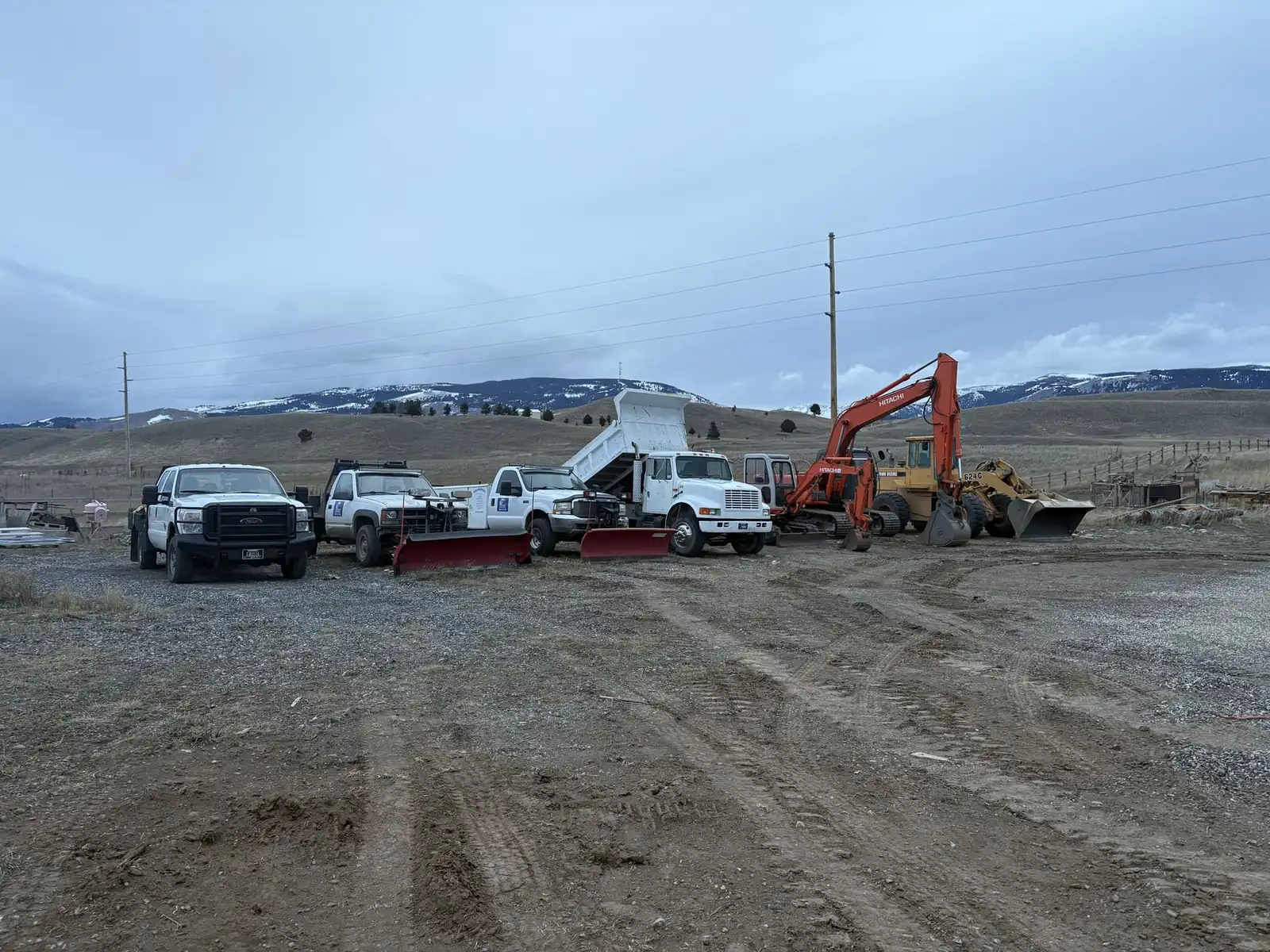
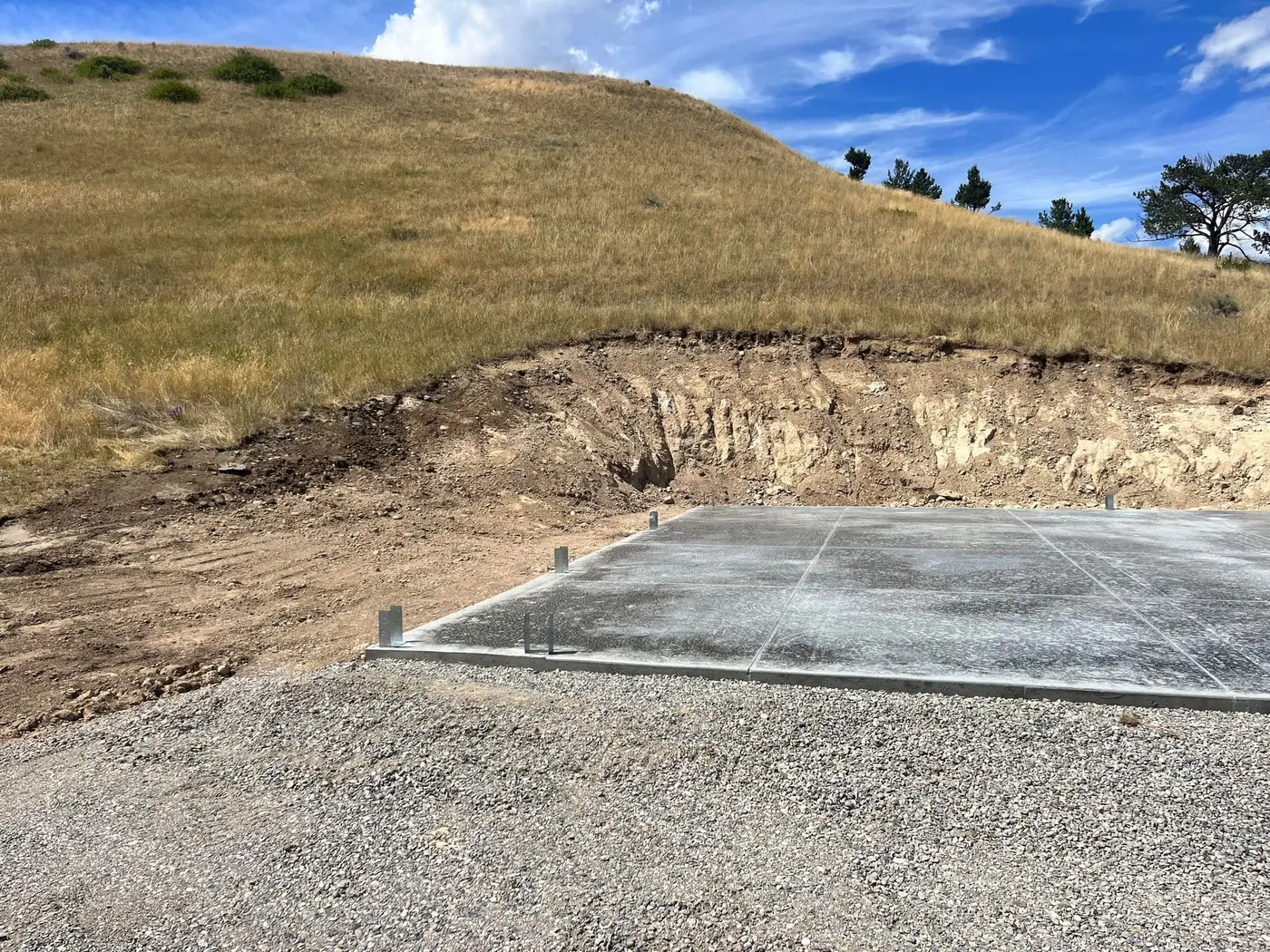
Gravel is the default surface of ranch country, and rightly so, it’s cheap, repairable, and honest. But there’s a shortlist of places where gravel keeps charging rent forever and concrete pays once: under the shop, at the barn door, around the fuel tank, anywhere equipment leaks, drips, drags, or needs to be worked on while lying on your back. Knowing which places make the shortlist is most of the planning.
Where concrete genuinely earns it
Shop and barn floors. The difference between a shop with a slab and one without is the difference between a shop and a shed. Creepers roll, jacks stand, spills wipe, floors sweep. For pole barns, deciding on the slab at build time matters, thickened edges, correct interior grades, and floor drains are cheap during construction and disruptive afterward.
Approaches and thresholds. The apron where gravel meets the overhead door takes the worst of everything: turning loads, plow blades, snowmelt refreezing at the threshold. A concrete approach keeps the transition from becoming a pothole factory and keeps the door bottom out of the ice.
Equipment and utility pads. Generators, fuel tanks, well houses, hot-tub bases (that one gets its own article), anything heavy, vibrating, or spill-prone wants a level, permanent footing.
High-traffic livestock zones. Aprons at waterers, alleyways, and shelter entries where hooves and moisture destroy any softer surface. Grooved finishes keep stock sure-footed, a spec worth requesting, not assuming.
Sidewalks and house-zone flatwork. The domestic end of the ranch: walks, patios, garage aprons, where stamped and finished work can carry some design intent along with the function.
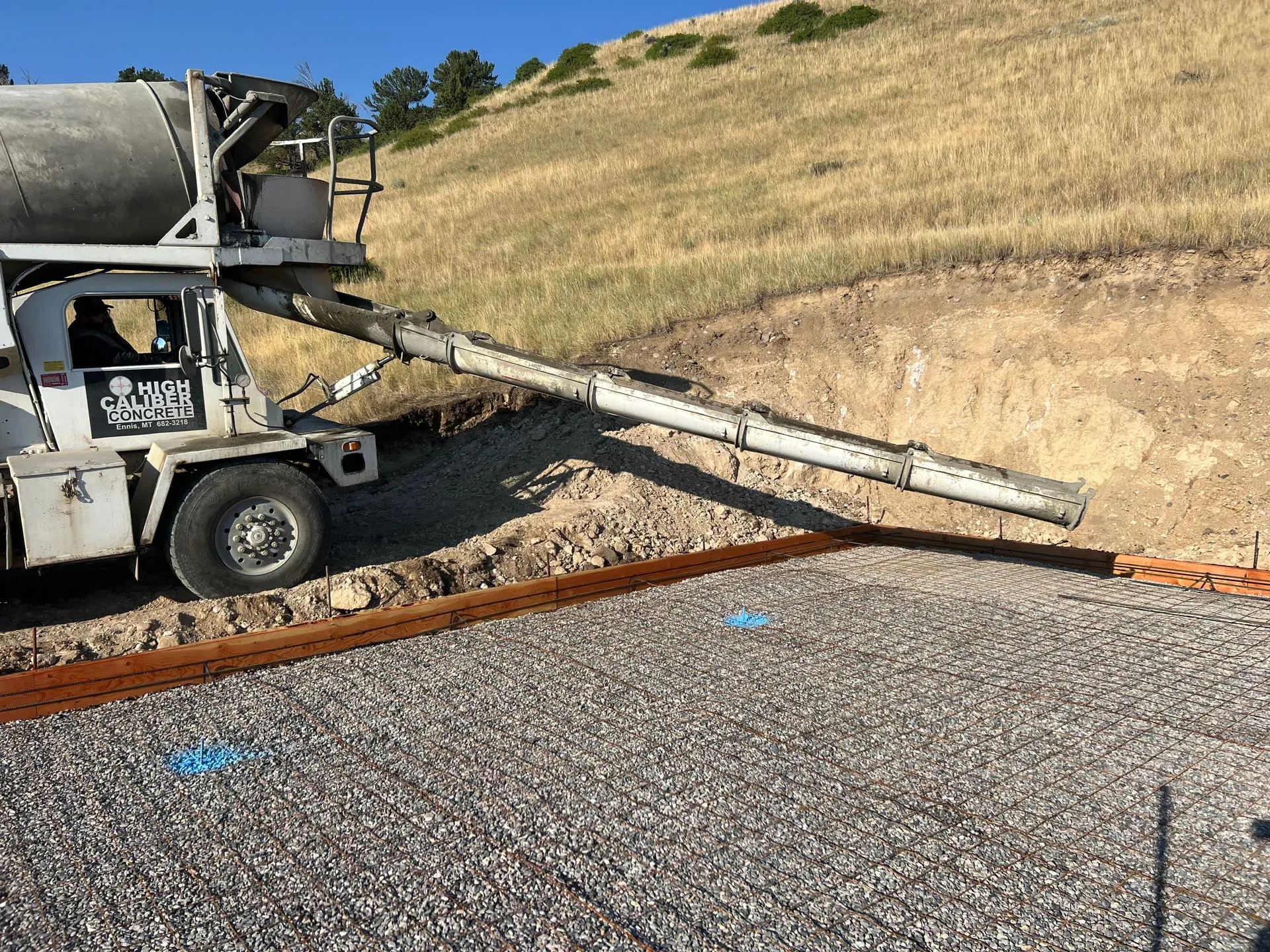 Flatwork from the gallery — the finish everyone sees, over the prep no one does.
What Montana demands of a slab
Concrete here lives a harder life than the same slab in a mild climate, and the difference is decided before the truck arrives:
Subgrade is the project. Concrete is only as good as what it sits on: organics stripped, structural fill compacted in lifts, uniform support throughout. A slab over a soft pocket cracks over exactly that pocket, every time. This is why our excavation crew and concrete work travel together.
Frost design. Freeze-thaw dictates footing depths for anything structural, drainage-conscious base under everything, and honest air-entrained mixes for exposed work. Exterior slabs that trap water under or beside them heave; slabs designed to shed and drain don’t.
Joints where cracks belong. Concrete cracks, the craft is deciding where. Proper control-joint layout means the inevitable happens along tidy lines instead of across the middle of the floor.
Curing patience. Cold-weather pours need protection and time; rushed early loading is the classic self-inflicted slab wound. Season and schedule are real inputs to quality, another argument for planning concrete into the summer end of a project calendar.
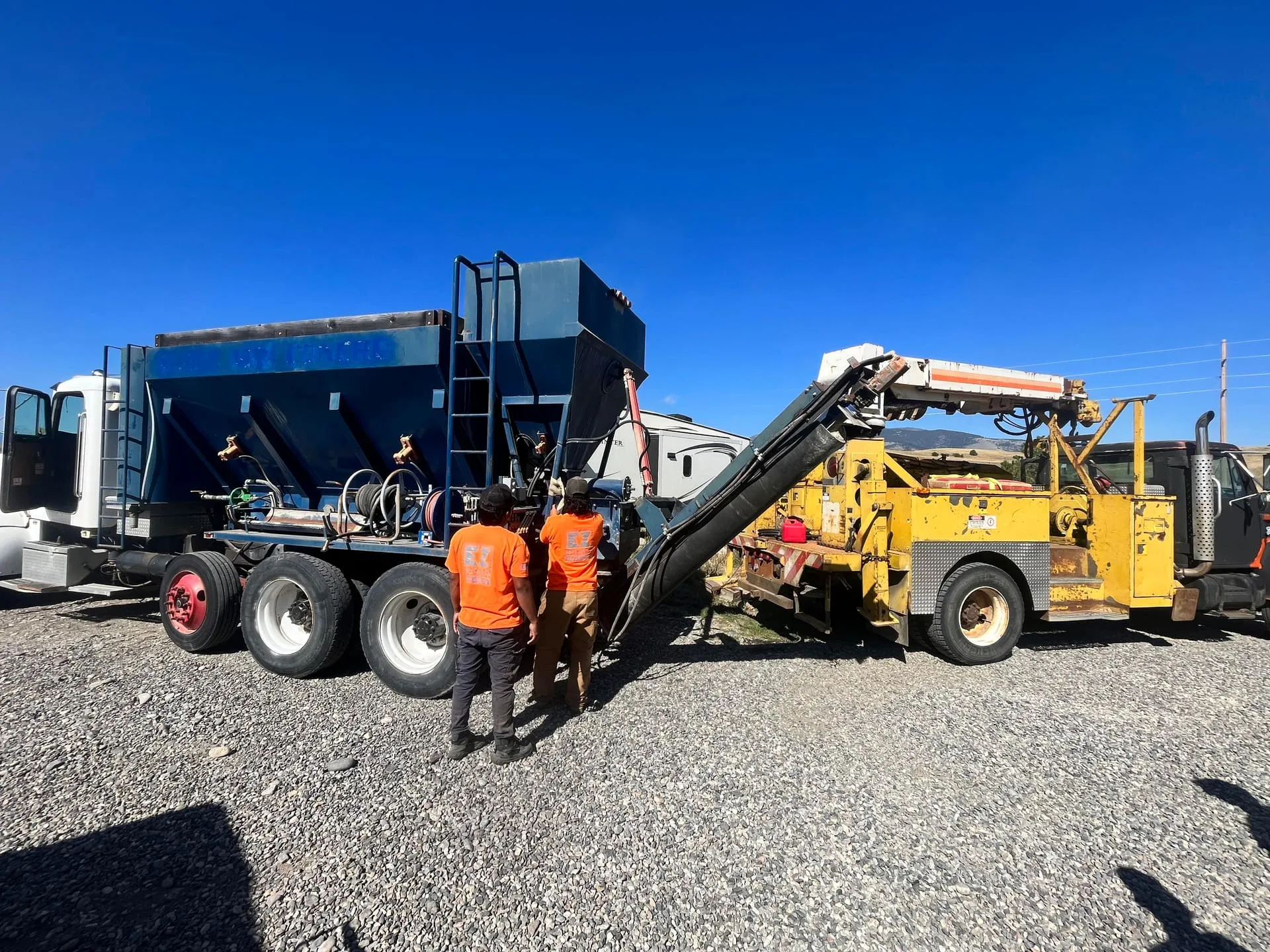 Joint layout and finish — where concrete craft shows.
Slab, gravel, or asphalt: the quick sort
- Concrete where things park, spill, get repaired, or must stay clean, high cost, near-zero maintenance, decades of service
- Gravel for roads, yards, and anywhere the surface must be cheap to renew — our road pages cover that world
- Asphalt for long driveways wanting a smooth, plow-friendly surface at scale — a different tradeoff curve than either
Most properties end with all three, each where it belongs.
Scope drivers for a concrete estimate
The variables that actually move flatwork numbers: square footage and thickness (equipment loading sets thickness), subgrade condition and prep depth, reinforcement spec, finish type (broom, smooth, grooved, stamped), site access for trucks and pumping needs, and season. Concrete finished around Paradise Valley barns, approaches, and pads (some shown in the gallery) spans that whole range.
Flatwork questions from real projects
Can a slab go into an existing barn? Frequently, yes — pole barns especially take retrofit slabs well. The complications are working around posts, door clearances after adding slab height, and machine access inside; all solvable, all better discussed on-site.
Broom finish or smooth? Outside: broom, almost always — smooth exterior concrete plus frost is a skating rink with liability attached. Inside shops: smooth or lightly textured for sweeping and creeper-rolling. Stock areas: grooved.
What about that first winter? New exterior concrete wants its first cold season treated gently — curing time honored before loading, and no deicing salts in year one. The pour schedule should leave that runway.
Rebar, mesh, or fiber? Loading and slab role decide — equipment slabs and approaches carry different steel than a garden path. It’s a spec conversation per pour, not a universal answer; what matters is that the answer is deliberate.
Planning questions
- What loads the slab — pickups, tractors, a loaded stock trailer?
- Drainage: where should water on and around the slab end up?
- Floor drains, in-slab conduit, or future utilities to rough in?
- Finish: broom-grip, shop-smooth, stock-grooved, or decorative?
- Timing against the building schedule — slab before, during, or after?
Line up a pour: Plan concrete or flatwork — we handle the earthwork, base, and finish as one scope. Details at concrete and flatwork services.