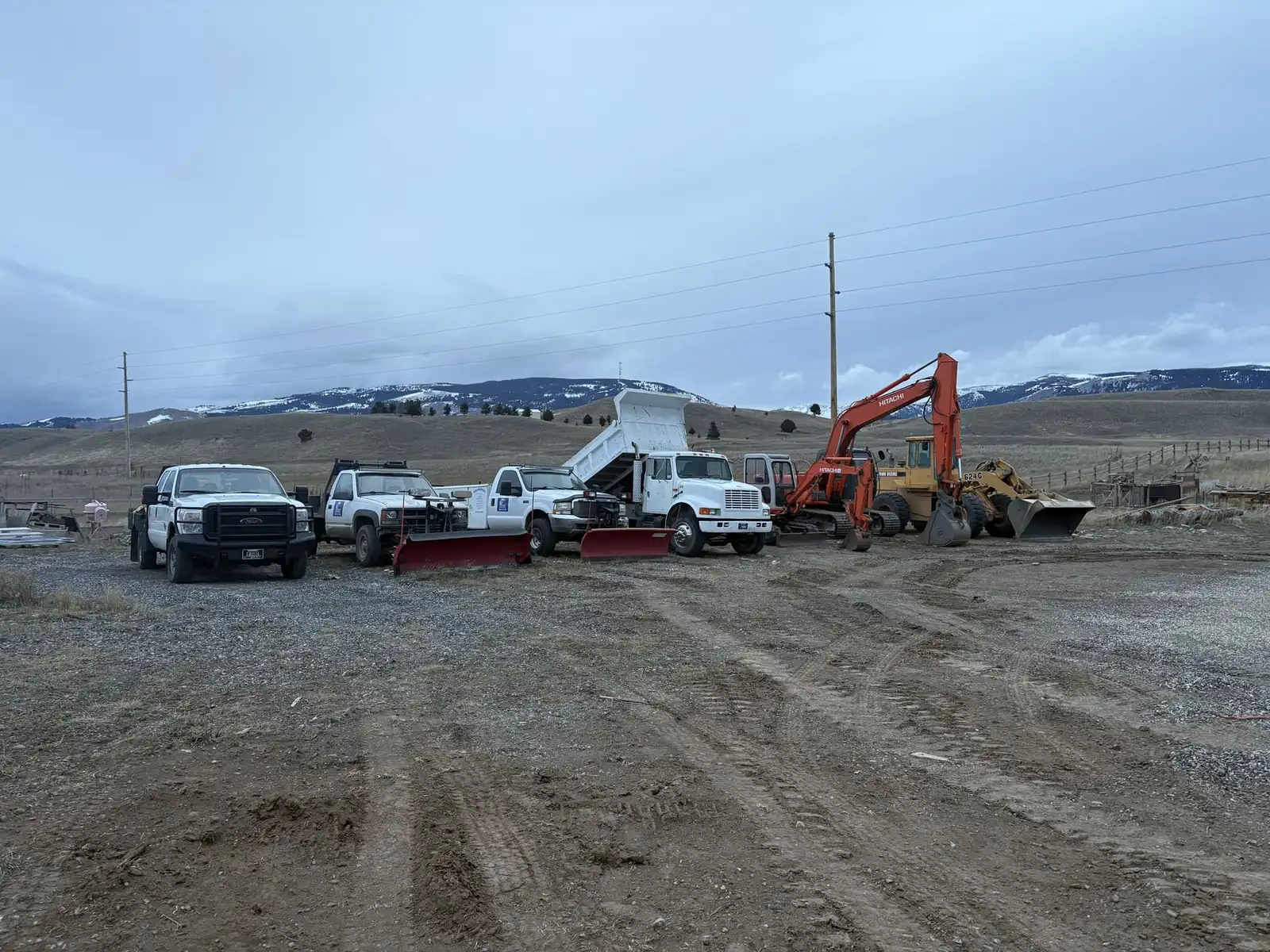
Ask a working rancher what fence covers most of their ground and the answer is usually the least glamorous one: woven-wire field fence on driven posts. It doesn’t show up on postcards. It shows up where animals need to stay put across long distances without a crew rebuilding rails every spring.
If you’re fencing acreage that has to work (cattle pasture, mixed stock, hay ground that borders neighbors) field fence deserves a serious look before anything fancier.
What field fence actually is
Field fence is woven wire: vertical stays and horizontal wires knotted into a mesh, stretched between posts and stapled or clipped tight. The knots are the engineering. A proper fixed-knot or hinge-joint mesh flexes when an animal leans in, then pulls back to shape instead of bagging out.
It’s sold in different heights, mesh spacings, and wire gauges — which is exactly why “field fence” done right starts with the question of which animals, how many, and what’s on the other side.
Matching the mesh to the animals
Cattle. The classic use. Cattle lean, scratch, and shove; a stretched mesh with solid corner bracing takes years of it. Where bulls or heavy pressure are involved, taller mesh and tighter post spacing earn their keep.
Horses. Horses and standard field fence are an uneasy pair — hooves can pass through larger openings, and that’s how injuries happen. For horse-dedicated ground, no-climb mesh with its 2x4-inch openings is the safer spec. Mixed cattle-and-horse pastures often run no-climb on the horse side or upgrade the whole line.
Sheep and goats. This is where woven wire shines and rail fences quietly fail. The right mesh spacing contains stock that walks through a jackleg like it isn’t there.
Dogs and small animals. Field fence around a homesite perimeter does double duty keeping ranch dogs home. One of our garden-enclosure projects in the gallery shows the mesh approach scaled down and tightened up for deer and pets.
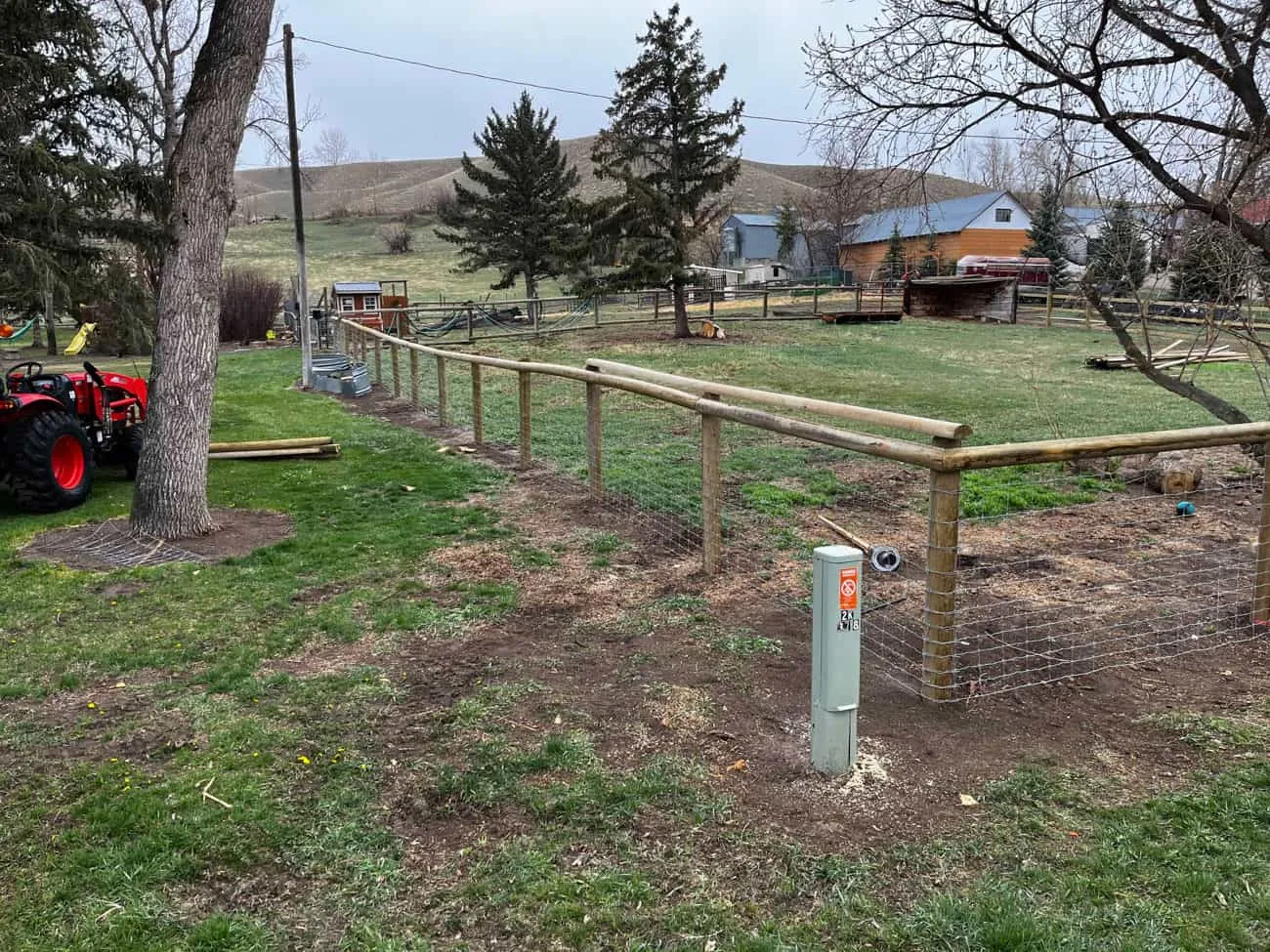 Woven-wire field fence from the company gallery — the working standard for mixed stock.
The post question
Mesh is only as good as what it’s stretched between.
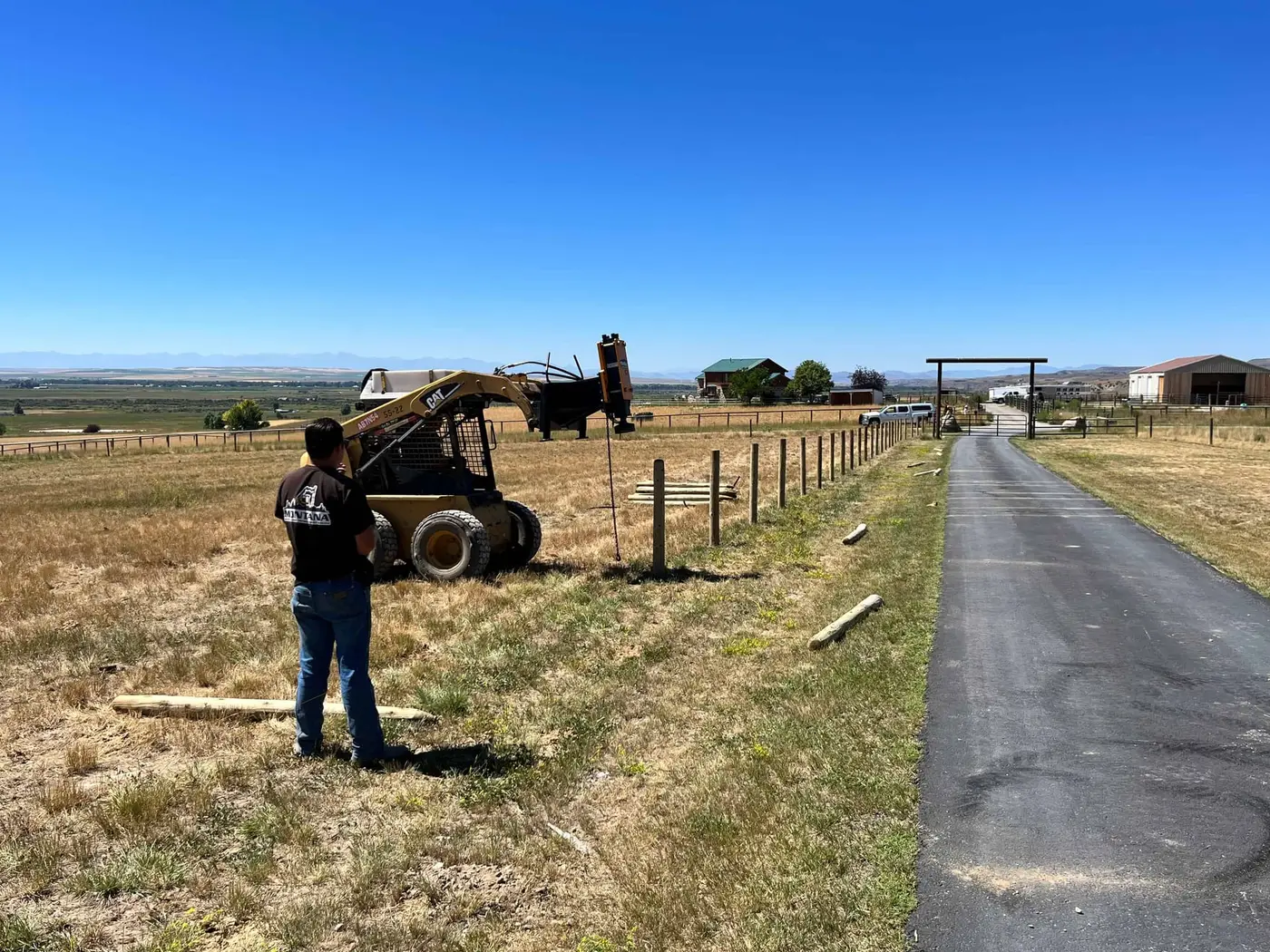
- Driven posts beat augered-and-tamped posts for holding power in most Montana soils — the soil stays compacted around the post instead of being disturbed and refilled. Our crew pounds posts to line and depth with dedicated equipment; the Belgrade pasture fence in our gallery shows the process mid-build.
- Corner and brace assemblies carry the entire tension of the fence. When a field fence fails early, the diagnosis is usually corners, not wire.
- Wood vs. steel T-posts: wood posts at intervals with T-posts between is a common, budget-sensible pattern; all-wood lines hold harder and look better along frontage.
Montana factors worth planning for
Wildlife pressure. Elk and deer treat fences as suggestions. Woven wire catches more wildlife than rail fencing does — a real consideration near migration paths. Top-wire height, a smooth (not barbed) top wire, and visibility all matter; our wildlife-friendly fencing guide goes deeper.
Snow load and drifting. Deep drifts sit on mesh and stretch it. On known drift lines, taller posts and careful tension make spring look a lot better.
Frost and wet ground. Post depth below frost line and good drainage at the base decide whether the line is still straight in ten years.
Terrain. Woven wire wants reasonably continuous ground contact. Across ravines and broken rock, a jackleg fence or a hybrid section often solves what stretched wire can’t.
Field fence vs. the alternatives, quickly
- Against jackleg: field fence is the workhorse for full containment of mixed stock on diggable ground; jackleg wins on rock, frost heave, and looks.
- Against continuous panel: panels dominate in corrals and high-pressure pens; field fence covers open acres for less.
- Against barbed wire: barbed wire still has its place on big cattle country, but mixed-use acreage with horses, dogs, kids, and wildlife generally argues for mesh.
The full side-by-side lives on our fencing comparison hub.
Field fence questions worth settling early
Barbed top wire or smooth? A strand above the mesh raises effective height and discourages leaning. Barbed makes sense on pure cattle ground; smooth is the better call where horses share the line or wildlife crossings are constant — a snagged deer damages fence and animal alike.
Wood posts or steel T-posts? Function says: wood at corners, braces, and gates (where the forces live), with either between. All-wood lines hold harder and look better along roads; T-post intervals stretch budgets on long interior runs. Most working layouts mix them deliberately.
What actually wears out first? Corners and stretches with standing water. The mesh itself, at proper gauge and galvanization, routinely outlasts its weakest posts — which is why base-level post decisions echo for decades.
Can it be repaired in sections? Yes — that’s one of woven wire’s quiet virtues. A damaged span splices or replaces between posts without rebuilding the run, and a fence built with quality corners accepts re-tensioning for years.
Before you ask for numbers
Have a rough sense of these six things and your estimate conversation gets fast:
- Approximate footage (a property map with the line sketched is plenty)
- Animals now — and animals planned
- Known rock, wet spots, or steep sections
- Gate and equipment crossings
- Old fence that needs removal
- Whether any stretch borders road frontage where looks matter
Ready to talk footage: Get a field fence estimate (free on-site measurements) or read up on what drives fence project cost first.