Every rural property older than a generation carries inventory nobody ordered: the barn with the swayback ridge, the leaning granary, the homestead-era shed that’s one wet snow from deciding things for itself, the fence-wire graveyard behind the windbreak. Sentiment keeps them standing long past sense, and then a project, a sale, an insurance letter, or a near-miss finally forces the question.
Demolition done right is less about knocking things down and more about what happens before and after. Here’s the anatomy of a clean clearing project.
First decision: what is this building, really?
Old structures sort into three honest categories:
Worth saving. Sound frame, fixable roof, real utility or genuine historic character. Stabilizing a good building is often cheaper than replacing its function, worth a hard look before any other decision.
Worth harvesting. Structure’s done, but the materials aren’t. Weathered barn wood, hand-hewn beams, corrugated tin with fifty years of patina, genuinely valuable, and demolition can be sequenced as deconstruction first, machine second: strip the wanted material carefully, then take the shell down fast. As the owner, what’s salvaged is your call to keep, use, or sell; reclaimed timber has found its way into more than one of our finish projects.
Worth clearing. Rot in the frame, collapse risk, or simply in the way of what’s next. The right tool is the excavator and the honest goal is a clean site.
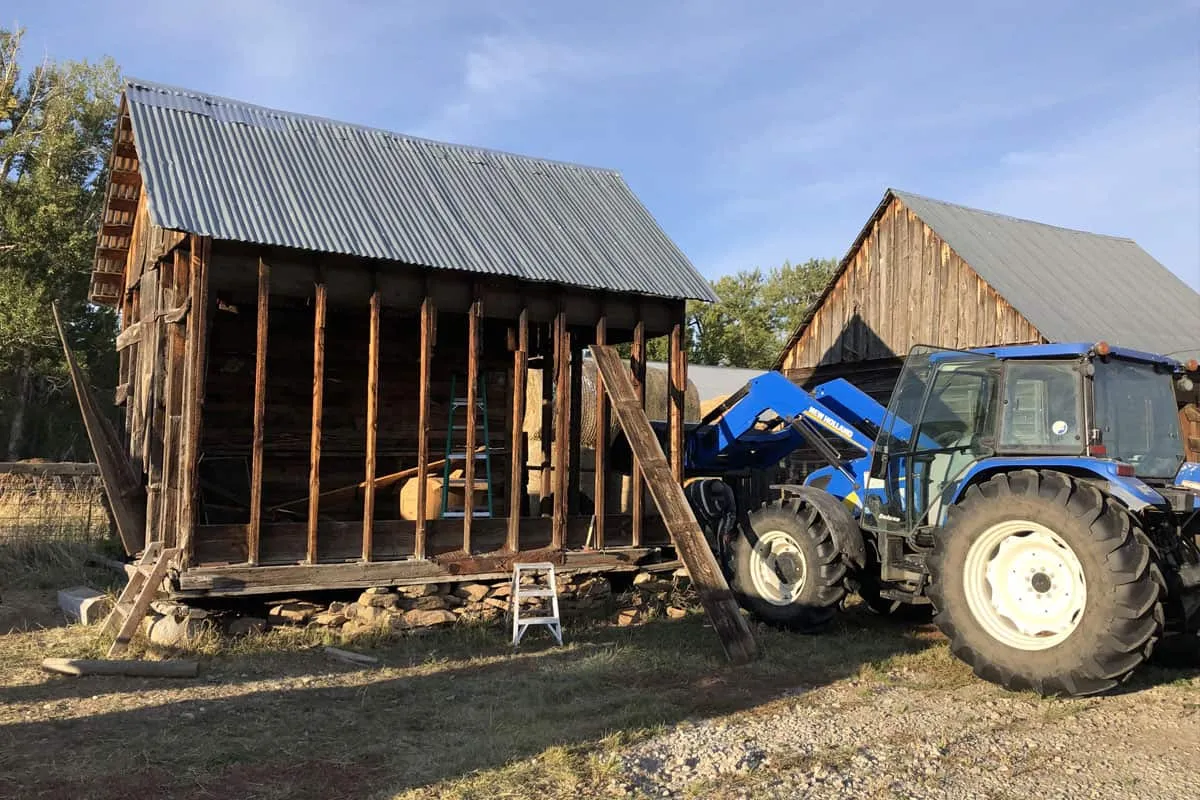 Barn demolition from the gallery — the harvest-or-clear decision, resolved.
The safety layer nobody should skip
Rural demolition has hazards that don’t announce themselves:
- Old utilities. That abandoned shed may still have a live wire someone ran in 1985, a buried fuel line, or a well pit nobody mapped. Locates and a careful walkthrough come before any machine — same discipline as excavation planning, because demolition is excavation with furniture.
- Hazardous materials. Buildings of certain vintages can carry asbestos siding or insulation, lead paint, and chemical leftovers in corners. Testing and proper handling where indicated isn’t bureaucracy — it’s what keeps a demolition from becoming a liability. Requirements vary by material and situation; a professional assessment sorts it quickly.
- Structural unpredictability. Half-collapsed buildings fail in creative directions. This is machine work with standoff distance, not weekend crowbar work — the classic barn “lean” stores energy like a spring.
Sequencing: demolition serves what’s next
The cheapest demolition is the one coordinated with the property’s next chapter:
- Building next? One mobilization can clear the old structure and cut the new pad — demolition and site excavation as a single earthwork phase
- Old concrete (slabs, footings, foundations) either leaves the site or gets processed; what’s planned for the footprint decides which. New concrete work doesn’t want surprises under it.
- Fence lines coming out too? Old-fence tear-out rides along efficiently with structure work — our fence replacement guide covers that side
- Filling the hole: old cellars and foundations need engineered backfill and compaction if anything will ever drive over or build on them; a lazily-filled cellar telegraphs through the ground surface for decades
The finish standard matters: a site should end graded, drained, and ready — not flattened rubble with grass seed thrown at it. Our barn and structure demolition work around Paradise Valley, some of it visible in the gallery, ends at that standard because the next project starts there.
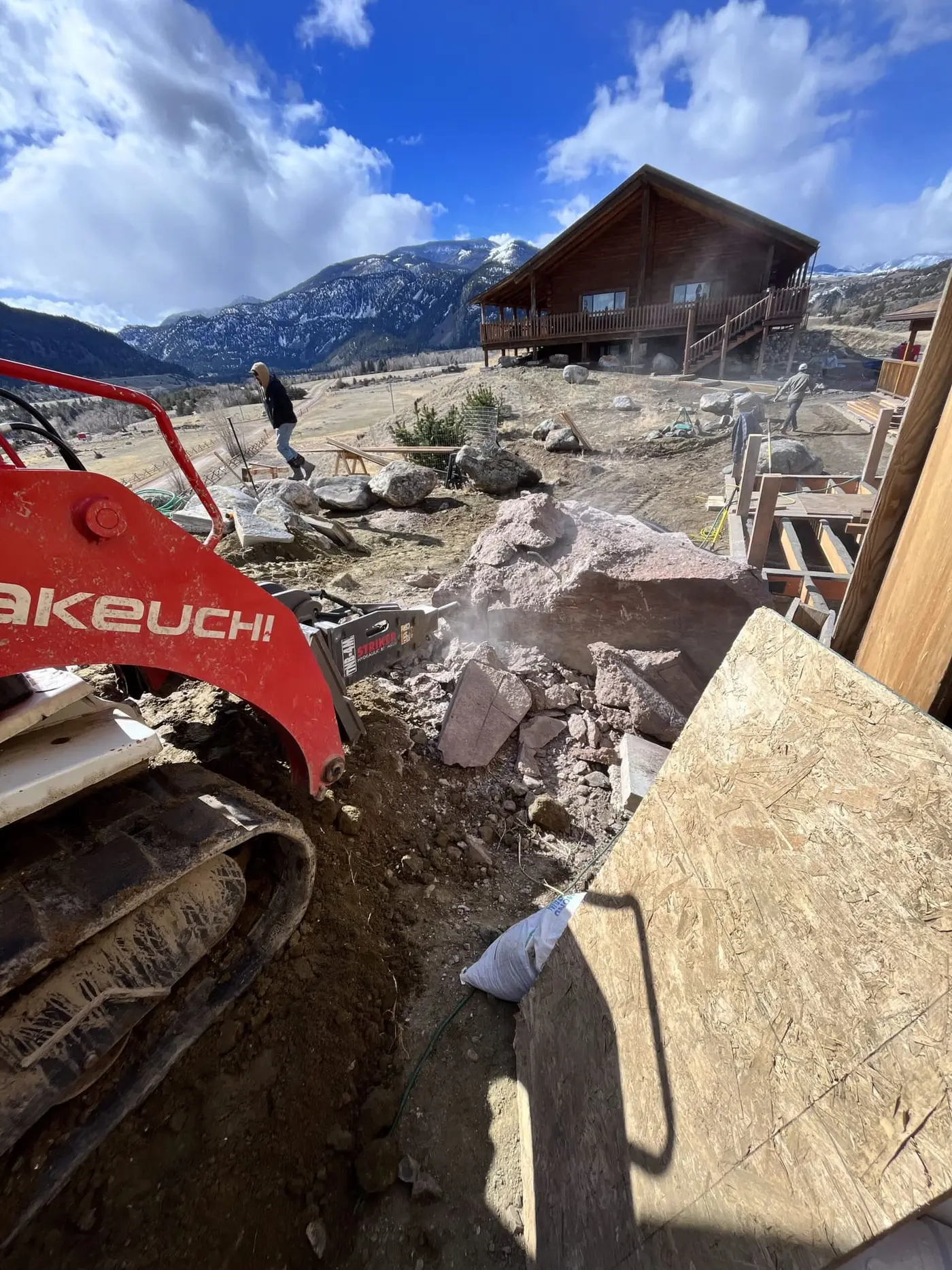
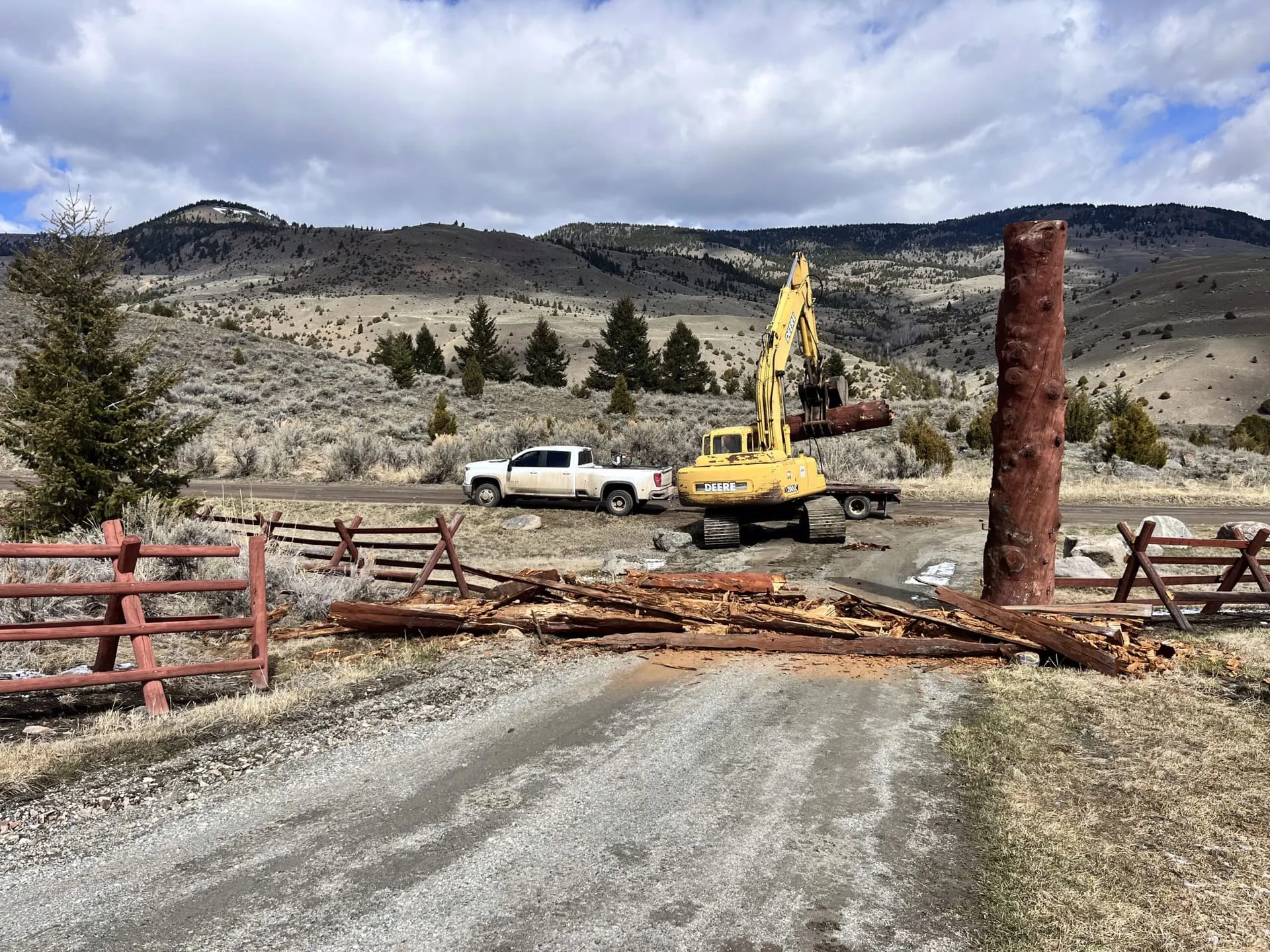 Machine days — structures down and sorted into their outbound streams.
What the debris weighs (figuratively)
Scope on clearing projects is driven by things owners rarely guess:
- Tonnage and haul distance: an old barn is a surprising number of dump-truck loads
- Material separation: metal recycles, timber salvages or burns (where permitted), mixed debris costs the most to dispose
- Concrete quantity: footings and slabs are heavy and dense; they dominate hauling math
- Access: the same equipment-access questions as any earthwork: can trucks reach it, turn, and load?
- Salvage time: careful deconstruction trades hours for material value; worth it for good wood, not for rot
What a clean project arc looks like
For calibration, the typical shape of a well-run clearing job from first call to finished site:
- The walk: structures assessed, save/harvest/clear decisions made together, utilities and vintage-material questions flagged
- Paper before machines: locates completed, any material testing resolved, salvage list agreed, disposal plan set (recycle loads, haul loads, burn where permitted)
- Salvage days: wanted materials stripped carefully while everything still stands and ladders still make sense
- Machine days: the fast part — structures down, materials sorted into their outbound streams as the pile shrinks
- The part that separates contractors: footprint excavation (old footings, cellar fill), engineered backfill and compaction, finish grading for drainage
- Walk-off: site reviewed together against what the next project needs from it
The whole arc often runs shorter than owners expect — it’s the sequenced version that goes fast, because nothing waits on a surprise.
A property-clearing walkthrough
- Which structures stay, which get harvested, which go?
- Any known utilities (live or abandoned) near the footprints?
- Vintage check: any materials that warrant testing before disturbance?
- What happens on each footprint afterward?
- Salvage wishes: what should survive the project?
- Debris: haul-off, on-site burial where appropriate, burn pile, recycle split?
Next step: Plan a demolition or cleanup project — we’ll walk the property, sort the save/harvest/clear list with you, and scope the site work that follows. See demolition services for the full picture.