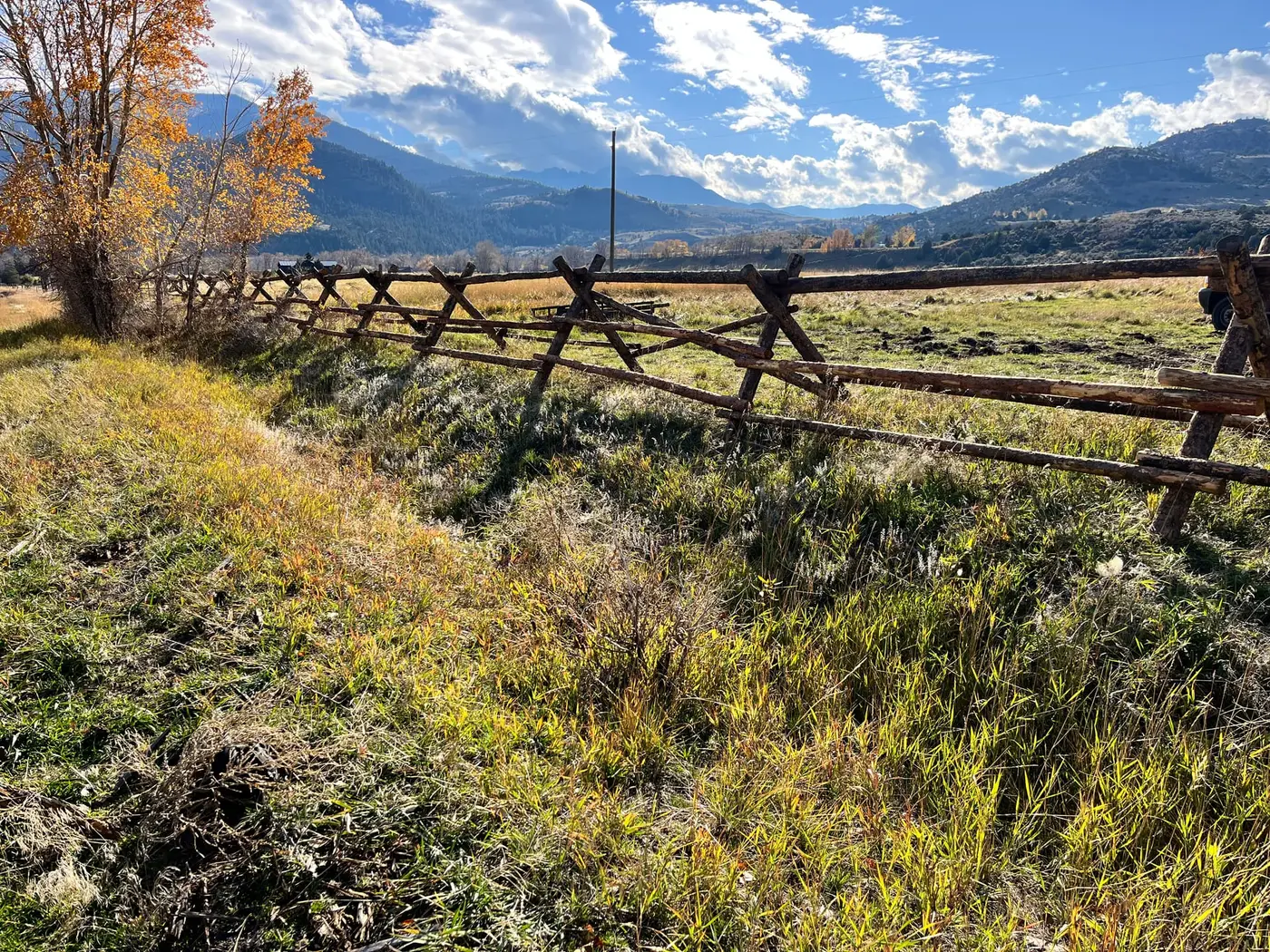
Jackleg fence (buck-and-rail, if you learned it elsewhere) is the fence Montana picked for itself. Drive from Bozeman through Paradise Valley and it lines the road for miles. The reason isn’t nostalgia. It’s that jackleg solves problems this landscape keeps handing out.
The short version: jackleg needs no post holes. The fence rests on crossed-leg “bucks” that sit on top of the ground, with rails lapped between them. That one structural fact drives everywhere it wins, and the handful of places it doesn’t.
Where jackleg is the right answer
Rock. Shallow limestone ledge, glacial cobble, river rock, ground that bends augers and stalls post pounders is ground where jackleg simply gets built. If we can walk the line, we can fence it.
Frost-heave country. Montana’s freeze-thaw cycles work set posts out of the ground a little more every year. A buck sitting on the surface has nothing for frost to grab. Where neighboring set-post fences lean after a decade, jackleg lines stay put.
Steep and broken ground. Bucks adjust to grade individually, so the fence follows terrain that would leave a stretched-wire fence flapping over dips and hollows.
River bottoms and wet meadows. High water tables rot set posts and make augering miserable. Surface-built fence takes the ground as it finds it.
Winter timelines. Frozen soil stops conventional fence construction cold. Jackleg goes up nearly year-round, which makes winter one of the smarter times to schedule it, crews are available and the build doesn’t care that the ground is like concrete.
Anywhere the look matters. There’s no getting around it: a jackleg line running toward the mountains reads as Montana in a way no other fence quite manages. For entrances and road frontage, that’s worth something real.
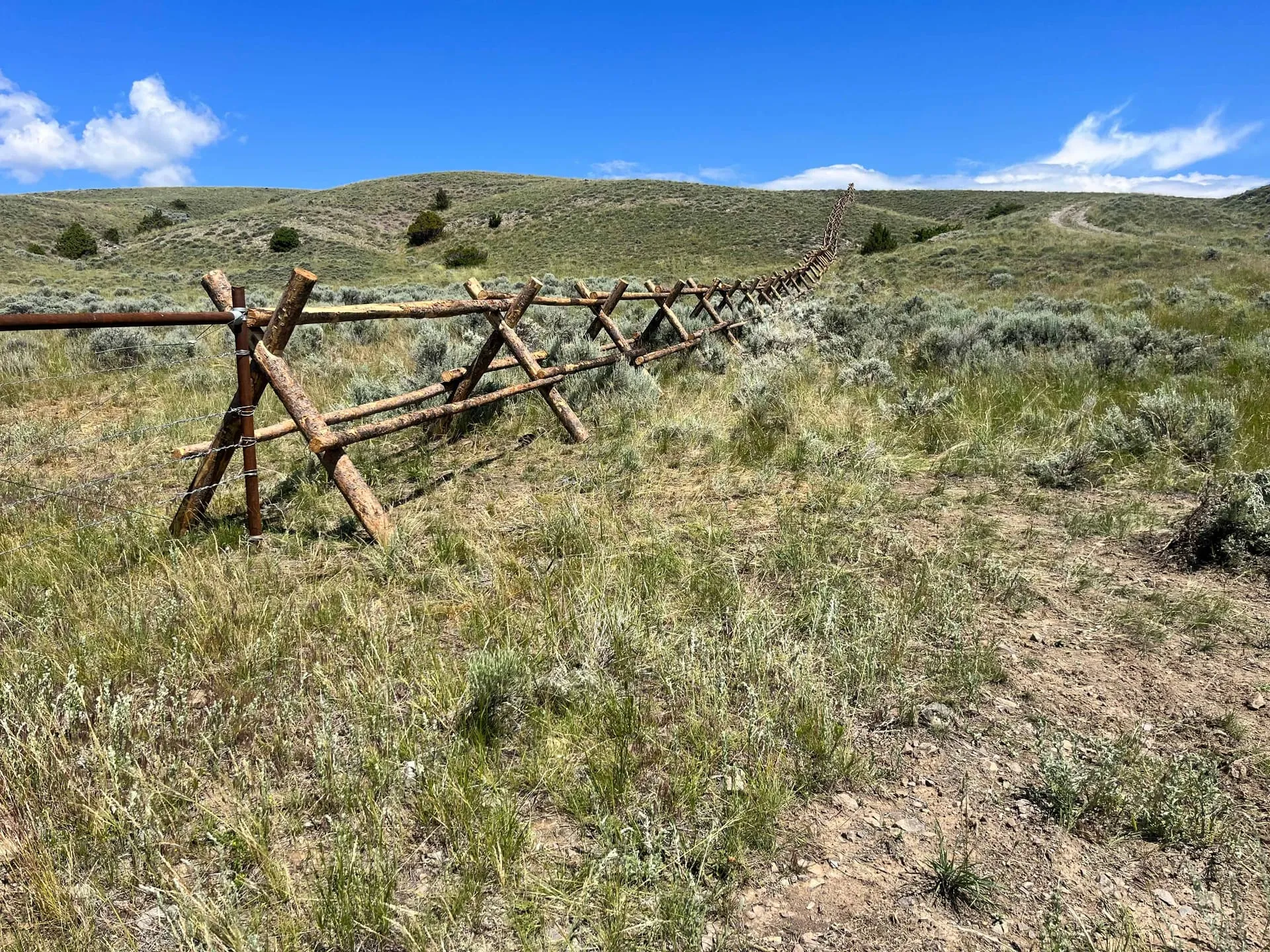 Bark-on jackleg from the company gallery — the bucks ride the terrain instead of fighting it.
What to think through before building
Rail count and wildlife. A standard jackleg holds cattle and horses well. If deer pressure is part of your picture, rail spacing and top height are worth discussing — our note on wildlife-friendly fencing covers the tradeoffs. Wire can be added between rails for dogs, sheep, or garden protection.
Bark-on or treated. We build both. Bark-on jackleg keeps the natural bark for the most rustic look, with the bark acting as a weather layer. Treated jackleg uses pressure-treated wood for the longest service life on wet ground and hard-working lines. Same construction; different priorities.
Footprint. Bucks are wider than a single post line. Along tight lanes or against structures, that extra width occasionally matters — usually it doesn’t.
Snow country behavior. Heavy drifts push on any fence. Well-built bucks with properly lapped rails shrug off snow load that snaps lighter fences; poorly built ones rack and lean. Construction quality shows up in March.
Material source. Much of the timber in our jackleg comes off our own sawmill, cut here in Montana. That matters for rail consistency — and for replacing a rail years from now without hunting for odd dimensions.
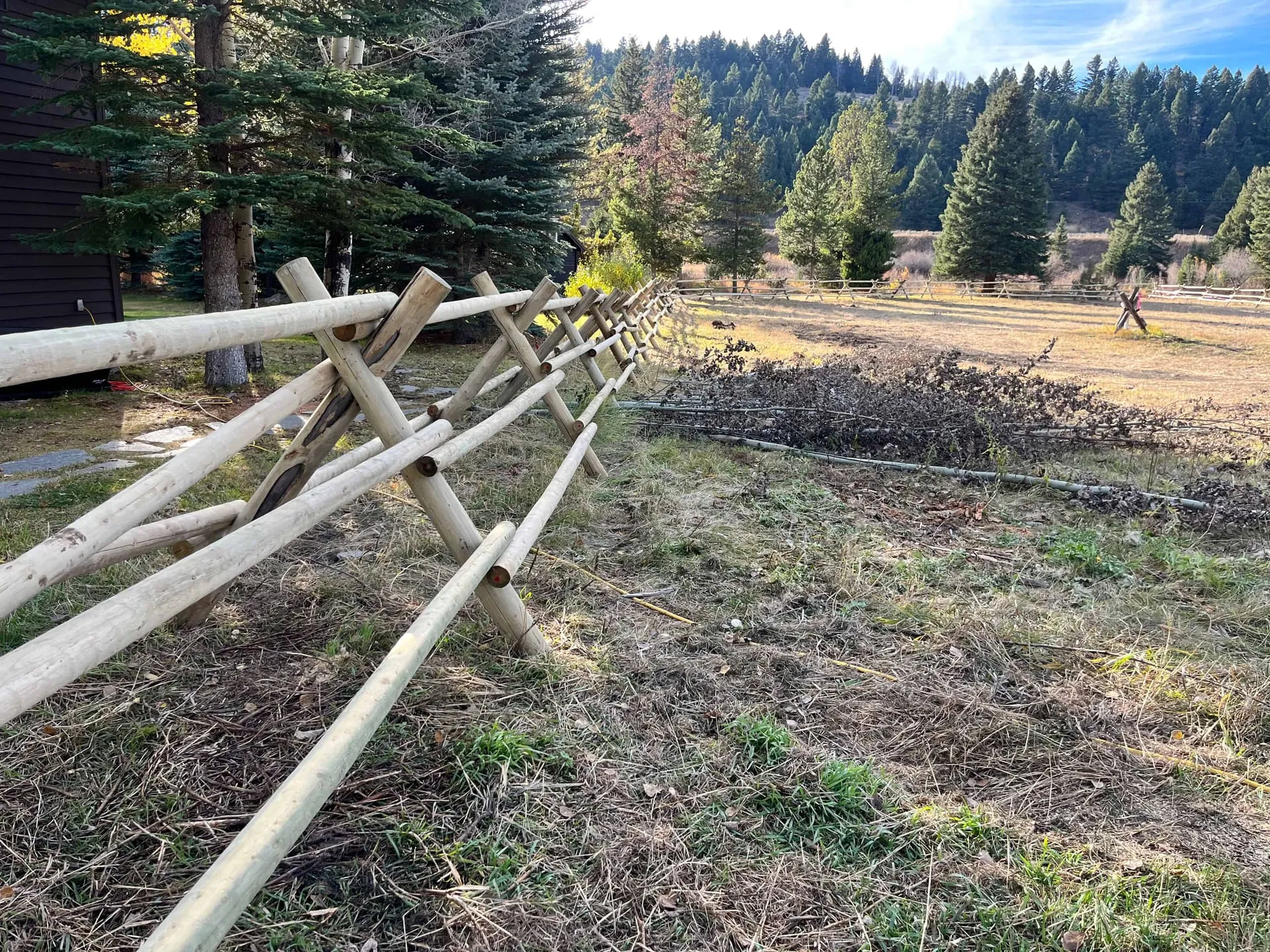 Treated jackleg: same construction, maximum service life on wet ground.
Where jackleg isn’t the best tool
Honest limits, because every fence has them:
- Tight containment for small animals: sheep, goats, and determined dogs need mesh; no-climb fence or wire additions handle that
- Maximum-security horse paddocks: some horse owners prefer full mesh for foals and fence-walkers
- High-pressure working corrals: for pens where cattle hit the fence, welded continuous panel or pipe fence takes the abuse better
- Long perimeter runs on flat, soft ground where budget rules: plain field fence covers open miles for less
One of our recent builds — the jackleg line at Waterfowl Way, shown in the project gallery — is a good picture of the standard case: clean bucks, straight rails, ground that would have fought a set-post fence.
Jackleg questions we hear a lot
How long do the rails last? It depends on species, treatment, and ground moisture more than on the fence style itself. Treated material stretches the timeline considerably; bark-on trades some longevity for character. Either way, individual rail replacement is simple — the fence ages piece by piece rather than all at once, which is part of why century-old jackleg lines still exist.
Can wire be added for smaller animals? Yes, and it’s common — smooth or woven wire runs between or behind the rails to hold dogs, sheep, or garden boundaries while the rails carry the structure and the look.
Does snow load damage it? Heavy drifts push on any fence. Properly built bucks with well-lapped rails handle normal Montana snow years; what fails under drifts is usually construction shortcuts (undersized legs, skipped fasteners) rather than the design itself.
Is jackleg more expensive than wire fencing? Usually yes per foot against plain field fence, since it’s a timber-and-labor build. Against other wood fences the comparison narrows, and on ground where post setting is impractical, jackleg is often the only realistic bid — which makes the comparison moot. Footage, terrain, and rail count drive the real number; an on-site measurement settles it.
Questions to have ready for an estimate
- Roughly how many feet, and where does the line run?
- What’s the ground like — rock, wet spots, grade?
- What’s it containing or keeping out?
- Bark-on look or treated longevity?
- How many gates, and where does equipment cross?
- Is there old fence to remove first?
Next step: Start a jackleg fence estimate (measurements are free) or compare styles first on the fencing hub.