Every fence in Southwest Montana is a wildlife fence, whether it was planned that way or not. Deer, elk, and antelope were using these travel routes long before the property lines went in, and they’ll keep using them. The question is whether your fence works with that traffic or gets wrecked by it.
There are two honest goals here, and they pull in opposite directions:
- Let wildlife pass safely over or under fence that’s really there for livestock or boundaries
- Keep wildlife out entirely: of gardens, orchards, haystacks, and young trees
Both are legitimate. Mixing them up is how properties end up with the wrong fence.
Fencing that lets wildlife pass
If the fence’s job is livestock or boundary marking, wildlife-tolerant choices save you repair work and spare the animals.
Height matters most at the top. Deer clear moderate fences cleanly when they can judge them; elk tend to go through what they can’t comfortably clear. Fences in the standard livestock height range with a visible, smooth top element take dramatically less damage than tall, hard-to-judge lines.
Smooth top wire instead of barbed. A deer that clips a barbed top wire can tangle; a smooth wire lets a marginal jump end safely — for the animal and the fence.
Bottom clearance. Antelope famously go under fences, not over. A bottom wire with reasonable ground clearance lets them pass without pushing the fence out of shape.
Visibility. Most wildlife damage is a collision problem. Rail fences like jackleg and split rail are naturally visible and tend to coexist with wildlife well — one reason they’ve survived a century of Montana use. On wire fences, a top rail or high-visibility top wire does the same work.
Think about crossing points. Game trails are stubborn. Where a known trail crosses your line, fighting it means endless repairs; accommodating it (with a rail section, lower profile, or intentional crossing) means the rest of the fence stays intact.
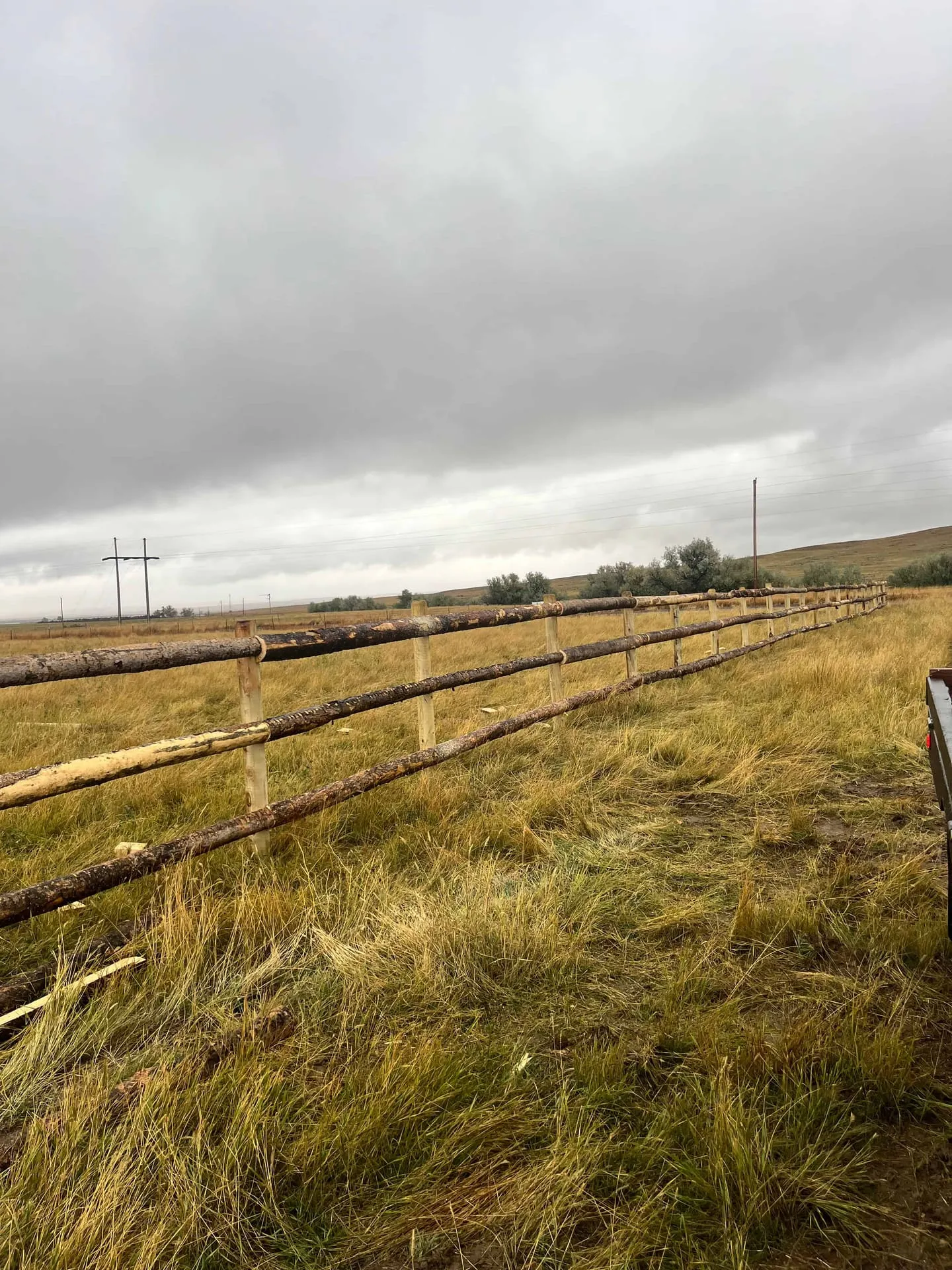 Rail fences read clearly to wildlife — visible lines that animals judge and clear cleanly.
Fencing that keeps wildlife out
Exclusion is a different engineering problem: the fence must defeat a motivated animal that can jump, push, and return nightly.
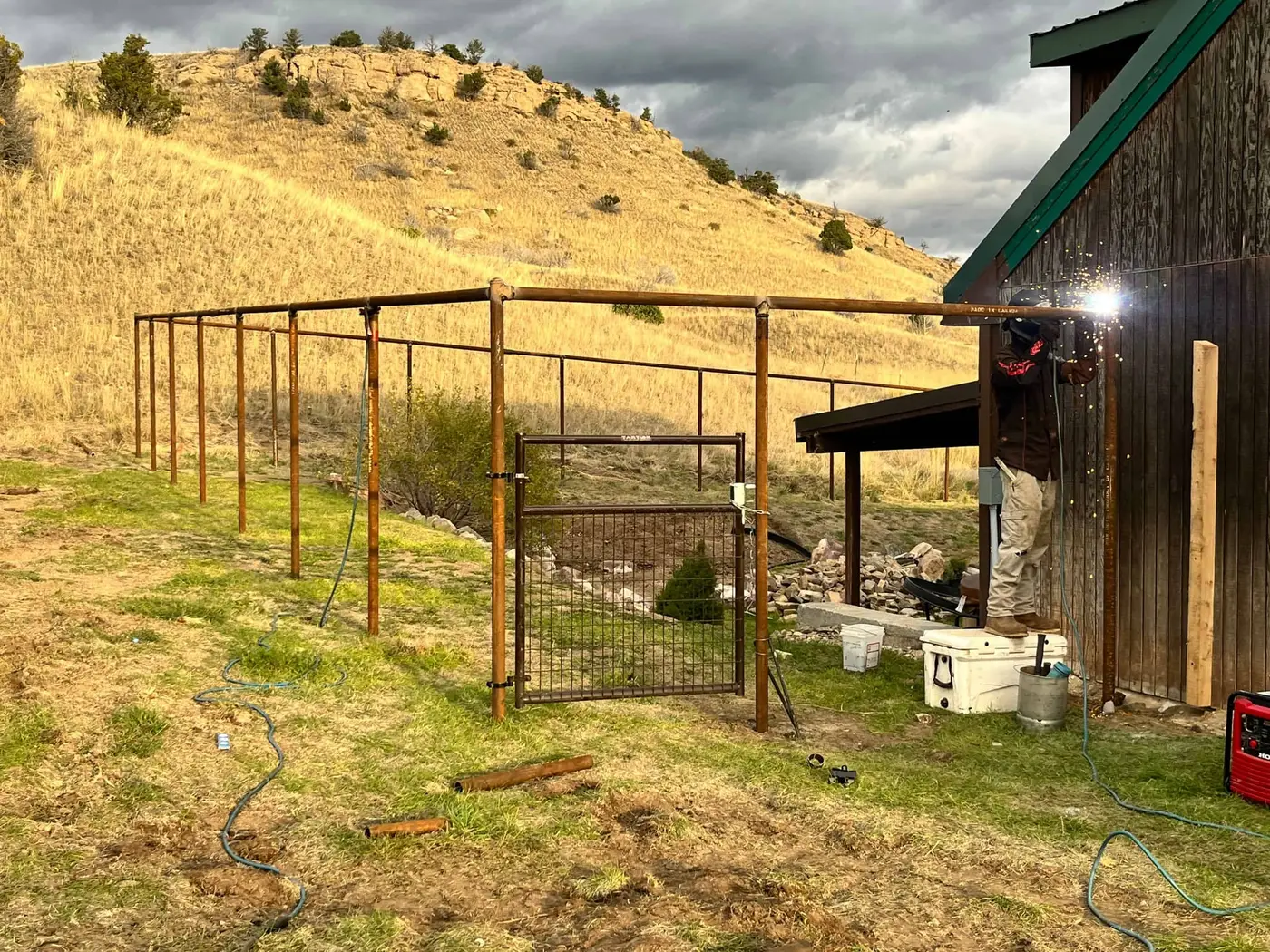
Height is non-negotiable. Garden and orchard deer fencing lives in the six-foot-plus range — half measures train deer rather than deter them. A six-foot welded deer fence protecting a garden is one of the projects visible in our gallery.
Mesh, not strands. Deer push through wire strands; woven or welded mesh closes the option. Tighter mesh at the bottom also stops the rabbits and ground traffic that follow.
Gates are the weak point. An exclusion fence with a gate left open one night a week is decoration. Self-closing hardware and honest daily habits matter as much as the fence spec.
Enclosures work best small. Fencing the whole property against elk is a heavy proposition; fencing the two acres that actually need protection (garden, orchard, stackyard) is efficient and effective. A recent enclosure project of ours paired tall mesh with framed raised beds so the garden finally kept its produce; the no-climb service page covers the material family involved.
The mixed reality of most properties
A typical Gallatin or Park County property ends up layered:
- Perimeter: wildlife-tolerant livestock fence — visible, smooth-topped, passable
- Horse areas: no-climb mesh for animal safety
- Garden/orchard: tall exclusion mesh on a small footprint
- Entrance: rail fencing for looks, which happens to be wildlife-friendly by nature
That layering usually costs less than over-building the whole perimeter and works better than under-building the garden.
Auditing the fence you already have
Most properties don’t need a new wildlife strategy — they need to find out what their existing fence is doing to the animal traffic. A one-hour walk tells you:
- Hair on the top wire marks regular crossing points — and whether crossings are clean (tufts) or violent (broken strands, leaning posts)
- Sagging or snapped top wires between intact lower wires is the signature of jumping traffic misjudging a hard-to-see line
- Pushed-under bottom wires and dug hollows mark antelope and smaller traffic going low
- Bone-and-tangle evidence (grim but informative) means a section is actively catching animals and deserves priority
- Game trails hitting the fence at an angle and running along it show animals searching for a crossing that doesn’t exist yet
The cheap fixes rank themselves from that walk: swap barbed top strands for smooth on the crossing zones, raise visibility with a top rail or marker on the misjudged sections, and give the persistent trail a proper crossing rather than an eternal argument.
And the single highest-value move on many older properties costs no new fence at all: pulling the derelict wire — the abandoned lines sagging through the willows since the seventies. Nothing on the property catches more wildlife per dollar than dead fence, and removal can ride along with any replacement project.
Questions worth answering before you build
- Where do animals already cross? (Winter tracks tell the truth)
- What are you protecting, and can it be enclosed separately?
- Any barbed top wires on existing fence that horses or wildlife hit?
- Are there stretches of old, half-fallen wire that should come out entirely? Removing derelict fence is one of the kindest things a landowner can do for wildlife — and we handle tear-out and hauling as part of fence replacement.
Next step: if a fence line needs to work around wildlife (or in spite of it) start a fence estimate and we’ll walk the property with the animal traffic in mind. The fencing hub compares every style side by side.