Two wood fences dominate Montana’s back roads, and people mix up their names constantly. Both are rail fences. Both look like they belong here. But structurally they’re opposites, and that difference decides which one belongs on your ground.
The one-sentence answer: jackleg sits on the ground on crossed-leg bucks and wins on rock, slopes, and frozen ground; split rail sets posts in the ground and wins on clean lines, tighter spacing, and a slightly trimmer footprint. If your ground digs easily and you want a classic post line, split rail. If digging is a fight (or you want to build in winter) jackleg.
Here’s the longer version.
How each one is built
Jackleg (buck-and-rail) rests on A-frame bucks (two legs crossed and joined) set at intervals along the line, with rails lapped between them. Nothing penetrates the soil.
Split rail runs vertical posts set into the ground, with split-faced rails spanning post to post. It’s the fence most people picture when they hear “rail fence”: upright posts, evenly spaced, rails stacked two to four high.
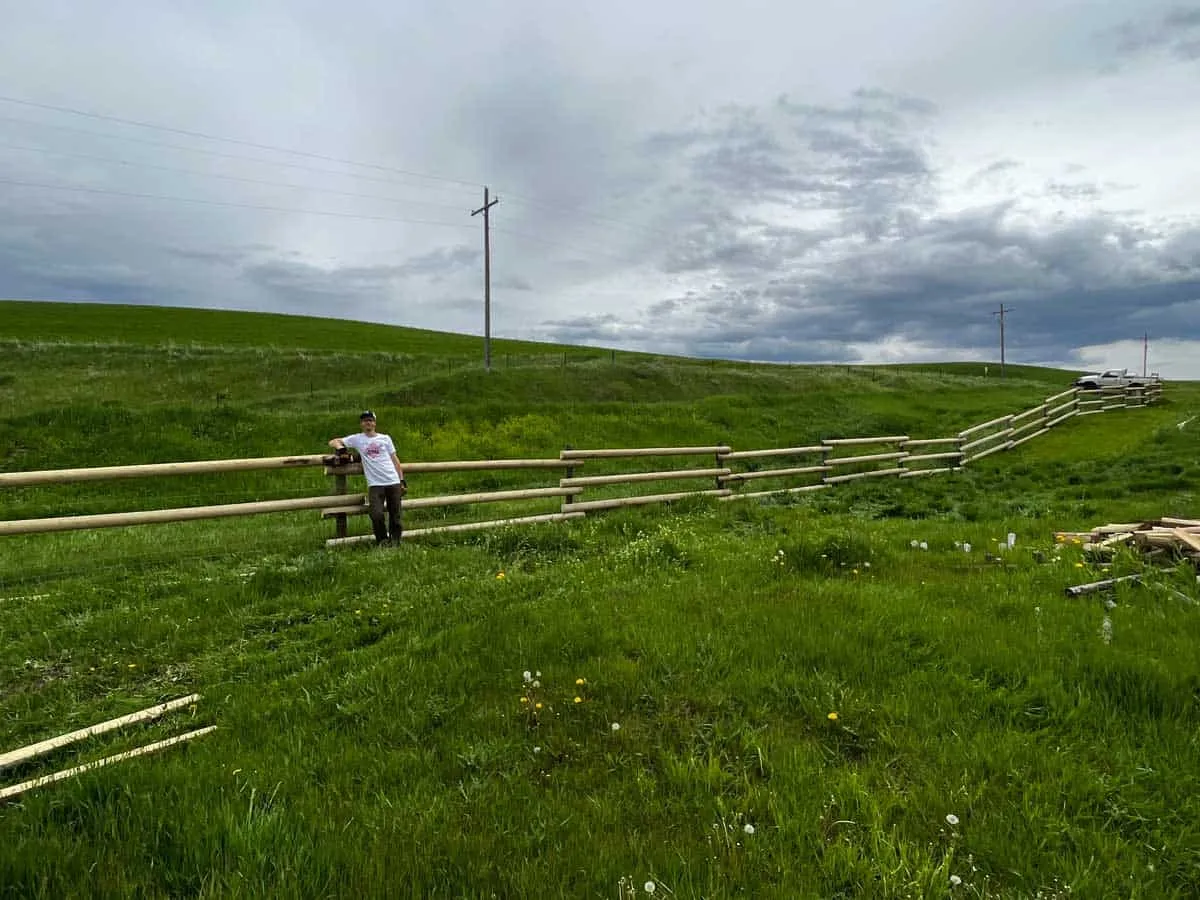 Split rail from the company gallery — set posts, stacked rails, clean lines on diggable ground.
Terrain: the deciding factor for most properties
This is usually where the choice makes itself.
- Rocky ground: augering or pounding posts through cobble and ledge ranges from slow to impossible. Jackleg doesn’t care.
- Frost heave: set posts in wet, frost-prone soil work upward over the years. Bucks on the surface have nothing to heave.
- Steep grades and broken ground: bucks adjust individually to grade; split rail handles rolling ground well but wants reasonably consistent post depth.
- Good, diggable soil: on level, well-drained ground, split rail sets cleanly and holds for decades. There’s no advantage to bucks on easy dirt if you prefer the post-line look.
Containment and wildlife
Neither fence is a small-animal fence on its own — both are rail fences with open gaps.
- Cattle and horses: both contain them when built with the right rail count and height. Horse owners often add mesh or choose no-climb for paddocks; boundary lines are a different story than pens.
- Dogs, sheep, goats, gardens: either style takes wire infill between rails.
- Deer and elk: rail fences are relatively wildlife-tolerant compared to woven wire — animals see them clearly and jump clean. If you want to exclude wildlife, that’s a different fence conversation: see wildlife-friendly fencing.
Looks and feel
Subjective, but real:
- Jackleg reads rugged, historic, working-ranch. Bark-on jackleg doubles down on that character.
- Split rail reads tidy, classic, estate-and-acreage. A four-rail split rail line along a driveway is one of the cleanest looks in rural Montana.
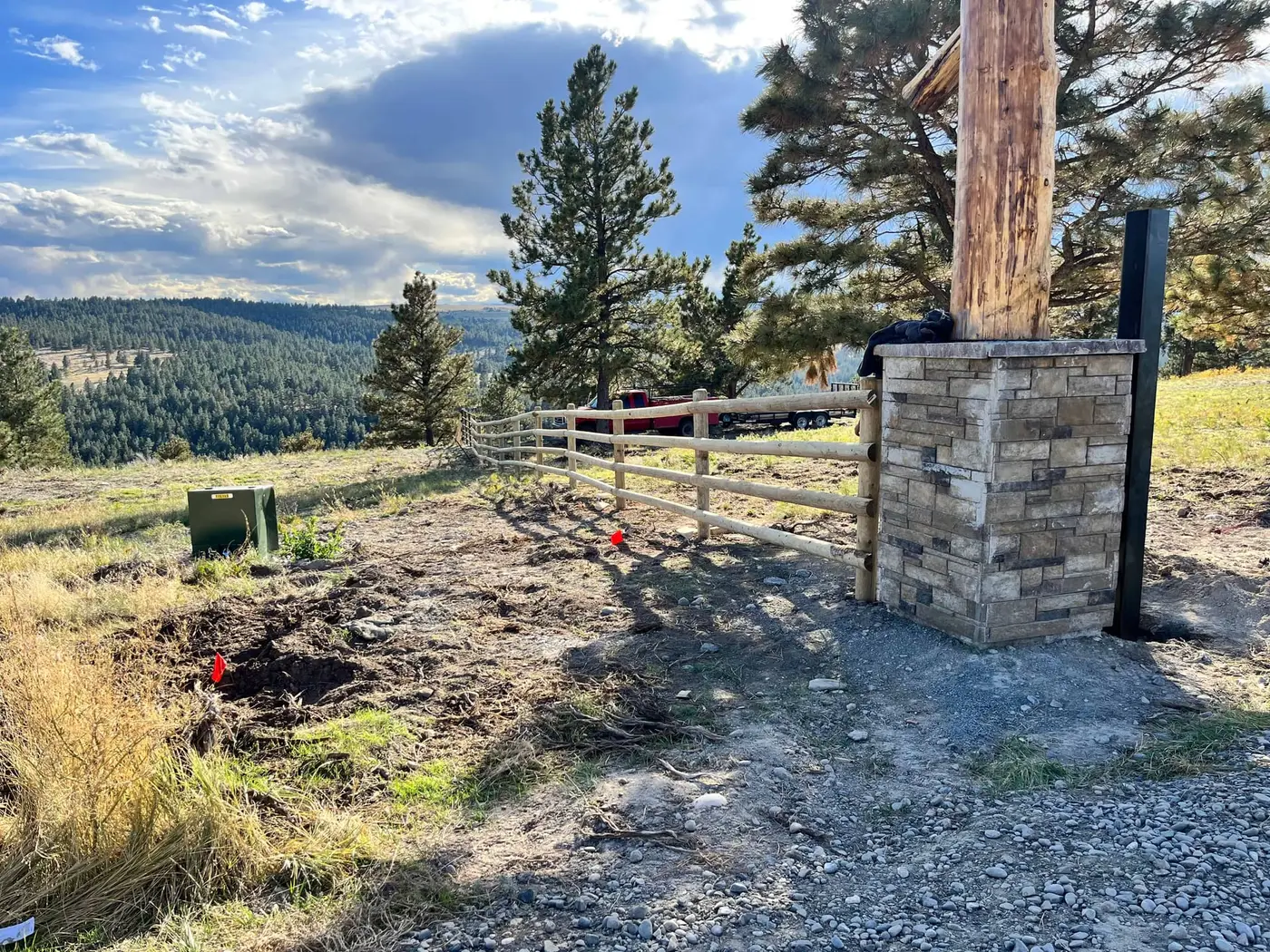
Plenty of properties use both — jackleg across the rough back sections, split rail along the frontage where the mail carrier sees it. A split rail project in our gallery shows the four-rail look along a fence line replacement; the Waterfowl Way jackleg build shows the buck-and-rail character on working ground.
Maintenance and lifespan
Both are wood fences in a hard climate; neither is maintenance-free.
- Rails occasionally need replacing in both systems — snow load, falling limbs, the occasional vehicle. Rail replacement is straightforward in either.
- Posts vs. bucks: a rotted set post means digging and resetting; a failed buck leg is an above-ground repair.
- Treatment choices matter more than style: treated material extends life on wet ground for either fence. We source much of our rail stock from our own sawmill, which keeps dimensions consistent when a repair eventually comes.
Cost logic (without made-up numbers)
Neither style is automatically cheaper. The honest drivers:
- Terrain: hard digging punishes split rail budgets; easy soil narrows the gap
- Rail count: three-rail vs. four-rail changes material volume in both
- Footage and access: long lines far from the truck cost more to build in any style
- Season: jackleg keeps winter schedules alive; split rail generally waits for thaw
An on-site walk settles it quickly — free measurements here.
Running both on one property: how the hybrid actually gets laid out
Since mixed layouts are the real-world answer so often, here’s how the split usually falls when we design one:
- Frontage and entrance runs get the showcase fence — split rail in three or four rail, tying into the entrance structure so gate posts, arch, and fence read as one build
- Working ground and rough country get jackleg — the river bottom, the rocky bench, the sections that see livestock pressure but not visitors
- Transitions happen at corners and gates, where a style change looks intentional rather than budget-driven; mid-run style changes read as patches
- Wire infill goes where the animals are, regardless of style — the dogs don’t care which fence is fancier
One more hybrid worth knowing: split rail posts with jackleg-style construction on individual problem sections. When a hundred feet of an otherwise diggable line crosses rock, bucks can carry just that stretch — same rail stock, continuous look, no dynamite budget.
The practical takeaway: don’t ask “which fence is better” — ask which fence belongs on each part of the property. The answer is frequently plural, and a good layout makes the mix look deliberate because it is.
The 20-year view: what each fence asks of you
Fences are bought once and lived with for decades, so the ownership picture matters as much as the install. Neither of these is high-maintenance by fence standards, but they age differently, and knowing how helps you choose.
Jackleg over time. Because nothing is set in the ground, jackleg sidesteps the slow failure that catches set-post fences: frost working posts loose year after year. What it does ask for is the occasional rail. Snow load, a falling limb, or a truck backing wrong will crack one eventually, and replacement is a straightforward above-ground swap. Bark-on jackleg weathers faster in appearance than treated, though “weathers” here mostly means it grays and settles into the landscape, which is the look many owners wanted anyway. A well-built jackleg line that started with sound timber can run a very long time with light attention.
Split rail over time. The rails behave much like jackleg’s, replaced individually as needed. The difference lives underground, at the posts. A set post in wet or frost-prone soil is the part that decides the fence’s lifespan, which is why post quality, drainage at the base, and treated material at ground contact matter so much on a split rail line. Get those right and the fence holds for decades; get them wrong and you’re resetting posts while the rails are still fine.
The practical ownership summary:
- Both need a rail now and then. Plan on it, budget nothing dramatic for it.
- Jackleg trades a slightly wider footprint and a rustic look for freedom from the frost-heave problem entirely.
- Split rail trades a dependence on good post-setting for a trimmer profile and the classic post-line appearance.
- Neither enjoys ground moisture, so on wet ground, treated material and honest drainage extend either fence’s life more than the style choice does.
There’s a reason century-old examples of both still stand across Montana. Built right, in the right spot, these are two of the longest-lived wood fences you can put on a property. The maintenance question is less “which needs more work” and more “which failure mode would you rather never think about,” and for a lot of rocky, frost-prone Montana ground, that answer points at jackleg.
Quick decision table
| Your situation | Better fit |
|---|---|
| Rock, ledge, or river cobble on the line | Jackleg |
| Wet meadow or frost-heavy soil | Jackleg |
| Winter construction timeline | Jackleg |
| Clean driveway/frontage look on good soil | Split rail |
| Tight, even spacing along a lawn or lane | Split rail |
| Maximum rustic character | Jackleg (bark-on) |
| Both problems on one property | Use both — many ranches do |
Next step: compare all fence types side by side, or start a fence estimate and we’ll walk the line with you.