By October, every fence in Montana has declared itself. The posts that heaved last spring are leaning, the wire that stretched under June cattle is sagging, and the sections you’ve been “watching” for two summers are done negotiating. If replacement is coming, fall is when preparation pays — because what you do before the snow decides what’s possible during and after it.
Here’s the practical sequence.
1. Grade the fence honestly, section by section
Walk the whole line while the ground is still bare and mark three categories:
- Failed: leaning posts, broken rails, wire on the ground. Livestock already know about these sections.
- Failing: heaved posts still holding, rot at the soil line, rust past the point of re-tensioning
- Serviceable: sound posts and tight wire that can honestly go another five years
Fence replacement rarely has to be all-or-nothing. Replacing the failed half now and the tired half in a planned second phase spreads cost without gambling the winter on wire that’s already down.
2. Decide what the new fence should be — not just a copy
The fence that failed was designed for a property that may not exist anymore. Different livestock, new neighbors, a garden that didn’t used to be there, more elk than anyone remembers. Before rebuilding like-for-like, spend an hour with the planning questions (or the fencing comparison) and confirm the old design is still the right one.
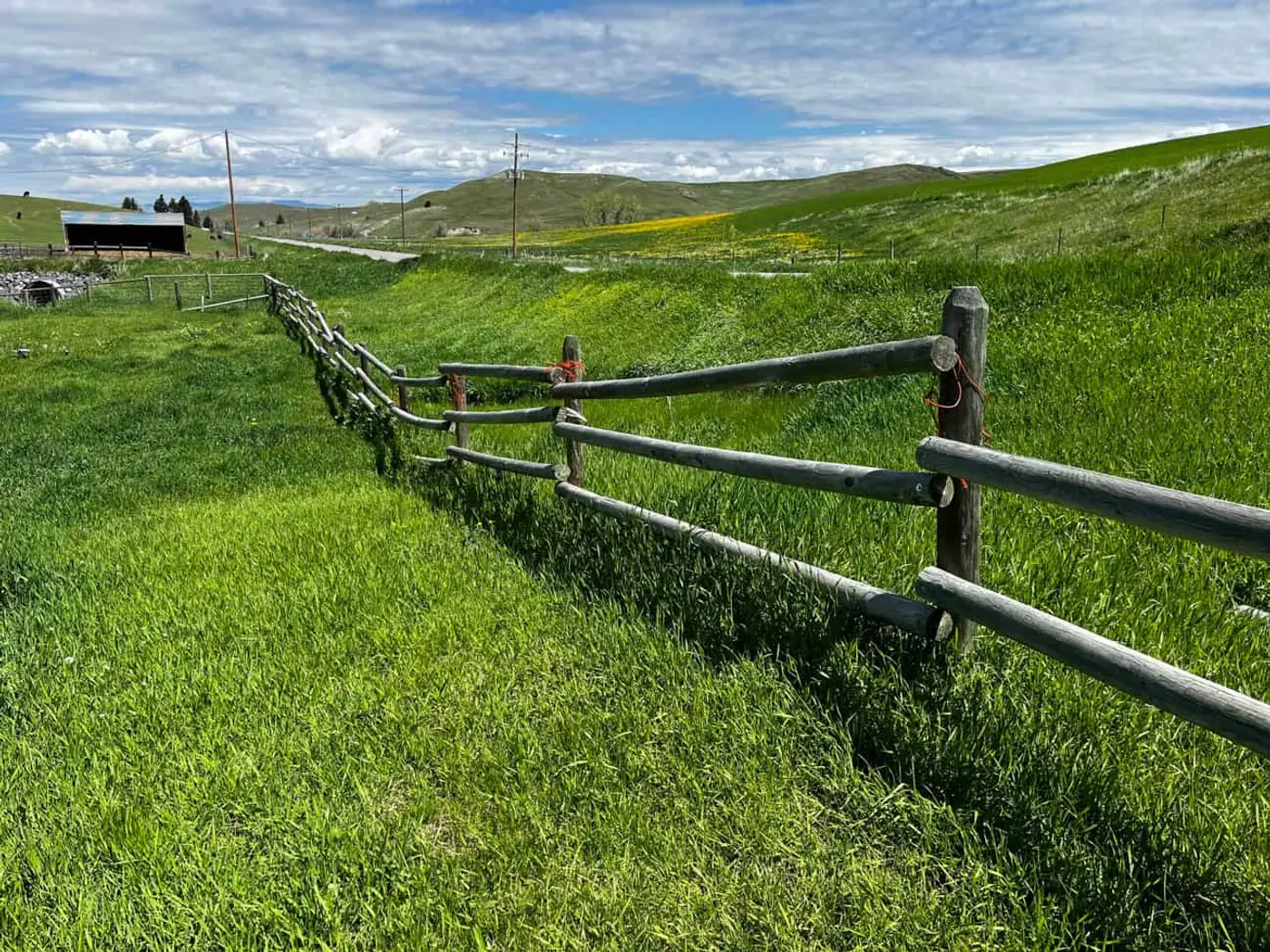
Frost-heaved post lines are a specific signal worth reading: ground that ejected the last fence will eject the next one. That’s the classic case for switching the rough sections to jackleg, which sits on the surface and ignores heave entirely.
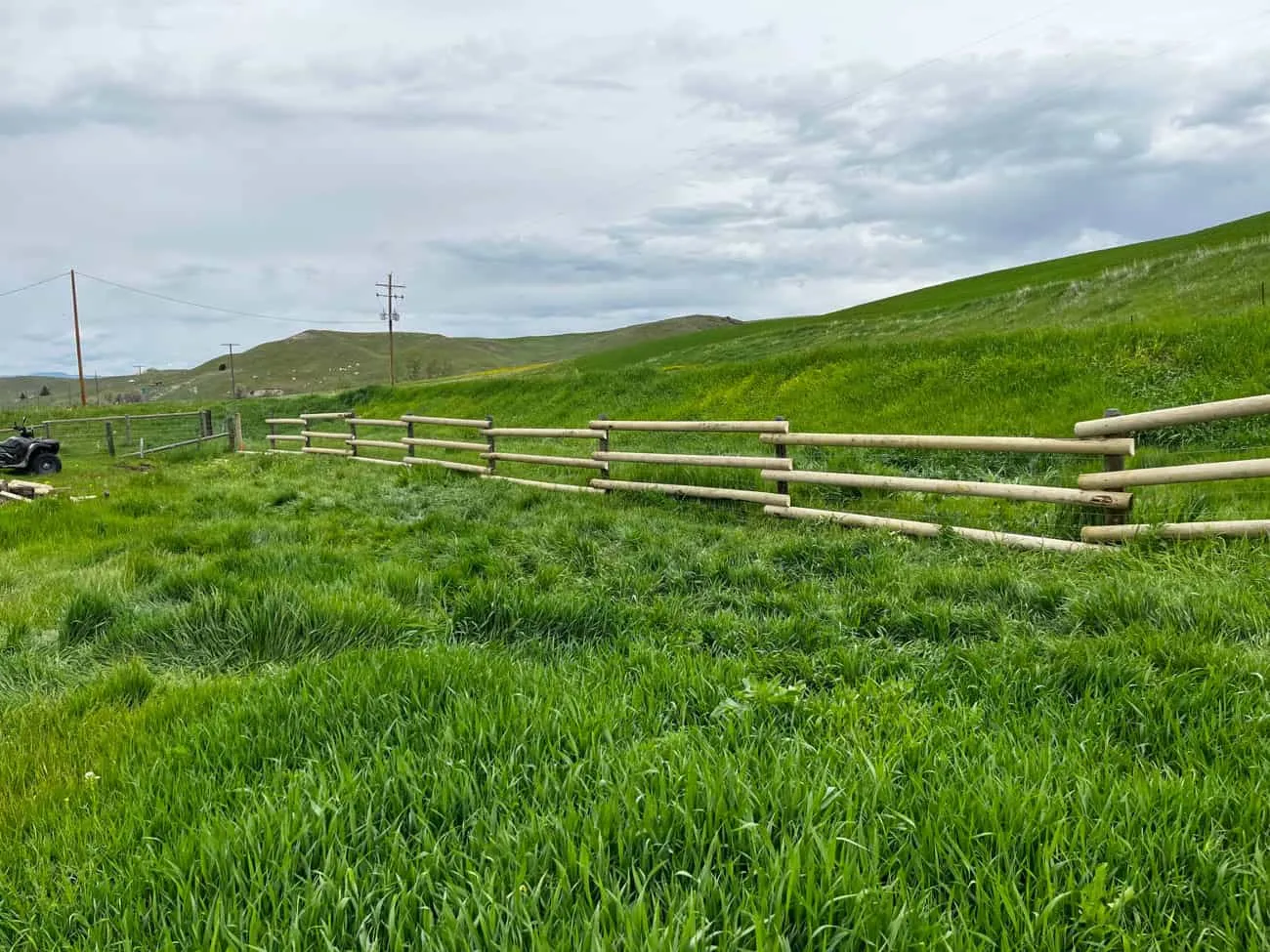 A replacement line from the company gallery — the payoff for tear-out done in season.
3. Schedule tear-out while equipment can move
Old-fence removal is the muddy, heavy half of a replacement, and it wants firm ground. Fall conditions (dry, frozen mornings, no snowpack) are ideal for pulling posts, rolling wire, and hauling debris. Spring tear-out on saturated ground rutting up your pasture is a worse version of the same job.
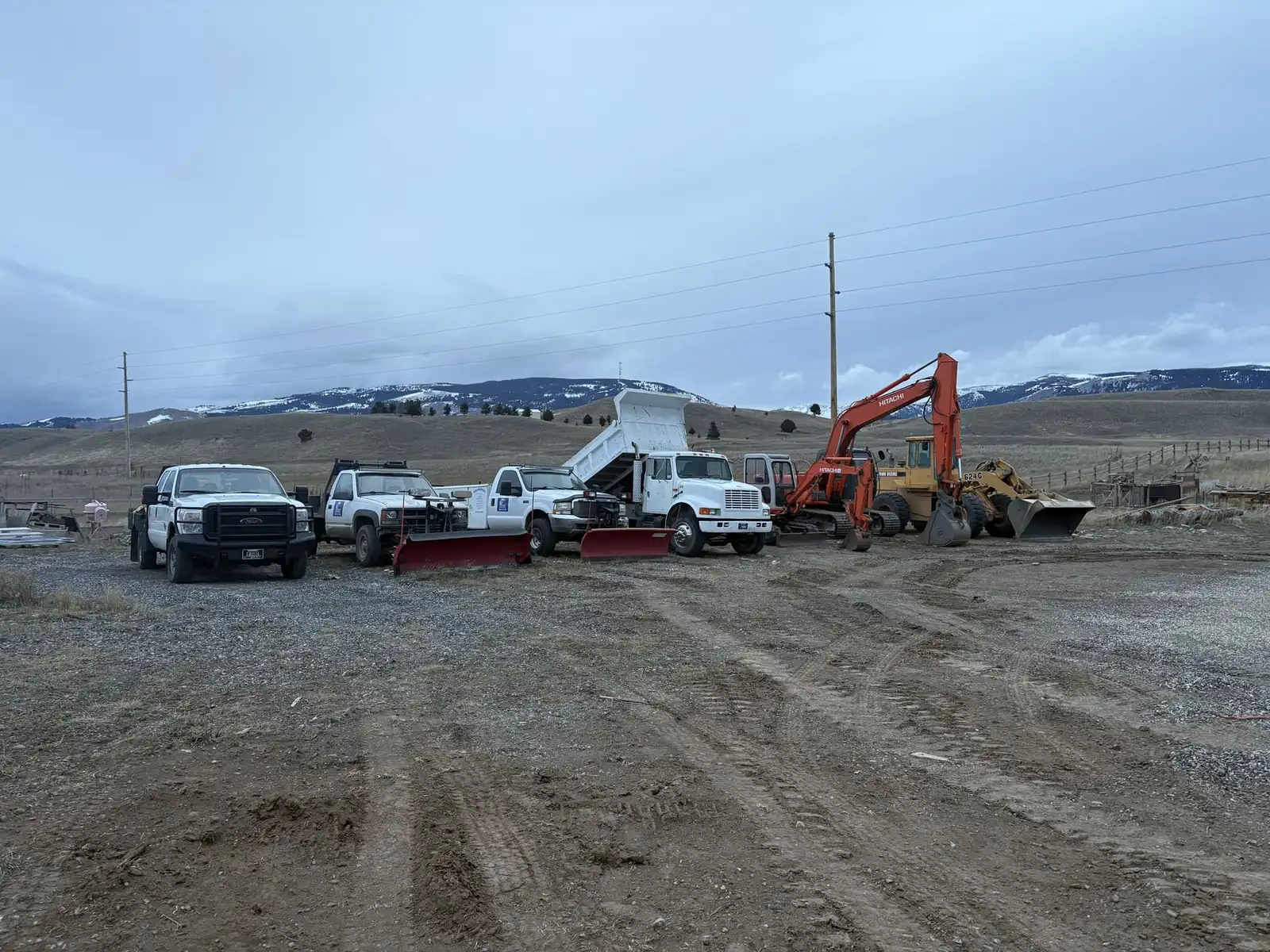
A removal we did at Six Mile Creek is a fair picture of the scale: decades of tired jackleg pulled, stacked, and hauled clean off the property before anything new went in. The gallery shows it mid-teardown. Old wire especially should never just be dragged aside — half-buried wire is a livestock and wildlife injury waiting years for its moment. Full haul-off is part of doing it right, and it’s work our demolition and cleanup side handles routinely.
4. Know what winter can and can’t build
The freeze line divides fence types cleanly:
- Buildable in winter: jackleg and buck-and-rail — nothing penetrates the frozen ground, so construction continues essentially year-round
- Waits for thaw: driven-post fences — field fence, no-climb, board and rail on set posts
That split creates a genuinely useful strategy: tear out in fall, build jackleg sections through winter, and have crews pound posts for the wire sections the moment frost releases. The property is never fully open, and the project doesn’t stack up into one giant spring scramble.
5. Keep stock managed through the gap
If the fence being replaced is a working boundary, plan the interim: temporary electric, a rotated pasture, or phased tear-out that never opens more line than the next build phase closes. Talk this through with your builder before the first post comes out — sequencing is free when it’s planned and expensive when it’s improvised.
6. Protect access before the snow
The fence project needs the same thing winter feeding needs: a road that works. Culverts cleared, approaches graded, a plan for snow removal along the equipment route. Our winter access planning guide pairs naturally with a cold-season fence build.
What a winter jackleg build actually looks like on-site
Owners are often surprised how normal cold-season fence construction is once the design allows it. The rhythm on a typical winter build:
- Material staged before deep snow: rails and buck stock delivered to points along the line while trucks still roll easily; from there, the build moves with tracked equipment or short carries
- Snow is cleared as the line advances, not all at once — each day’s section gets opened, built, and left standing before the next storm resets the canvas
- Frozen ground helps more than it hurts: equipment travels over pasture that would rut to mud in April, and the finished fence never had a compaction or heave problem because nothing was ever dug
- Cold has a working floor: genuinely brutal snaps pause work for crew and material reasons, but the practical window is far wider than most owners assume
The result arrives at green-up already weathered-in and standing, right when livestock rotation wants it — while the neighbors are still waiting for their post-pounding window.
A realistic fall timeline
- Early October: walk and grade the line; get measurements and an estimate
- Late October–November: tear-out and haul-off on firm ground
- December–February: jackleg sections built through winter
- Spring: driven-post sections completed as frost releases
Get ahead of the season: start a fence estimate — tell us it’s a replacement, and we’ll fold tear-out, phasing, and winter scheduling into the same plan. Free measurements across Southwest Montana.