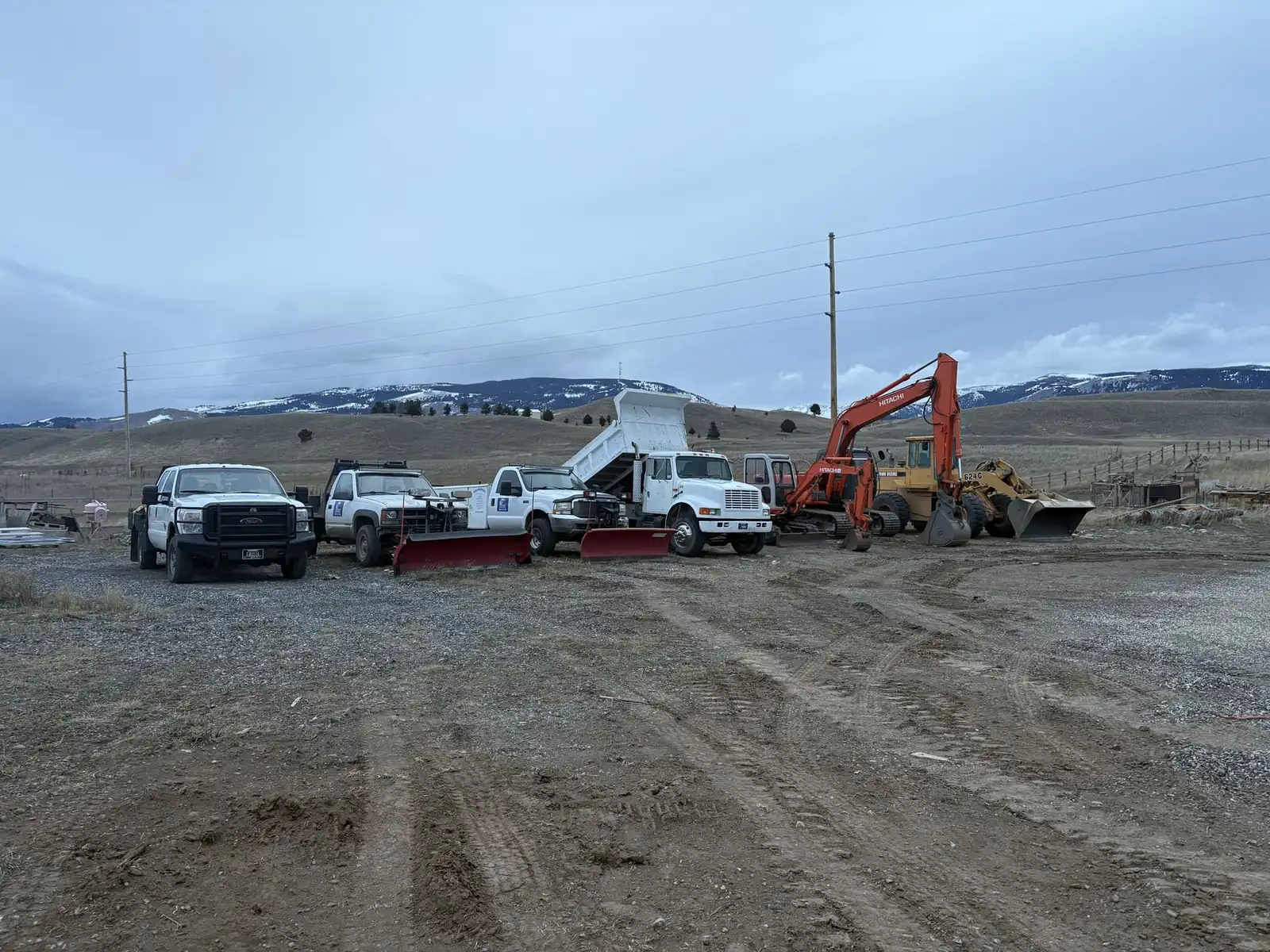
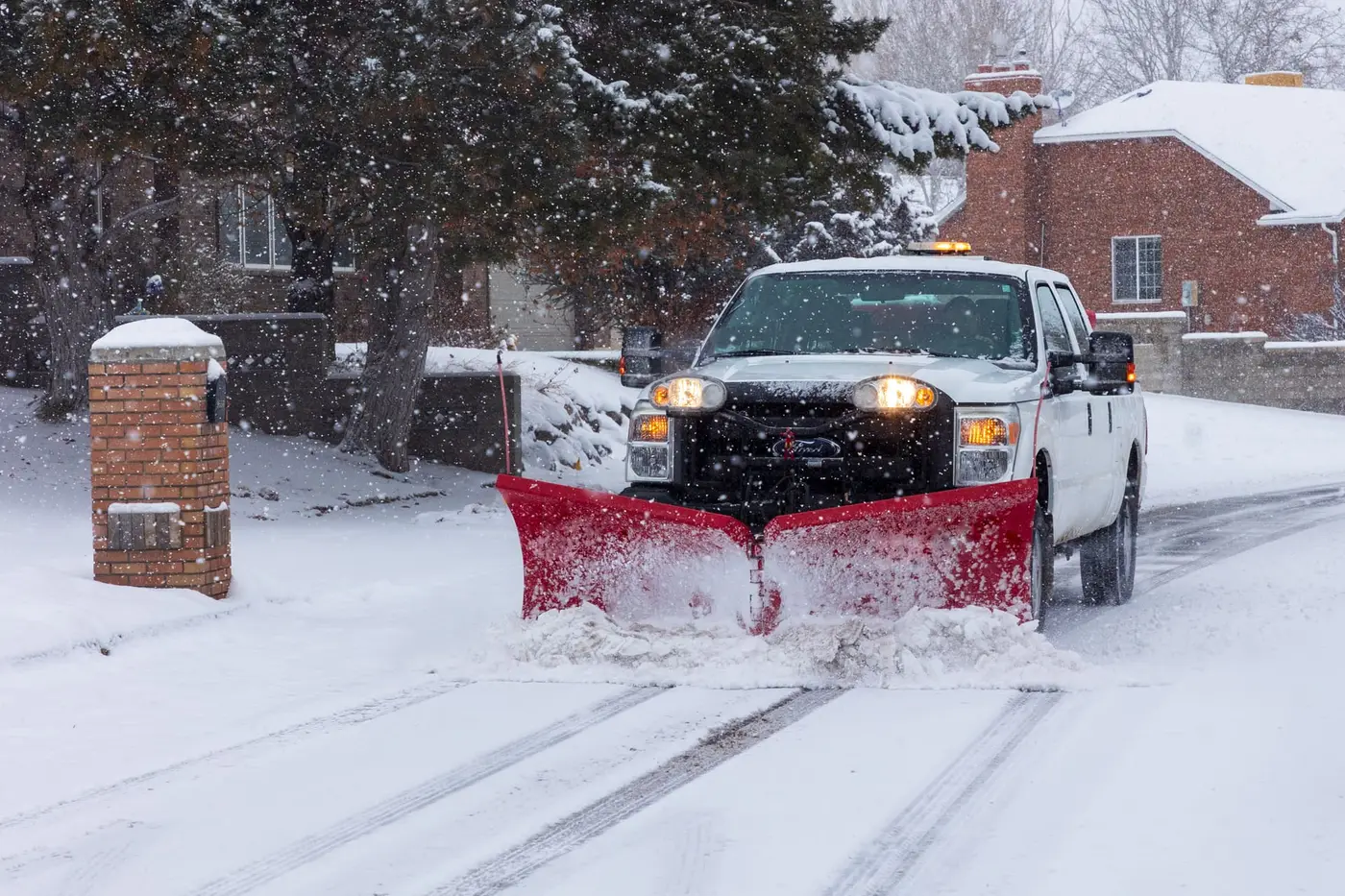
Snow removal on a rural Montana property is a logistics problem disguised as a chore. In town, the plow comes; the driveway is forty feet; done. On a ranch, you’re managing a private road network, approaches, gates, equipment yards, stock access, propane and delivery turnarounds, through four months that don’t negotiate.
The properties that stay open all winter aren’t lucky. They planned in the fall. This is the planning.
Start with the map, not the plow
Sketch the property and mark what must stay open, in priority order. A typical list:
- The county-road approach: if the first hundred feet drifts shut, nothing else matters
- House and shop access
- Stock water and feeding routes: daily, regardless of weather
- Fuel, propane, and delivery turnarounds: the propane truck needs room to turn, not just a lane to enter
- Equipment areas: the tractor you need to move snow can’t start behind the snow
That priority list is what you hand to whoever plows, including us. It converts “plow the place” into a plan.
Learn your drift lines before December
Snow doesn’t fall evenly; it relocates. Wind builds the same drifts in the same places every winter, controlled by terrain, fences, and buildings. First winter on a property? Watch and note. Every winter after: plan around what you know.
- Fence lines drift: solid fences especially. A drift-prone lane beside a fence sometimes argues for moving the fence type or the road, and it always argues for plowing room
- Cuts and coulees load up: the road through the draw fills first and deepest
- Building corners create wind shadows that bury doors and gates
Where the snow goes when plowed matters as much as where it falls: a berm pushed to the wrong side becomes next storm’s drift fence, and spring melt from big piles wants to flow somewhere, ideally not down your road base. (That’s a drainage story, and it starts in winter.)
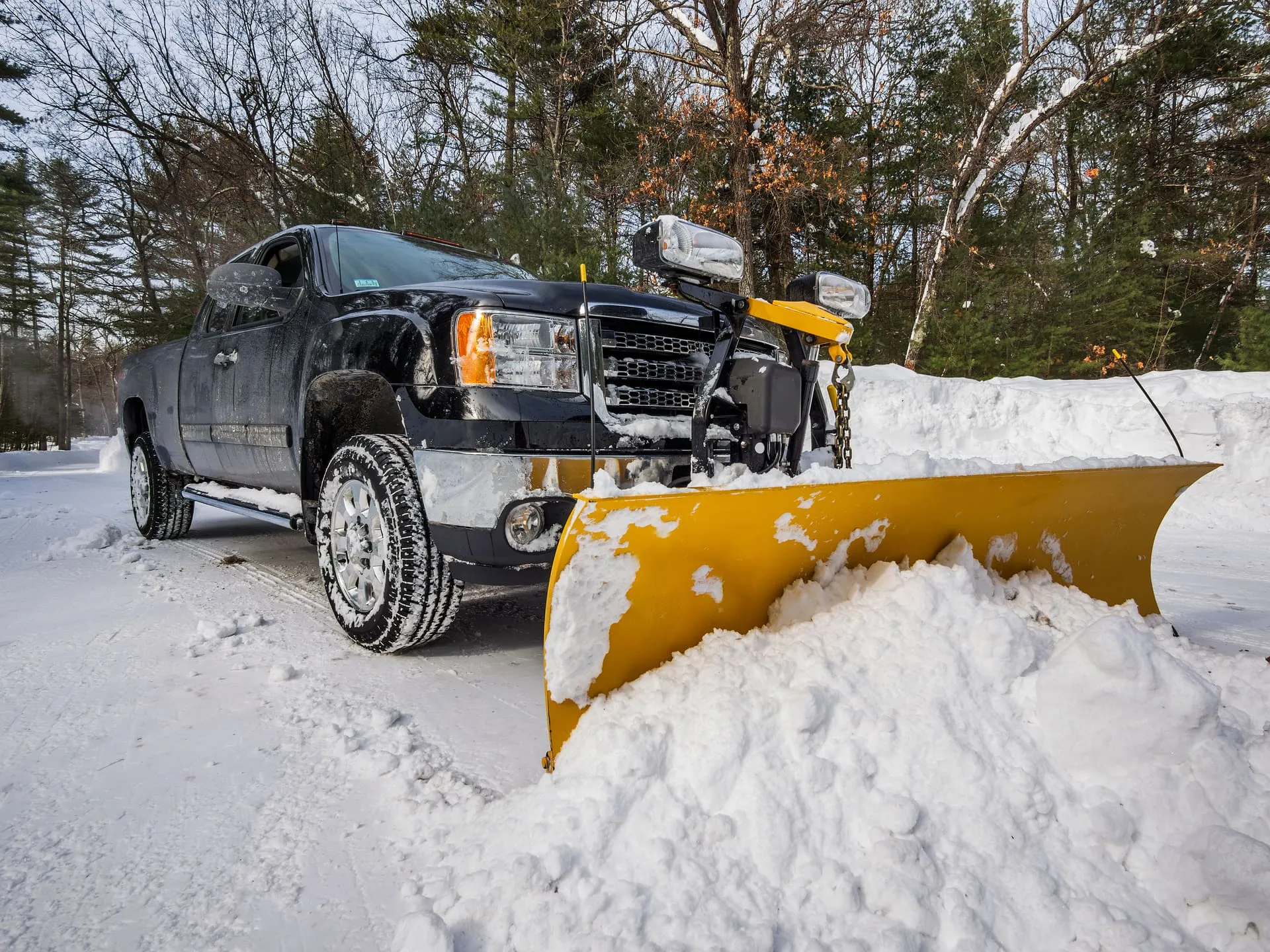 Route order and berm placement decided in October make this look easy in January.
Gates, guards, and pinch points
Every gate is a snow decision:
- Swing gates need their full arc cleared — coordinate the automatic gate design with the plow plan, as covered in our winter gate reliability guide
- Cattle guards fill with packed snow and quietly become bridges for stock; keeping them functional is a winter maintenance item
- Narrow spots (bridges, tree lanes, building gaps) need clearing width planned before the banks build up and narrow them further
The road itself decides how winter goes
Plowing is only as good as the surface under it. A crowned, well-drained gravel road plows clean and stays firm; a flat, rutted one traps melt, glazes over, and breaks up by March. Fall grading and gravel work is honestly a winter-access investment — and if the road’s already failing, our comparison of repair versus reconstruction is the place to start thinking.
Culverts matter in winter too: a culvert that froze full in November floods the road during the first February chinook.
Doing it yourself vs. lining up service
Honest self-assessment questions:
- Is there equipment on the property that can genuinely move this winter’s snow (including berms after a three-foot storm) or just a light-duty plow that handles average storms?
- Who does it when you’re gone the week it matters?
- What’s the cost of being snowed shut — missed work, stranded stock, a propane truck that couldn’t reach the tank?
Many properties run a hybrid: owner handles routine storms, professional service takes the big events and the away-weeks. We plow residential and commercial properties across Paradise Valley (Livingston, Pray, Emigrant, Gardiner) and the clients who fare best are the ones who called in October, walked the plan, and locked the priority map before the season.
Common winter-access questions
When should service actually be scheduled? Before the season, not during the first storm — capacity books up fast once snow flies, and route order gets set early. October conversations get better answers than December ones.
What’s a reasonable trigger depth for plowing? It depends on your vehicles and tolerance — but the practical wisdom is that two moderate plows beat one heroic one. Deep, settled snow packs under traffic into ice layers that last until March.
Does plowing damage gravel roads? Done right, no — blade height and operator familiarity with your road’s crown and culvert ends matter. This is why route consistency (the same operator learning the same road) quietly improves results year over year.
What about the last quarter mile the county doesn’t touch? That gap between the county’s turnaround and your gate is the classic rural problem — and exactly what private service exists for. Define whose job that stretch is before it defines itself in January.
Fall checklist
- Priority map drawn and shared
- Drift lines noted from last winter
- Stakes set along road edges and culvert ends before first snow
- Gates and cattle guards serviced
- Culverts cleared
- Turnarounds confirmed for delivery vehicles
- Plow service arranged — before the first big storm books everyone
Next step: talk with us about winter service or call (406) 551-6772 — and if the road under the snow is the real problem, start with road repair while the ground still allows it.