When appearance moves from “nice to have” to “part of the property’s value,” the conversation usually narrows to two fences: full round rail and ranch board. Both are deliberate, finished-looking fences you choose for the frontage, the entrance drive, and the horse pastures people actually see.
They photograph similarly from a distance. Up close (and over ten years of ownership) they’re quite different.
The look
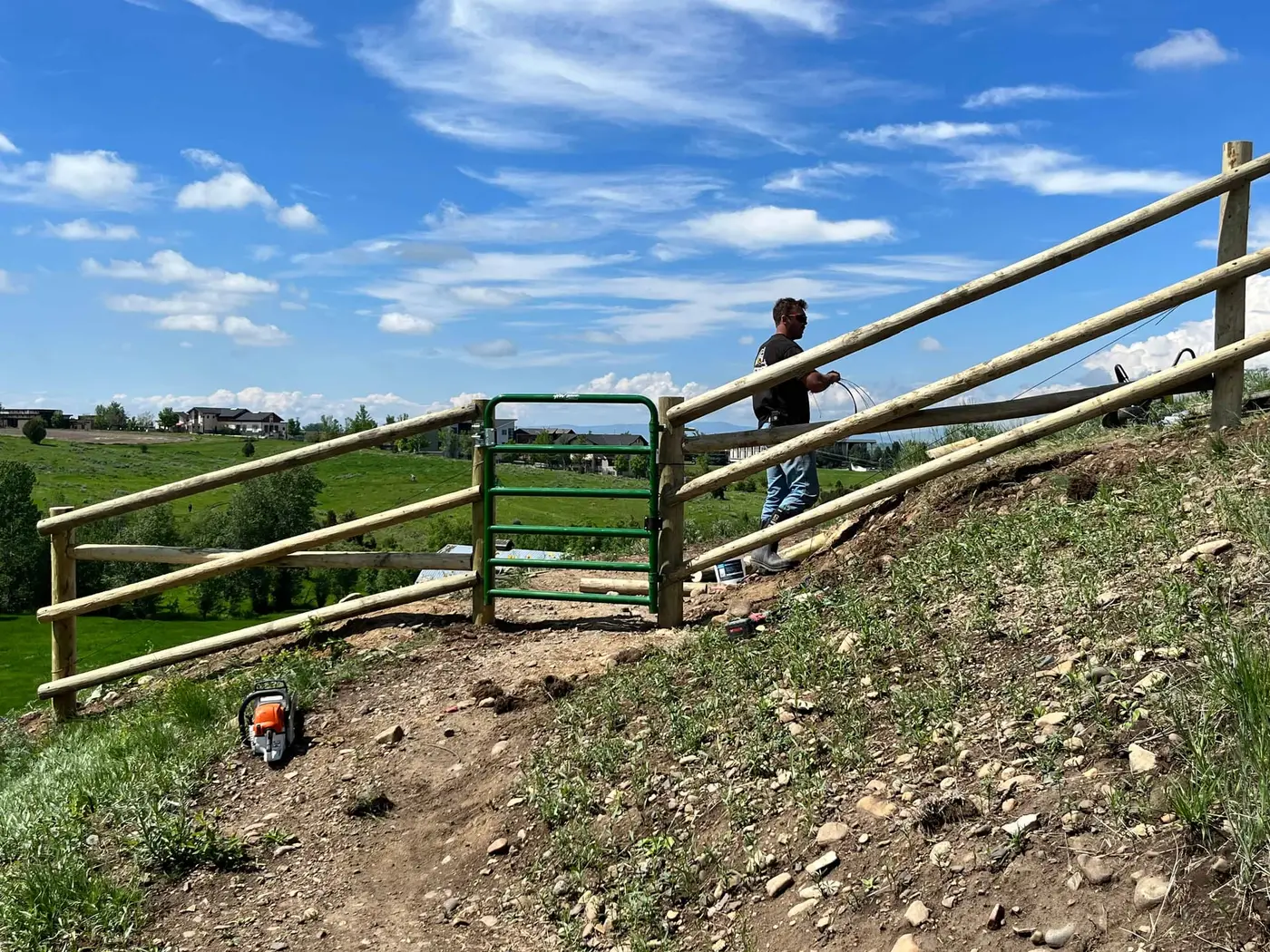
Round rail uses milled, fully round rails set into round posts, usually doweled so the rails seat into the post rather than onto its face. The result reads timeless and substantial, a softer, more traditional profile with no flat surfaces. Two-rail versions look open and decorative; three-rail versions read as proper livestock fence.
Ranch board runs flat dimensional boards (typically three or four) fastened to the face of square or round posts. It’s the Kentucky-horse-farm look translated to Montana: crisp lines, strong shadows, and a slightly more formal, estate feel. Painted or stained black or white, it’s unmistakable.
If round rail says ranch, ranch board says farm estate. Neither is wrong; they’re different sentences.
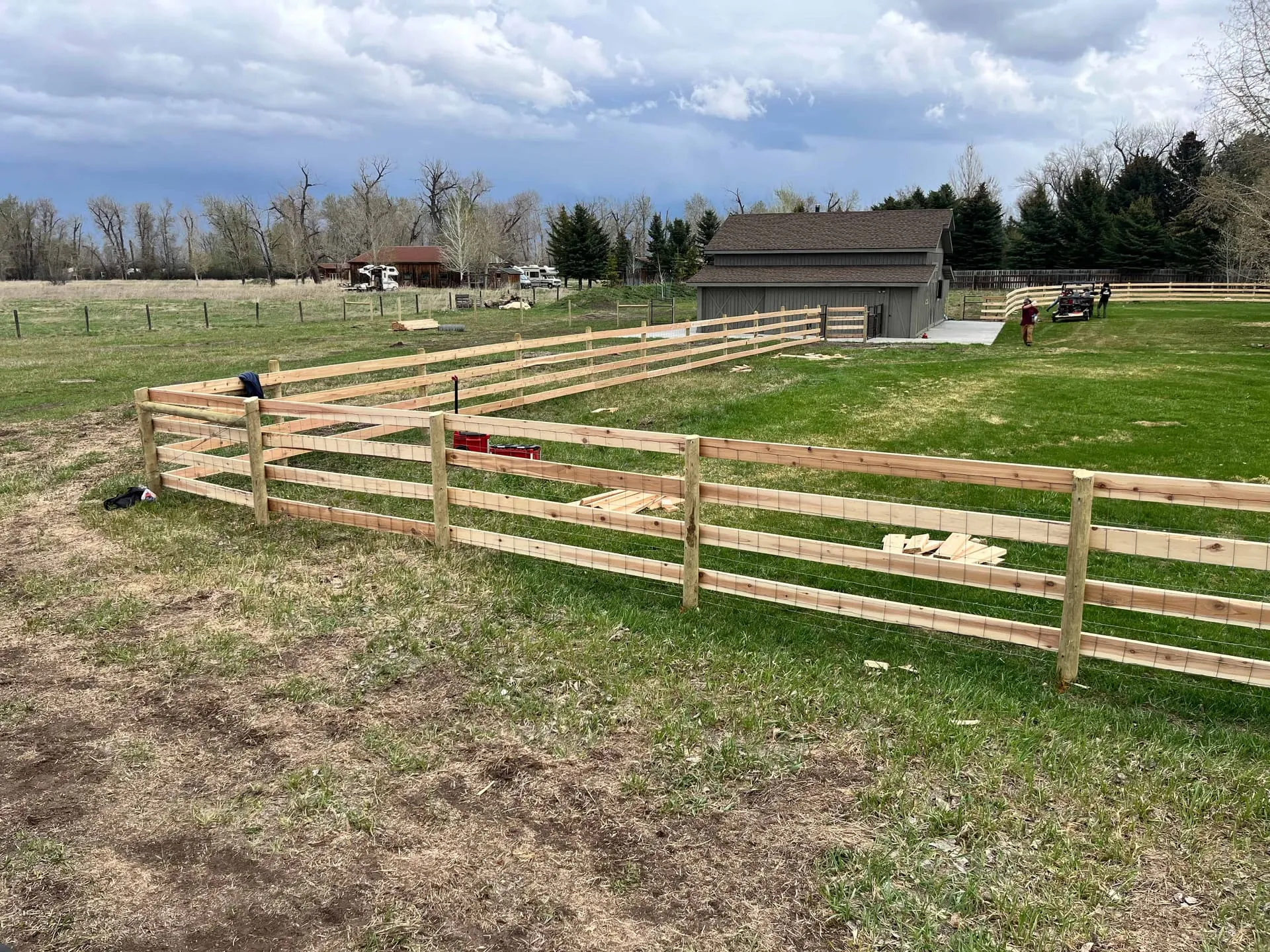 Ranch board from the company gallery — crisp lines and estate formality.
Horses and livestock
Both are strong choices around horses because both are highly visible, the number-one horse-fence virtue.
- Ranch board offers a flat, forgiving surface, but a broken board leaves sharp ends; inspection matters
- Round rail is stout and hard to break, with doweled connections that resist being rubbed loose
- For pens and paddocks where contact is constant, many owners back either fence with mesh or step up to no-climb inside the pretty perimeter
For cattle, both work as boundary fencing; neither is where you’d spend money on the back forty. That’s field fence country.
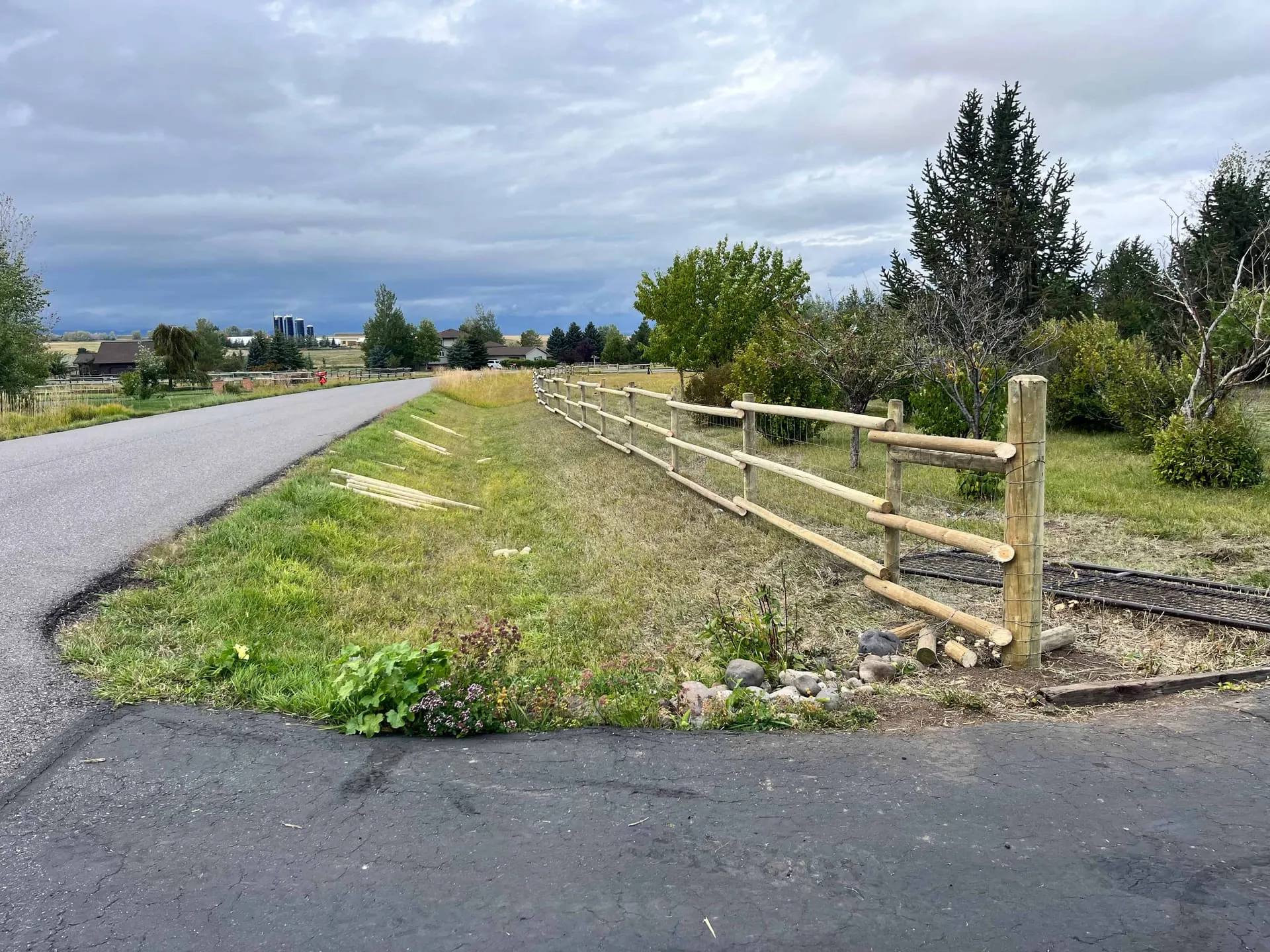 Full round rail: doweled joints, no flat faces, weathering instead of peeling.
Maintenance: the honest difference
This is where the two fences separate.
Ranch board is a painted surface in a UV-heavy, freeze-thaw climate. Stain or paint fades and peels on a schedule, and boards move as they cycle wet and dry. Owners who love the look accept the repainting rhythm; owners who don’t should know before they buy it.
Round rail weathers rather than peels. Left natural or sealed, it grays and settles without demanding a maintenance calendar. Doweled joints hold tight without fasteners backing out seasonally.
Neither fence enjoys ground contact — post quality, drainage, and treated material at the soil line decide lifespan for both.
Terrain and installation
Both fences want set posts, so both prefer diggable ground. On rock, ledge, and heavy frost soils, this is the point where we’d steer the conversation toward jackleg for character or a hybrid layout. Grade changes are handled well by both, though board fencing on rolling ground demands careful layout to keep lines sweet — exactly the kind of detail that separates a fence you enjoy from one you tolerate.
Where each one earns its cost
Choose round rail when:
- You want premium looks with minimal maintenance
- The property leans rustic-traditional rather than formal
- Horses will live against it and you value its strength
Choose ranch board when:
- The estate look is the point — especially painted
- The fence frames an entrance, arena, or frontage with real curb-appeal value
- You’re comfortable with a finish-maintenance cycle
Choose both when: board at the entrance, round rail along the pasture — a common and good-looking compromise. Board fencing from a Paradise Valley project and a full round rail line both appear in our project gallery if you want to compare them on real ground rather than in theory.
Questions owners ask about these two fences
How often does board fence really need repainting? Climate exposure decides — sun-facing runs weather fastest, and dark colors show it sooner. Plan on a recurring cycle and treat the first repaint as the calibration: however long the original finish lasted is your property’s answer.
Can mesh be hidden behind either fence for dogs? Yes — wire backing mounted on the pasture side is nearly invisible from the road and standard practice on both styles. It’s much cleaner to install during the build than after.
Which handles a leaning horse better? Round rail’s doweled connections resist being rubbed and pushed loose; board fencing relies on its fasteners and board strength. For fence-walking horses, round rail or a mesh-backed hybrid earns its keep.
Do they mix on one property? Constantly, and well — board at the entrance where its formality shines, round rail on the pasture runs. Keeping post height and stain tone consistent makes the transition read as design rather than budget.
Cost factors, not price tags
What moves the number on either fence: footage, rail/board count, post spacing, finish work (staining, painting), terrain, gates, and old-fence removal. Premium wood fencing rewards planning — our cost-factor guide covers the full list.
Pick a direction: Plan your fence project and tell us which look you’re after — or walk the fencing comparison first to see both styles in context.