Horse fencing has one requirement the others don’t: it has to protect the animal from the fence itself. Horses spook, bolt, paw, lean, and test. A fence that would hold cattle for twenty years can injure a horse in one bad evening. That’s the problem no-climb mesh exists to solve.
What makes a fence “no-climb”
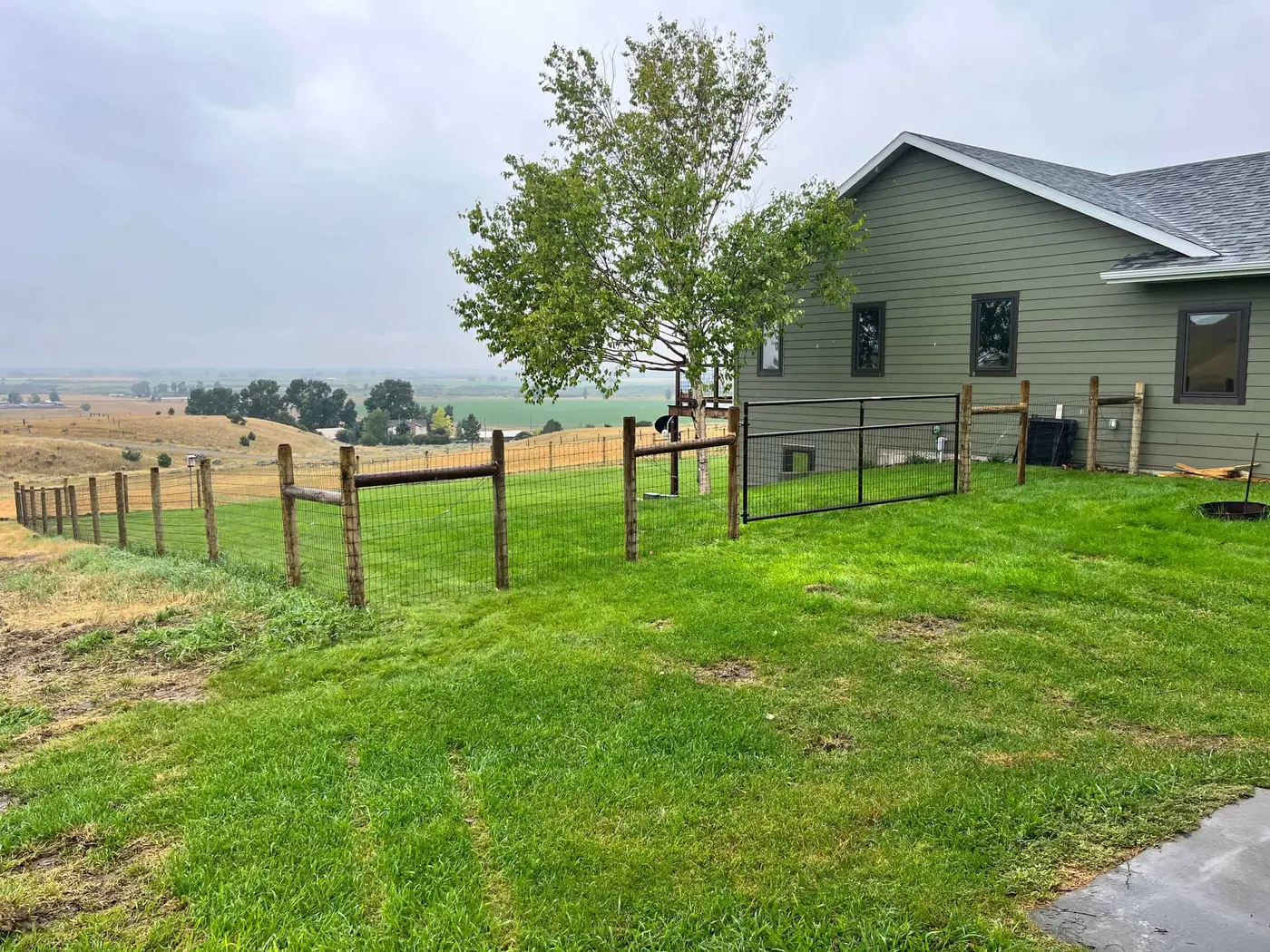
No-climb is woven wire with openings around 2 inches by 4 inches, too small for a hoof to pass through, too tight for a foothold. That single geometry choice removes the two classic horse-fence injuries: a leg through the fence, and a horse climbing or pawing the mesh.
Add a smooth, flexible mesh surface with no barbs and you have the standard most equine vets and insurers are happiest to see.
The visibility question
Horses need to see fence. Mesh alone reads as haze at a gallop, especially at dusk. Practical fixes, in rough order of popularity:
- A top rail: wood rail along the top makes the line unmistakable and stiffens the fence
- A top board plus mesh is the classic Montana horse-property look: clean, visible, safe
- White or contrast top elements where sight lines are long
This matters most on new pastures, fresh boundaries, and anywhere horses run fence lines they don’t know yet.
Terrain and installation realities
Mesh fencing wants steady tension and consistent ground contact, which makes installation quality the whole game.
- Corners and bracing carry the tension; undersized corner posts show up as saggy mesh within a season or two
- Driven posts hold tension better than dug-and-tamped posts in most local soils
- Grade changes need the mesh worked carefully so gaps don’t open at the bottom of dips, exactly where a curious foal investigates
- Gates deserve the same standard: a safe fence with a wire-gap gate keeps the risk, just concentrated in one spot
On genuinely rough or rocky sections where posts can’t set, a hybrid approach — mesh runs where the ground allows, jackleg or rail across the trouble — beats forcing one system across ground that fights it.
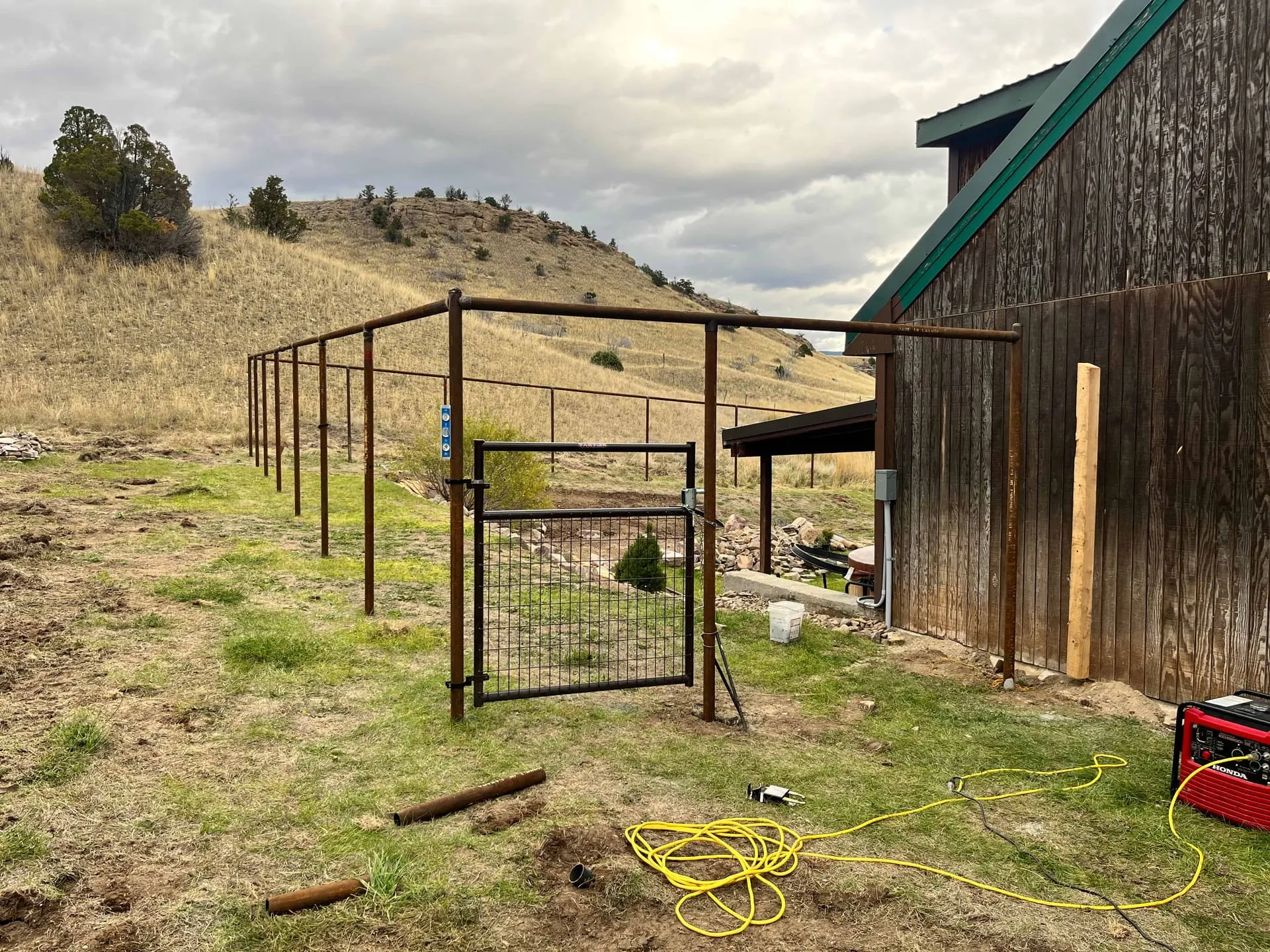 The same tight-mesh family scaled up — a six-foot garden and deer fence from the gallery.
Montana-specific considerations
Wildlife. Deer clear a four-and-a-half-foot fence casually; elk go through what they can’t clear. No-climb around horse paddocks near wildlife corridors takes a beating on the top edge — a sacrificial smooth top wire or rail takes that hit instead of the mesh. More in our wildlife-friendly fencing guide.
Snow. Drifts load mesh laterally. Tension done right in June is what keeps the line straight the following March.
Dogs share the fence. The same 2x4 mesh that protects horses conveniently keeps dogs in and coyotes out — which is why several of our recent enclosure builds, like the dog-fence projects in the gallery, use the same material family around homesites and gardens.
No-climb vs. the alternatives for horses
| Option | The honest tradeoff |
|---|---|
| No-climb mesh | The safety benchmark; costs more than field fence |
| Field fence | Fine for mixed stock; openings are hoof-sized — risk |
| Ranch board | Beautiful and visible; boards break, and a broken board is sharp |
| Continuous panel | Excellent for corrals and runs; industrial look on big pastures |
| Barbed wire | Not a horse fence. Full stop. |
Many properties layer these: no-climb paddocks near the barn, board or rail along the entrance, field fence on the far pasture the horses never touch.
Five horse-fence mistakes that show up in vet bills
- Keeping the old barbed wire “for now.” The most dangerous fence on a horse property is the derelict one — half-buried wire from decades ago waiting in the tall grass. Tear-out belongs in the project, not on the someday list.
- Saving money on the paddock, spending it on the back pasture. Risk concentrates where horses are confined and pressured — near the barn, at feeding, in small pens. Spend safety money where the density is.
- Mesh to the ground on uneven grade. Gaps under the fence at dips invite pawing and trapped hooves. Grading the line or working the mesh carefully at low spots is installation craft that matters.
- Gate hardware that protrudes. Latch bolts and hinge pins that stick into the opening are exactly head-height for an excited horse. Flush hardware and smooth gate faces are cheap insurance.
- Forgetting the horse that isn’t yours yet. Boarders, rescues, and young stock test fences differently than your steady gelding. Building to the calmest horse on the property is planning for the past.
Planning checklist before an estimate
- How many horses, and what temperament — settled geldings or young stock?
- Paddock, run, or full pasture? (Sizes change the tension plan)
- Known wildlife pressure on the line?
- Where do trucks, trailers, and the manure spreader cross?
- Top rail or all-mesh?
- Any old wire to tear out first — the most dangerous fence on a horse property is the half-buried one from 1975.
When you’re ready: Plan a no-climb fence with free on-site measurements, or compare all fence types if you’re still weighing options.