Every spring, the same phone calls: the driveway that was fine in February is a rutted mess by April, there’s a soft spot swallowing tires where the road never had trouble before, and somewhere along the lane a culvert is doing nothing while water cuts a channel across the gravel. None of this is bad luck. It’s physics on a schedule, and understanding it is the difference between maintaining a road and rebuilding one every few years.
What’s actually happening under the gravel
Winter loads the ground with ice. All season, freezing pulls moisture upward into the road base, where it forms ice lenses — layers of ice mixed through the soil, strongest right under the surface.
Thaw releases it from the top down. Come March, the surface thaws while deeper ground stays frozen. Meltwater can’t drain downward through the still-frozen layer, so the top several inches of your road become saturated soup sitting on an ice shelf.
Then traffic does the rest. A road base at full strength in January might carry a loaded truck easily; the same base during breakup carries a fraction of that. Every pass squeezes water and fines around like toothpaste — that’s the rutting, the pumping, and the infamous frost boils where mud erupts through the surface.
This is exactly why counties post spring load restrictions on public roads. Your private road obeys the same physics; it just doesn’t get a sign.
Triage: what helps during breakup
Once mud season arrives, the realistic options are about limiting damage:
- Stay off it when possible: especially heavy loads. Two weeks of restraint can save a summer of repair.
- Don’t grade wet: blading saturated gravel just relocates soup and mixes mud into your good surface rock
- Open the water paths: clear culvert ends, pull the plug of ice and debris out of ditches, cut a relief channel where water ponds on the surface. Water standing on a thawing road is the single most destructive thing you can allow.
- Spot-fill genuine holes with clean coarse rock to keep the route passable — knowing it’s a patch, not a fix
What doesn’t help: dumping fine gravel into a frost boil. Fines plus water made the problem; more fines feed it.
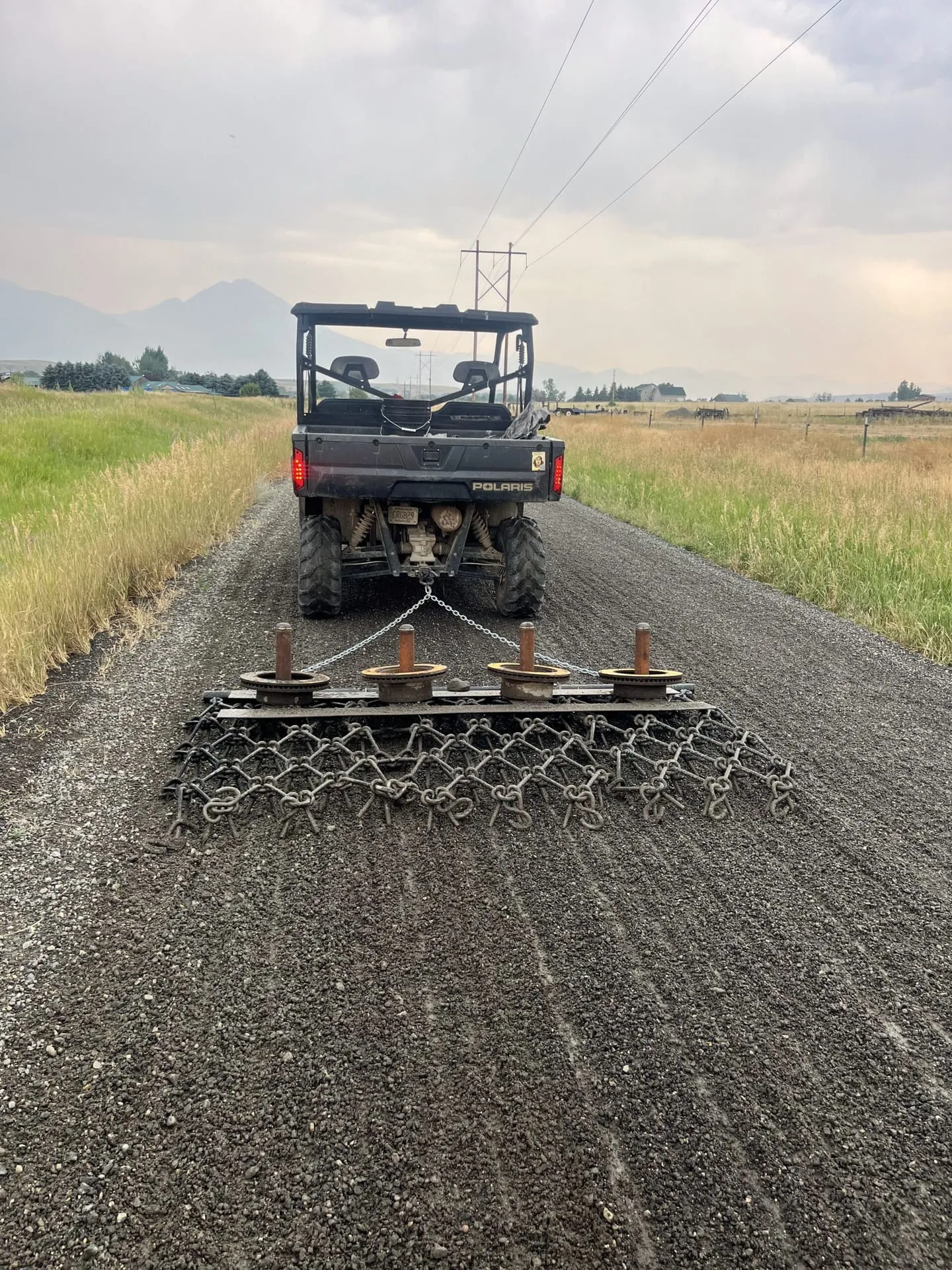 Grooming and grading a gravel surface, routine maintenance between the bigger fixes spring reveals.
Reading the damage after it dries
Late spring is diagnosis season. What the road tells you:
- Ruts that grade out and stay out: surface-level wear; normal maintenance
- The same soft spots every year: a base or drainage problem that grading cosmetically hides until next thaw
- Washboard returning within weeks: usually a loose, under-compacted surface or fines-poor gravel
- Boils, pumping, sinking edges: the base is failing; this is repair-versus-reconstruction territory, and pretending otherwise buys one season at a time
- New channels cut across or along the road: water is winning; see our drainage and erosion guide
Roads that shrug off spring
Roads that survive breakup year after year share the same construction DNA — none of it exotic:
- Crown: the surface sheds water to the sides instead of holding it
- Ditches that actually flow somewhere, all the way
- Culverts sized and placed for spring volume, not July volume
- A real base: engineered depth of the right material over the native soil, which is most of what separates a built road from “gravel spread on dirt”
- Surface gravel with binding fines in the right proportion: enough to knit, not enough to pump
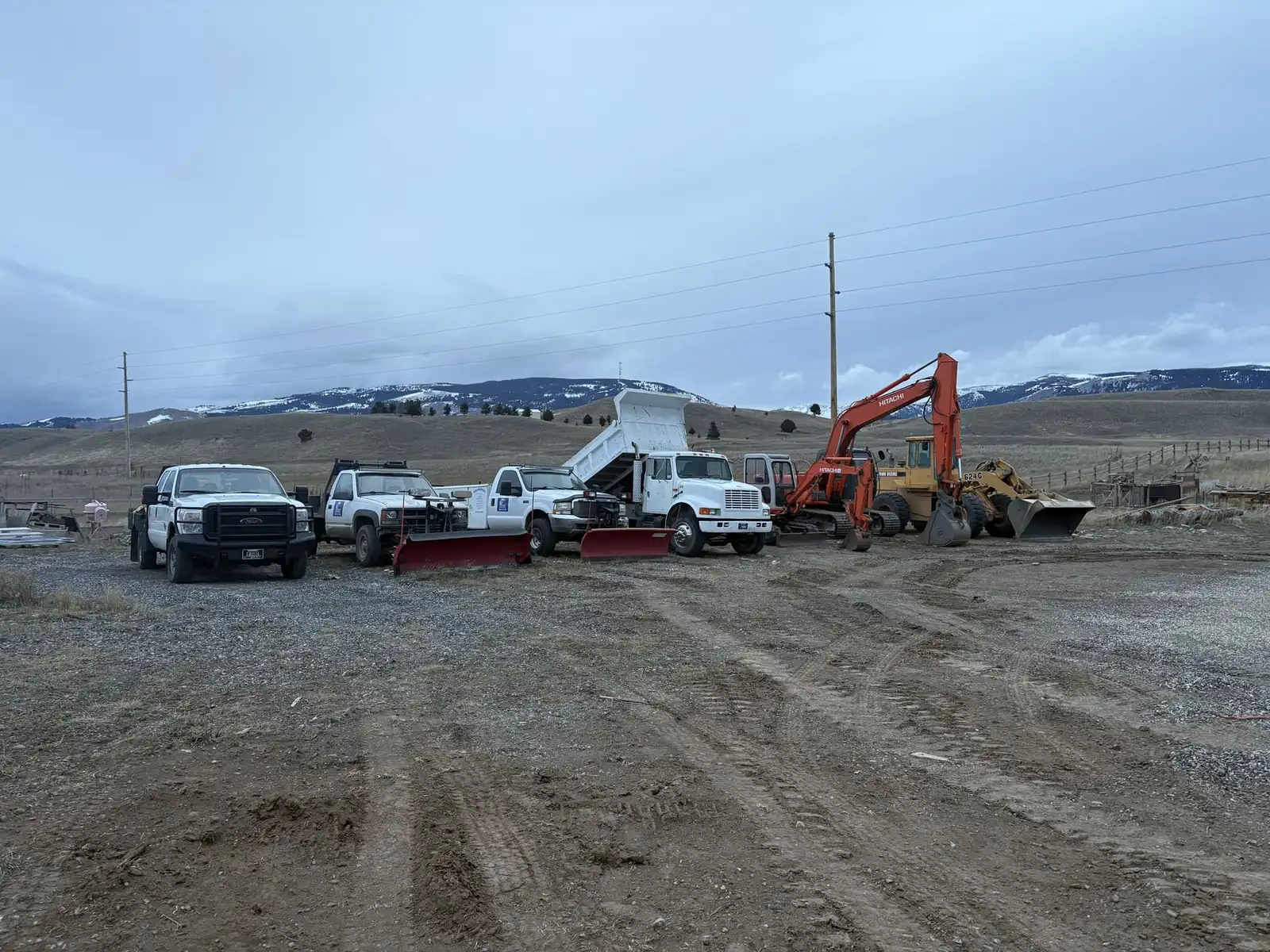
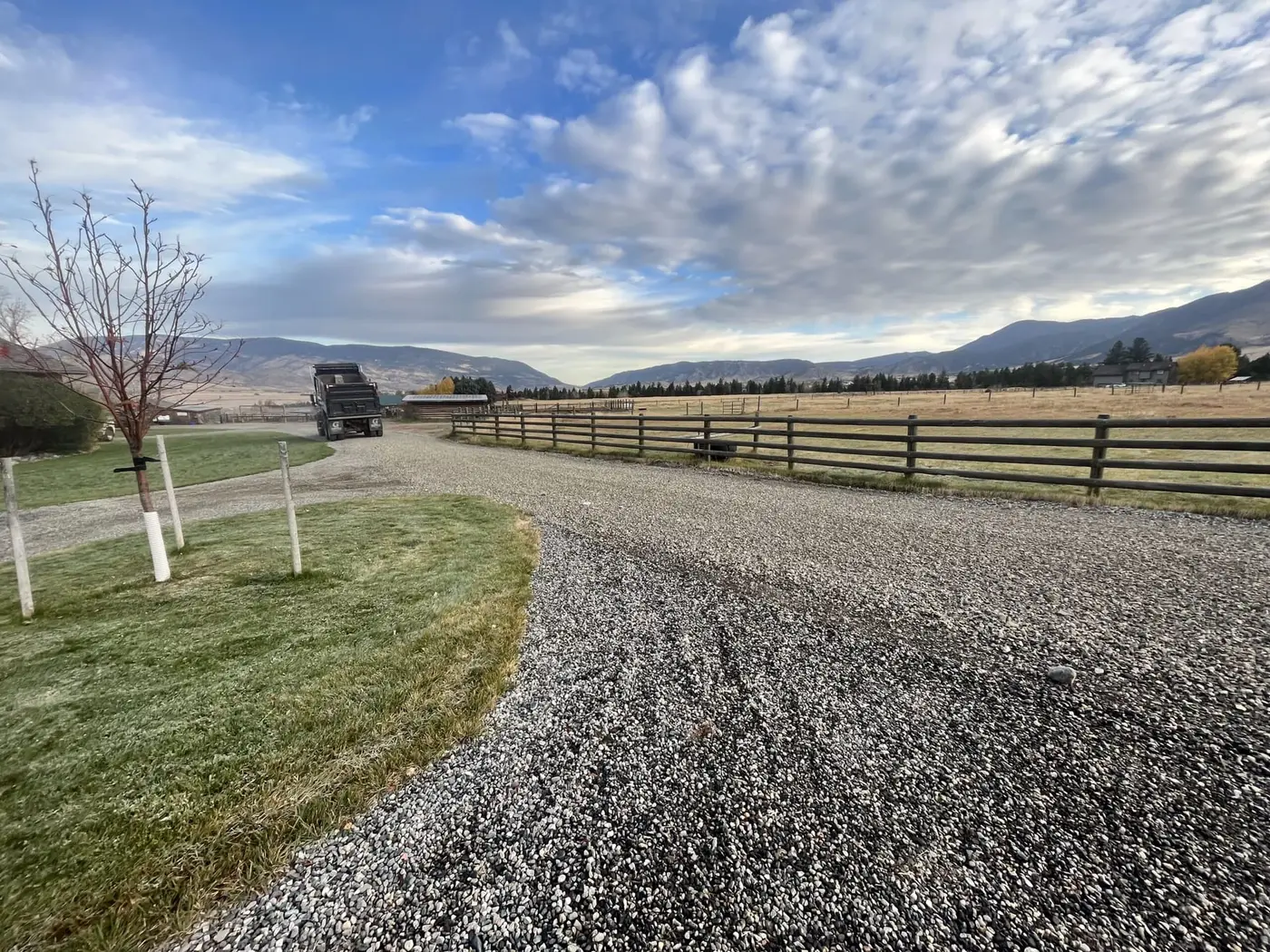
That’s the standard our road construction crew builds to, and it’s the retrofit goal when our road repair work rebuilds a failing section rather than blading it annually. The road work shown in our project gallery (grading, regravel, and repair across Paradise Valley) is mostly this: converting roads that fight spring into roads that drain.
This month’s to-do list, by season stage
Still frozen (late February–March): walk the road now — culvert inlets clear? Stakes marking edges for the plow? This is also the last easy window to move any heavy loads the road will need to carry before June.
Active breakup (March–April): restraint season. Reroute or delay the heavy hauls, keep water moving off the surface daily if storms stack up, and resist the urge to grade soup. Photograph the failures as they appear — spring documentation makes summer scopes precise.
Drying out (May): the assessment window that matters. Probe the soft spots that “recovered” — did they firm up, or just dry on top? Book summer work now; the good calendar slots go to owners who called in May, not August.
Full summer: construction season for whatever the spring revealed — base rebuilds, culverts, regraveling, and crown restoration all want dry material and warm compaction weather.
The economics worth saying out loud
Annual grading of a structurally failing road costs real money and buys nothing permanent. At some point (usually after the second or third identical spring) targeted reconstruction of the failing sections becomes the cheaper decade. An on-site evaluation determines which sections genuinely need base work versus routine maintenance; the fix is rarely the whole road.
While the evidence is fresh: Discuss your road while spring damage is still visible — it’s the most revealing diagnostic season of the year. We evaluate, grade, regravel, and rebuild ranch roads across Gallatin and Park counties.