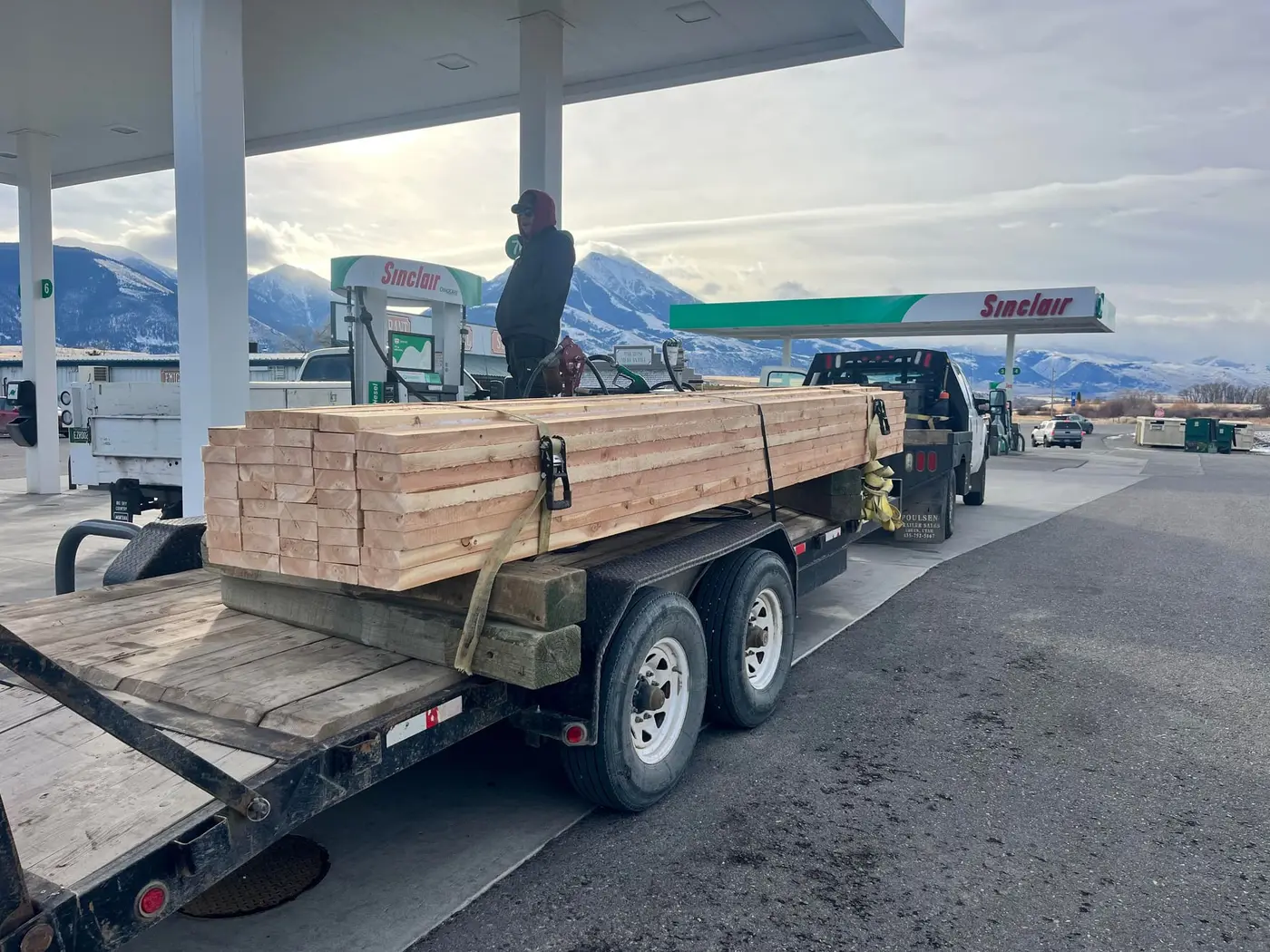
Walk into a lumberyard and you can buy any board you want, as long as it’s one of the sizes everyone else wants. The moment a project calls for a true 3x10, a sixteen-foot rail with character, or a beam that matches the hundred-year-old one in the barn, the catalog runs out. That’s what a sawmill is for, and it’s why we run our own.
Custom sawmilling isn’t nostalgia. On ranch projects it’s frequently the practical answer, and occasionally the only one.
What custom milling actually does
A mill turns logs into intentional lumber. In practice, for ranch work, that means:
Dimensions the yard doesn’t carry. Full-dimension lumber (a 2x6 that measures 2x6), oversized beams, extra-long rails, and odd thicknesses for repairs on old structures built when lumber was honest about its size.
Fence stock cut for the fence. Rails for jackleg and split rail lines, cut consistent, in the lengths the build wants, which matters again years later when a rail needs replacing and the dimension still exists.
Beams with intent. Archway timbers, mantels, porch posts, exposed rafters, pieces where grain, size, and proportion are design decisions, not just structure. Our log archways often carry beams that started as Montana logs a few miles from where they’ll stand.
Character wood. Rough-sawn siding and trim with actual texture; live-edge slabs for the occasional showpiece. The false-beam accents shown in our project gallery came off the same milling operation, sawn character applied where solid timber wasn’t practical.
 On the mill — raw log to intentional lumber.
When custom milling beats buying
The clear decision cases:
- The size doesn’t exist commercially: the most common trigger; matching historic structures, oversized spans, true dimensions
- You have the trees. Storm-downed timber, thinning projects, or clearing for a building site can become the project’s own material rather than a burn pile. There’s real satisfaction (and real value) in a barn whose beams grew on the property.
- Quantity plus specificity. A long fence line’s worth of consistent rails, cut to the build, often pencils out favorably against retail — with better material control
- The look is the point. Rough-sawn texture and full dimensions read differently than planed dimensional lumber; on visible work, that difference is the product
And the counter-cases: commodity framing lumber for a standard build is what lumberyards are good at; milling earns nothing there. Green (fresh-cut) lumber also needs drying time or a design that accommodates movement — a scheduling reality, not a flaw, but one to plan around.
What to know about your logs
If you’re bringing timber to the conversation:
- Species matters. Fir and larch carry structure; pine mills beautifully for rails and siding; species mix shapes what the logs should become
- Length and diameter set the menu. Beams need logs that were bucked with beams in mind — talk before the chainsaw work, not after
- Clean logs, clean blades. Yard-tree logs with fence wire and old nails grown in are the classic mill hazard; history matters
- Storage buys quality. Logs off the ground, ends painted, milled on a sensible timeline — small handling decisions that decide lumber grade
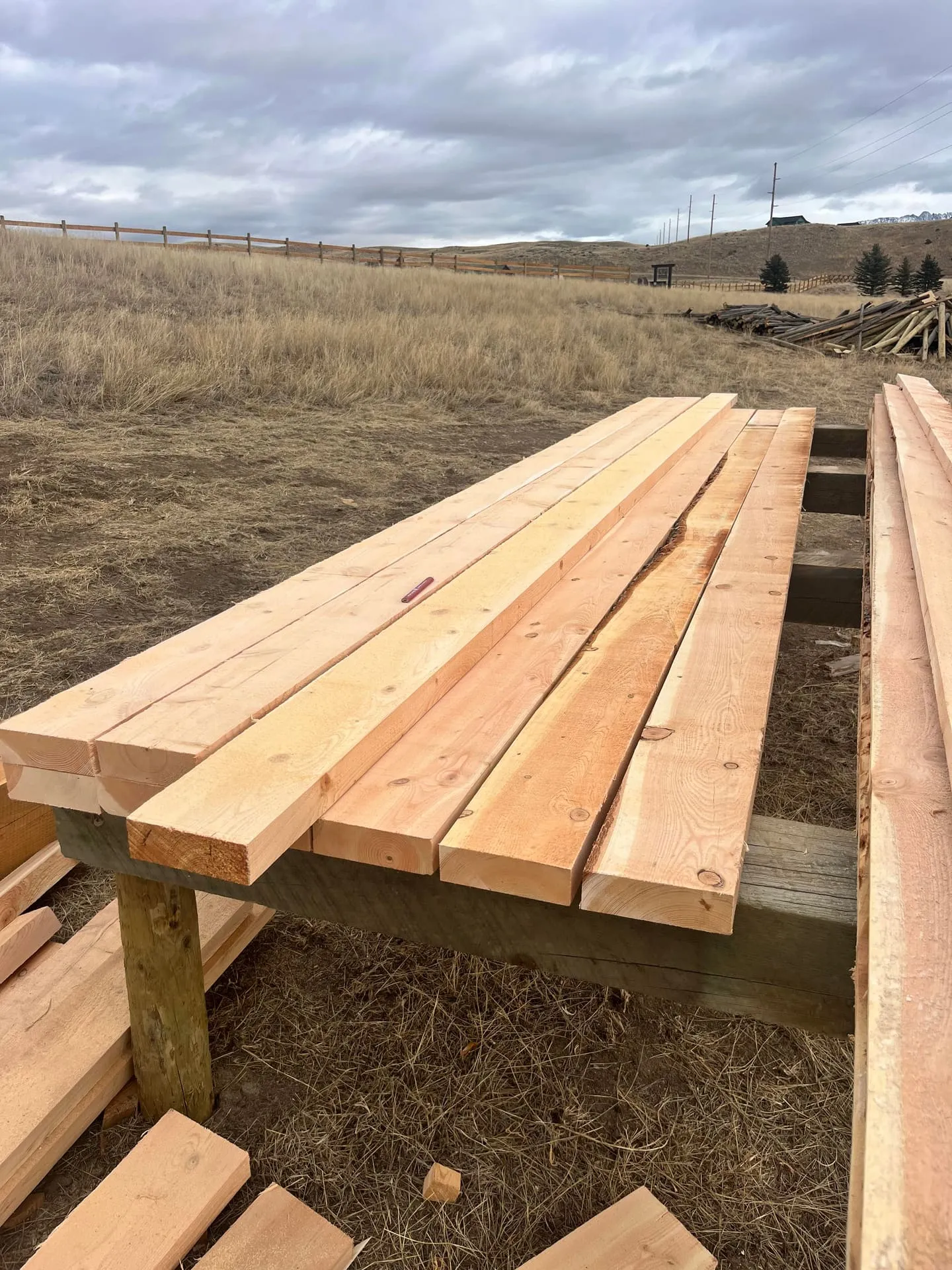
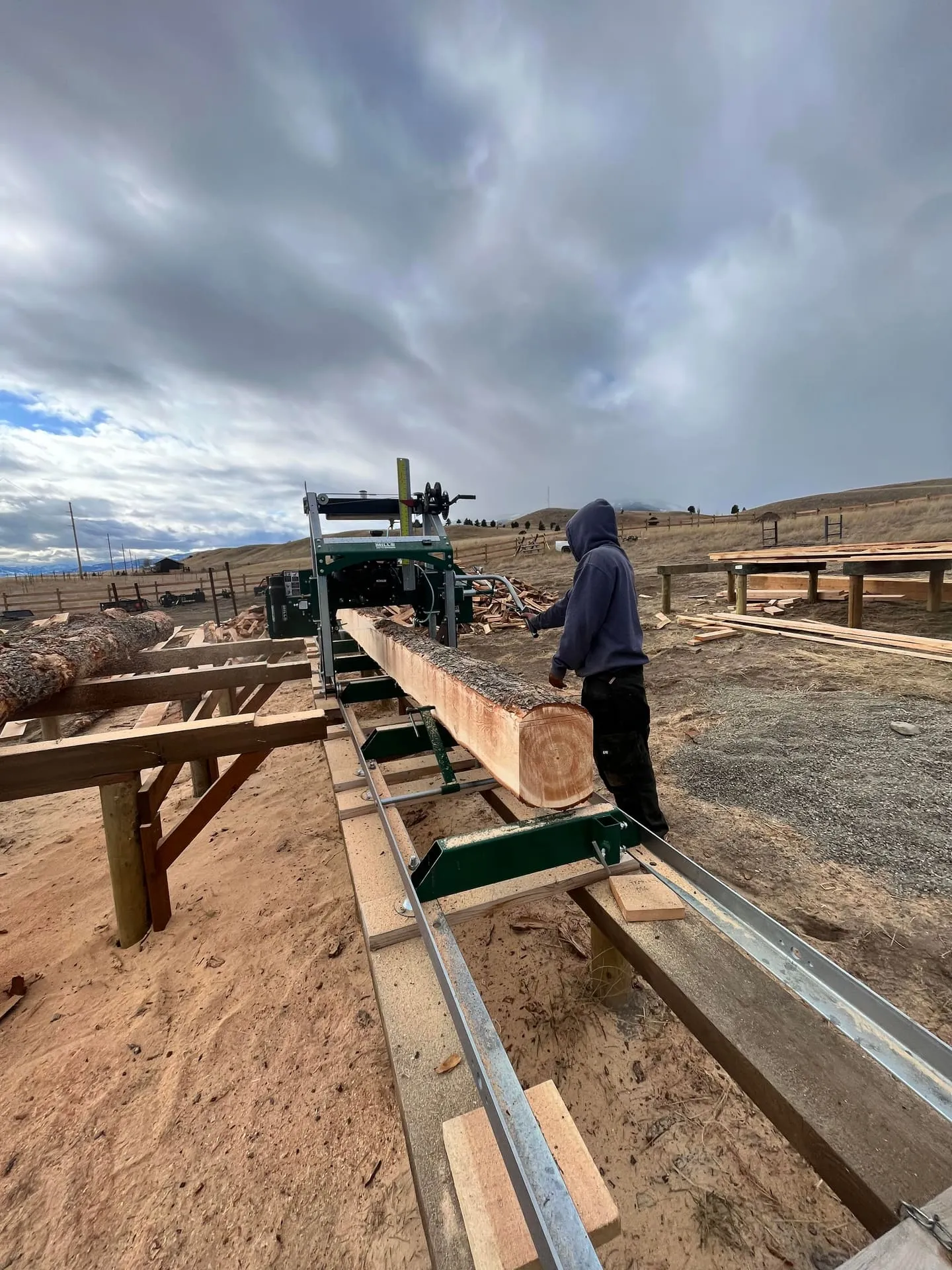 Off the mill — cut list becoming material.
How a milling project typically runs
Ours is an in-house operation feeding our own builds first (fences, structures, entrances) plus standalone custom sawmilling jobs. A typical arc: talk through the end use, assess the logs (yours or sourced), agree the cut list, mill, then sticker and dry as the project requires. The cut list conversation is the important one; everything downstream is execution.
What shapes cost: log condition and handling, cut complexity (beams and matched dimensions take longer than run-of-log boards), volume, and drying/storage needs. Bring the end use and the log inventory; the rest is straightforward.
Milling questions worth asking early
How long from log to usable lumber? Milling itself is quick; drying sets the timeline. Air-drying runs months depending on thickness and season, while some uses (fence rails, rough outdoor structures) tolerate green lumber built with movement in mind. The end use decides the wait.
What can’t a mill fix? Rot, deep checks, and embedded metal. A log’s history limits its future — which is why the log assessment happens before promises about the cut list.
Is small-batch milling worth it? For commodity dimensions, rarely. For the right cases — matching old-structure lumber, oversized beams, sentimental trees becoming mantels — absolutely. Volume helps economics, but specificity is the real reason milling exists.
Do you mill customer logs on-site or haul them? Depends on quantity, access, and the logs themselves — part of the initial conversation. Either way, bucking decisions (where the log gets cut to length) should involve the mill before the chainsaw work.
Where to go from here: Plan a sawmilling project — whether it’s a cut list for a build or a stack of logs looking for a purpose. The sawmilling page covers the operation.