A fence lives or dies at the ground line. You can buy the best wire and the straightest rails made, but if the posts move, the fence fails, and how a post goes into the ground decides whether it stays put for thirty years or leans after three. Most people never think about it. On Montana soil, it’s worth thinking about, because the ground here votes on the method whether you consult it or not.
There are three common ways to set a post. Here’s what each one does well, and where our particular mix of rock, frost, and spring water pushes the decision.
Driven posts: the Montana default for good reason
A driven post is pounded straight into undisturbed ground by a hydraulic post pounder. Nothing is dug, nothing is backfilled. The soil the post displaces stays compacted tightly around it.
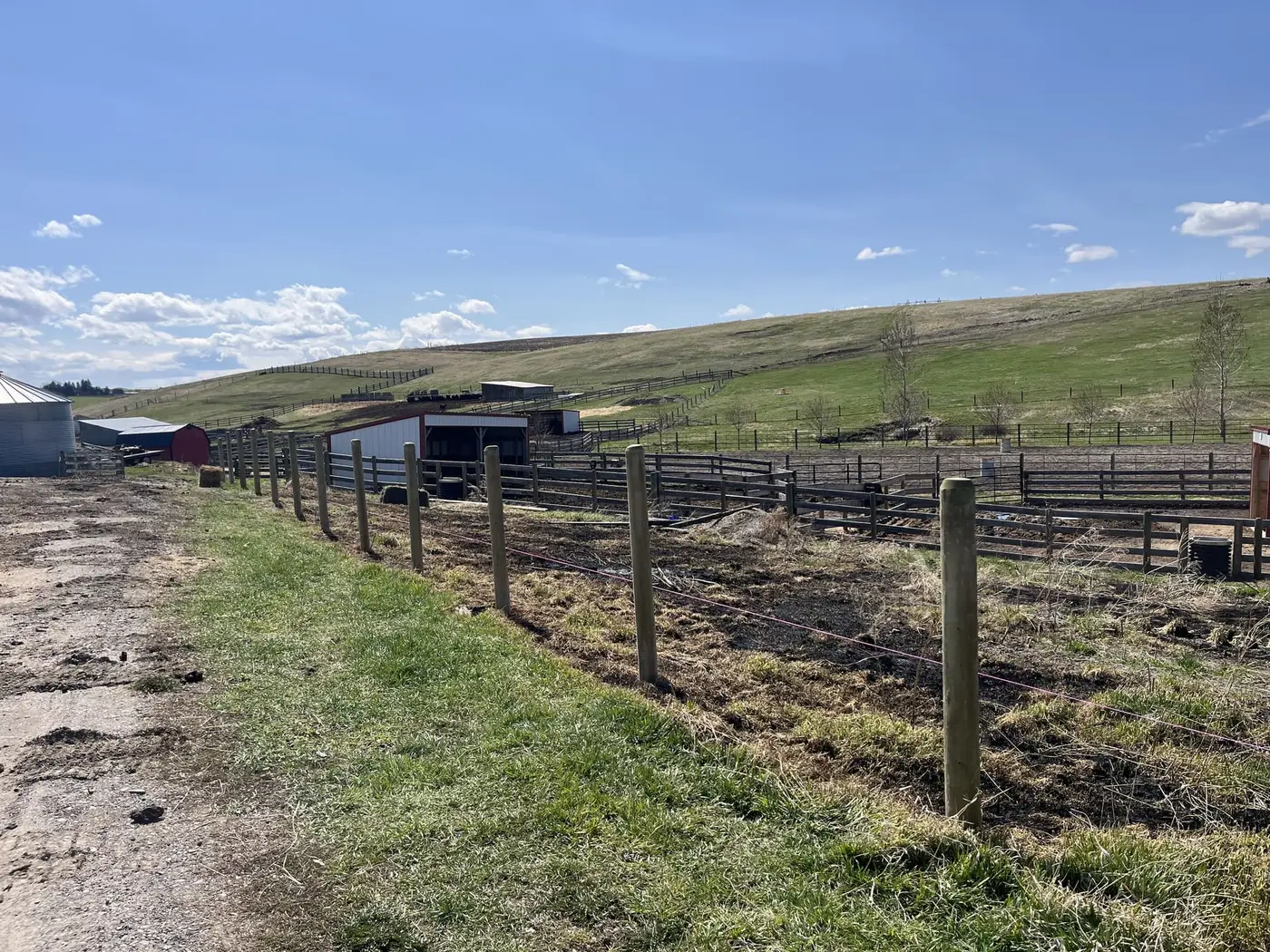
That last point is the whole advantage. A driven post is gripped by ground that was never loosened, so it holds against pushing, leaning, and frost far better than a post sitting in refilled dirt. It’s also fast, which matters when a fence line runs for a quarter mile or more. Our crew drives posts to consistent line and depth with dedicated equipment, and a pasture build like the one at Belgrade in the project gallery shows the process: post after post, level and dead straight, no holes anywhere.
Driven posts are the standard for field fencing, wire lines, and most working fence across the valley. Where they struggle is solid rock, which stops a pounder cold, and that’s usually the moment the conversation turns to jackleg instead.
Augered posts: when you need a hole
Augering drills a hole, the post drops in, and the space around it gets backfilled and tamped, sometimes with soil, sometimes with gravel, sometimes with concrete.
Augering earns its place where a driven post can’t do the job: oversized gate posts, corner assemblies that need depth and mass, and structural posts for entrances and heavy gates. It’s also the answer in ground too hard-packed or rocky to drive but not so bad that setting is impossible.
The catch is the backfill. A hole is disturbed ground, and disturbed ground holds a post less firmly than undisturbed ground until it settles and, in wet years, it may never settle as tight. Good augered sets manage this with proper depth, the right backfill, and real compaction. Rushed ones are where frost finds its opening.
Concrete-set posts: mass where it’s needed
Setting a post in concrete is augering plus a collar of concrete around the post. It adds mass and rigidity, which is exactly right for a gate post carrying a heavy swinging load, a corner that anchors a long tensioned run, or an automatic gate operator that cannot tolerate any movement.
Concrete is not automatically better, though, and here Montana has an opinion. A concrete collar that traps water against a wood post accelerates rot at the worst possible spot, right at the ground line. And a concrete plug set above the frost line gives frost a big flat surface to grab and heave. Done right, concrete goes deep, drains at the base, and is used where its mass is genuinely needed. Done casually, it’s how a gate post ends up tilting with a boulder of concrete still clamped to its foot.
What the ground is actually deciding
Three Montana factors run underneath all of this:
Frost. Freeze-thaw is the enemy of every set post. Frost grabs whatever it can and lifts, a little more each winter, which is why depth below frost and undisturbed grip both matter so much here. It’s also the single biggest argument for jackleg fencing, which sets nothing in the ground and gives frost nothing to lift.
Rock. Shallow ledge, glacial cobble, and river rock decide the method by brute fact. Rock stops a pounder, complicates an auger, and frequently redirects the whole design toward surface-built fence.
Water. Spring seeps and high water tables rot posts and keep backfill soft. Wet ground argues for treated material at the ground line and, often, for a fence type that doesn’t rely on a buried post at all.
The short version, by fence type
- Wire and field fence: driven posts, with augered or concrete corners and gates
- Board and rail fences: driven or augered depending on soil, with set corners
- Jackleg: no set posts at all, which is its superpower on rock and frost
- Gates and entrances: augered and often concrete-set for the mass heavy loads demand
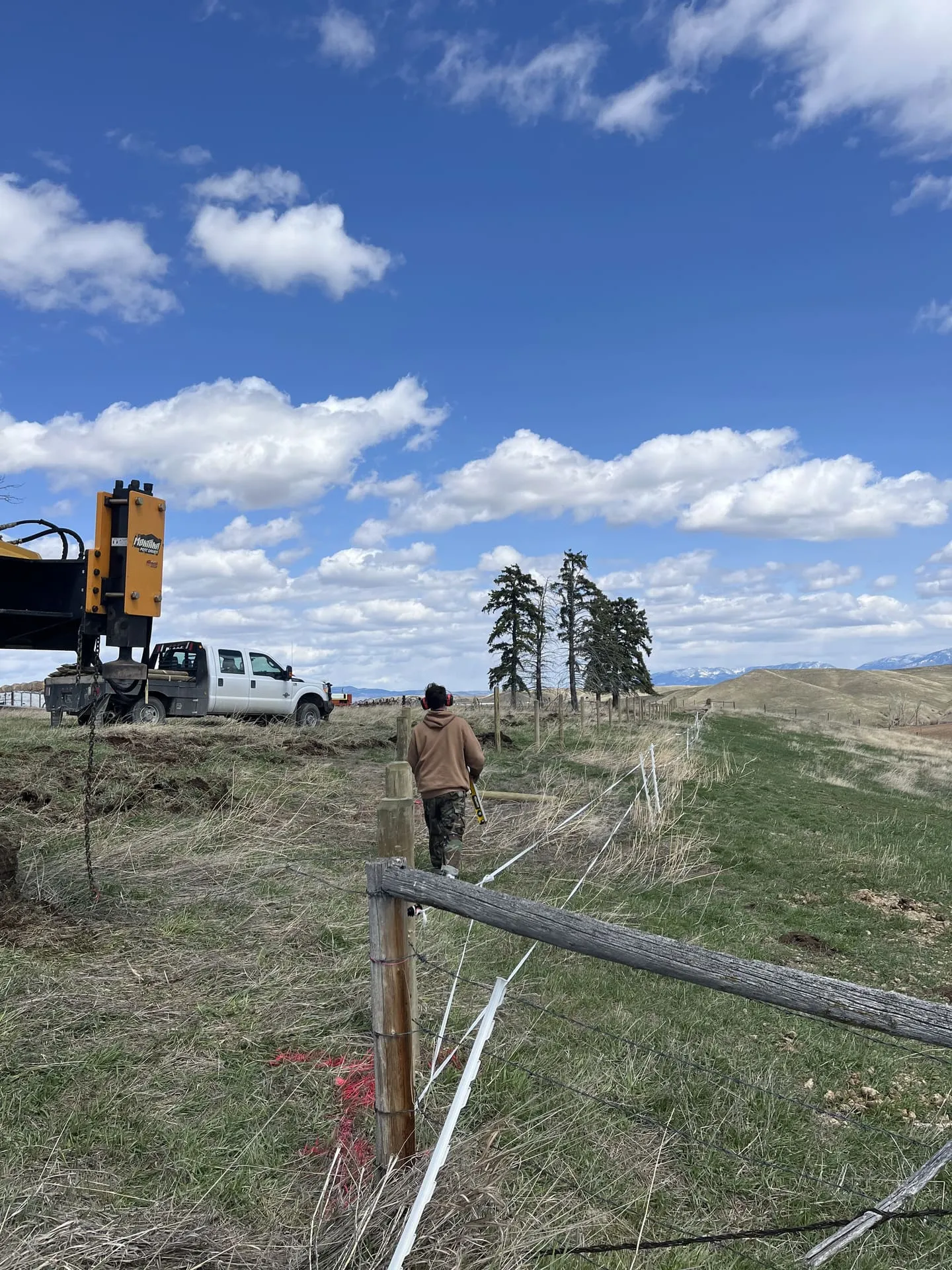 Driven posts on a working fence line, gripped by undisturbed ground.
None of this is a decision you have to make alone. When we walk a fence line, the posts are half of what we’re reading in the ground, and the method follows the soil, not a preference. The fence planning guide covers the rest of the questions worth thinking through first.
Ready to talk footage: start a fence estimate and we’ll read your ground with you. Free on-site measurements across Southwest Montana.