Most ranch fences last somewhere between 10 and 30 years, going by the extension figures we could find, and a fence on untreated posts can be done in five. The fence type sets the rough range. What decides where your fence lands in it is the posts, the corners, and the ground they sit in. Wire and rails rarely wear out first. The posts rot at the ground line, frost lifts them, or a corner lets go, and the rest of the fence follows.
Here’s what the published numbers say, and what wears each fence out on Montana ground.
The short answer
- Wire fences (barbed, woven, no-climb): roughly 20 to 30 years when they’re built on treated posts with good corners, according to extension sources.
- Wood rail and board fences: extension figures are shorter, about 10 to 20 years, and depend heavily on treatment and upkeep.
- Steel fences (pipe, continuous panel): no rot, so their life comes down to rust, finish, and the posts staying put.
- The posts set the clock. Untreated pine posts may last only 3 to 7 years. Properly treated ones, 20 to 35.
How long does each type of fence last?
The ranges below come from extension publications where we could find them. They assume proper installation and maintenance, and they come from different states and studies, so treat them as typical, not promised. Where we couldn’t find a published range we trust, we’ve said so rather than guess.
| Fence type | Typical life, where published | What usually ends it |
|---|---|---|
| Barbed wire | Tied to the posts: treated pine posts 20 to 35 years (UK Extension); tall barbed game fence about 30 years (MSU Extension) | Posts rotting at the ground line, heaved or failed corners, broken and rusted strands |
| Woven wire / field fence | 20 to 25 years (Extension Horses); tall woven game fence about 30 years (MSU Extension) | Sag from snow and livestock pressure, corners, posts, rust on lighter galvanizing |
| No-climb | Same woven-wire family, 20 to 25 years | Horses leaning and rubbing, slack mesh, posts |
| Jackleg | No reliable published range found | Wood species and treatment, legs sitting in wet ground, rails pulling free |
| Split rail | 10 to 15 years for wood post-and-rail (Extension Horses) | Posts rotting at the ground line, rails slipping out of the mortises |
| Round rail | 10 to 15 years for wood post-and-rail (Extension Horses) | Posts at the ground line, rails checking and splitting |
| Ranch board | 15 to 20 years for wood post-and-board (Extension Horses) | Boards splitting and loosening, paint or stain upkeep, posts |
| Pipe (oil-field) | Decades; heavy-wall pipe doesn’t rot, and the published 15 to 20 years (Extension Horses) is for lighter steel horse fence | Rust where steel meets wet ground, finish upkeep, cracked welds |
| Continuous panel | No reliable published range found | Rust at the ground, bent panels from impacts, posts moving |
| Cedar privacy | No reliable published range found | Posts at the ground line, wind load on solid panels, boards weathering |
Sources: University of Kentucky Extension, Installing Wood Posts for Greatest Longevity; MSU Extension, Electric Fencing to Control Deer and Elk on Montana’s Farms and Ranches; Extension Horses, Basics of Effective Horse Fencing.
A few notes on reading that table:
- Treated vs. untreated changes everything for wood. The post-and-rail figures don’t separate treated from untreated wood. A rail fence on posts treated for ground contact sits at a very different place in that range than one on raw posts.
- Jackleg is a special case. Its legs sit on top of the ground instead of in it, so there’s no buried post to rot or heave. Its life comes down to the wood and how wet the ground stays under the legs. That’s a big reason treated jackleg holds up so well on damp ground.
- Read the steel figure with care. The only extension figure for steel pipe comes from a horse-fencing table and covers lighter pipe with ordinary maintenance. Heavy-wall oil-field pipe doesn’t rot and is the longest-lived fence we build; how long it lasts comes down to wall thickness, the finish, and how much time the base spends in wet soil.
What shortens a fence’s life in Montana?
Posts rotting at the ground line
This is the most common way a wood fence dies. University of Kentucky Extension notes that untreated or dip-treated posts rot first at the ground line, where water and air together give fungi the best conditions. Below the surface the wood can look fine. At grade, it turns soft. Research on lodgepole pine posts by the USDA Forest Service found that a good preservative treatment greatly extends their service life.
Frost heave
Montana’s freeze-thaw cycles grip a set post and lift it a little each winter. Those small lifts add up until the post has lost its grip, and a heaved corner lets the whole run go slack. Depth, soil and setting method all matter; our guides to frost depth and how fence posts are set cover the details.
Snow load and drifting
Drifts pile against wire and rails and settle as they melt, dragging the fence down and out. Woven wire and no-climb catch more snow than barbed strands, and solid privacy panels catch the most. Fences that run across the prevailing wind take the worst of it.
Elk and livestock pressure
Elk that can’t comfortably clear a fence often go through it, and a herd crossing the same spot every winter breaks wire, snaps rails and loosens posts. Cattle and horses lean, rub, and reach over for the grass on the other side. All of that loading ends up in the posts and corners.
Poor bracing
Corners and gate posts carry the full tension of every run they anchor. When a corner leans, the wire loosens all the way down the line, and everything after that is damage control. It’s why corners and braces fail first, and why an under-built corner shortens a fence’s life no matter how good the rest of it is.
Wet soils
Creek bottoms, irrigated meadows, and spots where spring runoff pools keep posts wet longer, speed rot, and soften the ground that holds the post. Wet, heavy soils also tend to heave more.
Cutting corners at installation
UK Extension points out that cutting the top off a treated post, for height or a sloped cap, can expose untreated wood inside, and that painting posts while they’re still wet traps moisture. Both can start rot in a post that should have lasted decades.
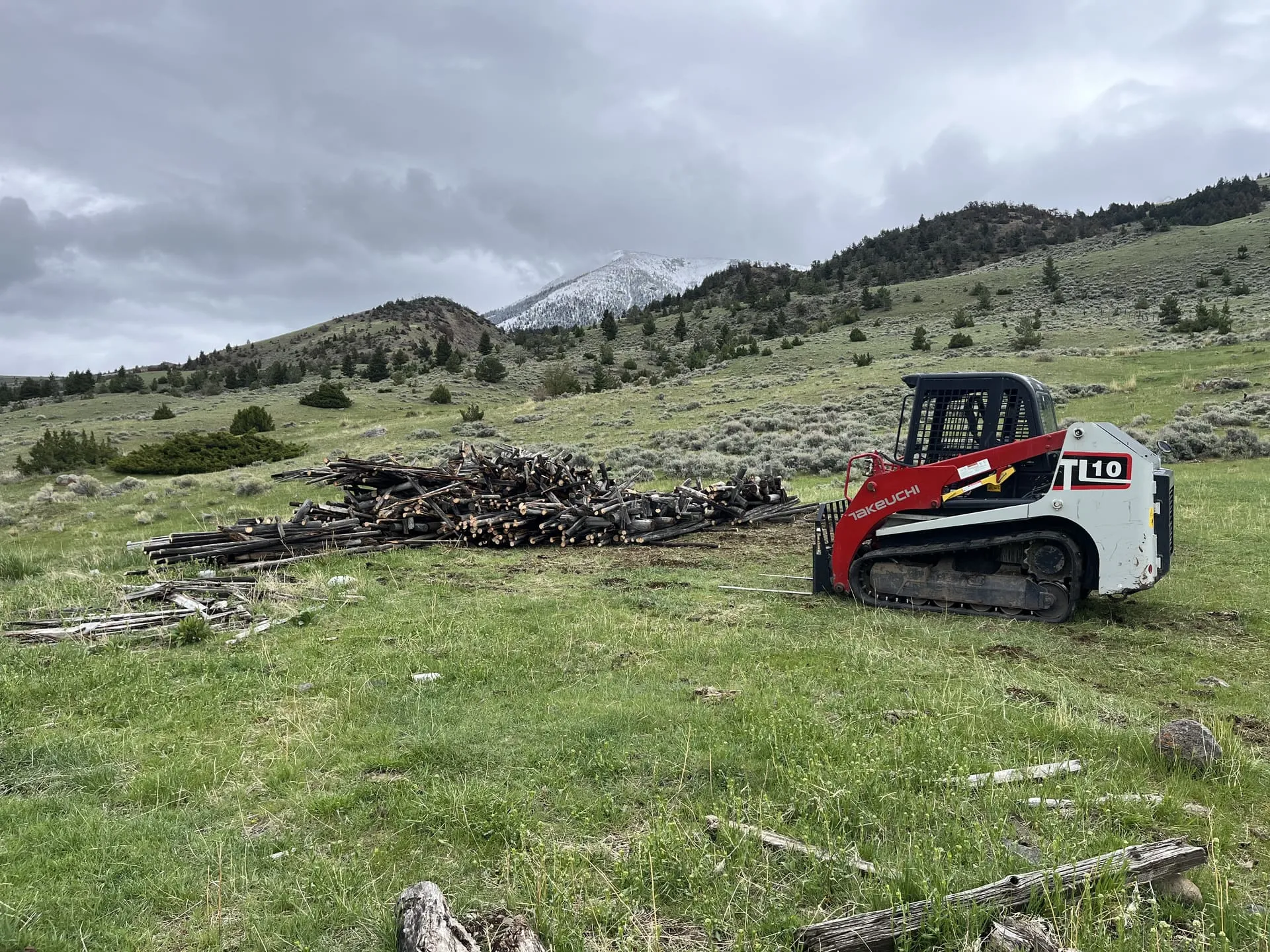 Old jackleg pulled from a line near Six Mile Creek, stacked for hauling before the replacement fence went in.
What makes a fence last longer?
- Posts treated for ground contact. UK Extension notes that treated posts are tagged for ground-contact use. If a post top has to be cut, the cut end should be re-treated with a brush-on preservative.
- Corners built for the load. Size brace assemblies to the length of the runs and the tension they carry, and set them solidly below the frost-active layer.
- The right tension. Wire that’s stretched properly doesn’t sag into drifts or get pushed out of shape by stock. Wire that’s over-stretched breaks in a cold snap.
- Heavier galvanizing on wire. Galvanized wire comes in coating classes. Class 3 carries a heavier zinc coat than Class 1 and holds off rust longer.
- Drainage. Keep water moving away from posts and gate bases. A fence line laid out to skirt a wet spot often outlives one driven straight through it.
- A spring walk. After the snow goes, look for posts standing taller than their neighbors, leaning corners, slack wire, broken rails, and hair or breaks where wildlife crosses. Catching a corner early matters more than anything else on that walk.
When is an old fence worn out?
When posts are loose down the whole run and the corners have moved, the fence has reached the end of its life, whatever the wire looks like. Our guide on whether to repair or replace an old fence line walks through how to judge it.
If you’re planning a fence for the long haul, the fencing guide compares each style side by side, including how each one handles snow, stock, and wet ground. To talk through a specific line, start a fence estimate or call (406) 551-6772.