Horses are hard on infrastructure and hard on themselves, which makes a horse property a specific kind of build. The same ground that works fine for cattle can hurt a horse, and the shortcuts that hold up on a hay operation come back to bite you when the animals are worth what horses are worth. If you’re setting up a place for horses in Southwest Montana, here’s how the major pieces fit together, and the order that tends to save the most money and vet bills.
Fencing: safety first, always
Everything about horse fencing comes down to one idea: the fence has to be safe for the animal that will inevitably test it. Horses spook, run, paw, lean, and misjudge, and a fence built only to contain them can still injure them.
The safe options, in rough order of how often they suit horse properties:
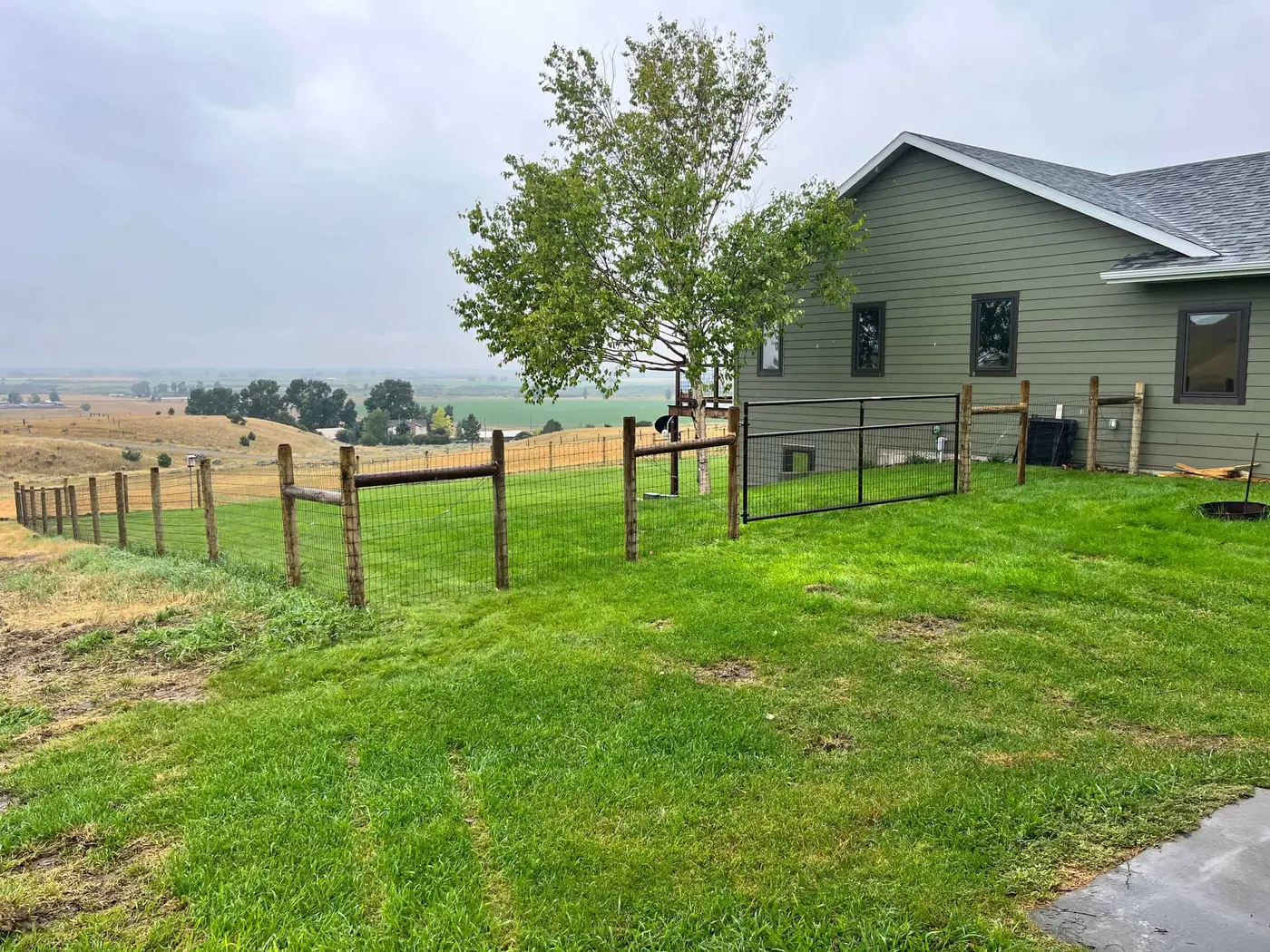
- No-climb mesh: the benchmark. Its tight 2x4-inch openings give a hoof nowhere to go through and no foothold to climb. Paired with a top rail for visibility, it’s the standard for paddocks and pastures where safety is the priority.
- Ranch board: highly visible and handsome, the classic horse-farm look. Inspect for broken boards, since a snapped board leaves sharp ends.
- Round rail: stout, visible, and hard to break, with doweled joints that resist a leaning horse.
The one non-option: barbed wire, which has no place on a horse property. Our no-climb horse fencing guide goes deep on the safety details, and the round rail versus ranch board comparison helps between the two premium looks.
A practical layout note: most horse properties end up layered. No-climb around the paddocks and high-traffic areas near the barn, something handsome along the entrance and road frontage, and simpler field fence on outer pastures the horses rarely pressure. Spending the safety budget where the horses actually concentrate is smarter than spreading it evenly.
Shelter: run-in beats barn for most turnout
Horses handle Montana cold better than people expect. What they need is a dry place out of the wind, not necessarily a heated barn. A three-sided run-in shelter, open face turned away from the prevailing winter wind, covers most turnout needs at a fraction of a barn’s cost.
The siting rules are the same ones that govern any livestock shelter: open face away from the wind, roof shedding snow away from the doorway and the fence line, and enough room that a dominant horse can’t trap a timid one out in the weather. Get the orientation wrong and the shelter drifts full or blows through; get it right and the horses use it exactly as intended.
Footing and mud: the problem nobody plans for
Mud is the quiet enemy of horse properties. It causes hoof problems, wastes feed, and turns the highest-traffic areas into a spring-long mess. The fix is planned before the mud arrives, not after.
The high-traffic zones, gateways, waterers, shelter entries, and feeding areas, benefit enormously from a proper footing base: excavated, geotextile fabric, and gravel, or a concrete apron in the worst spots. This is excavation and drainage work done once that pays off every wet season for the life of the property. Grading so water runs away from where horses stand is half the battle.
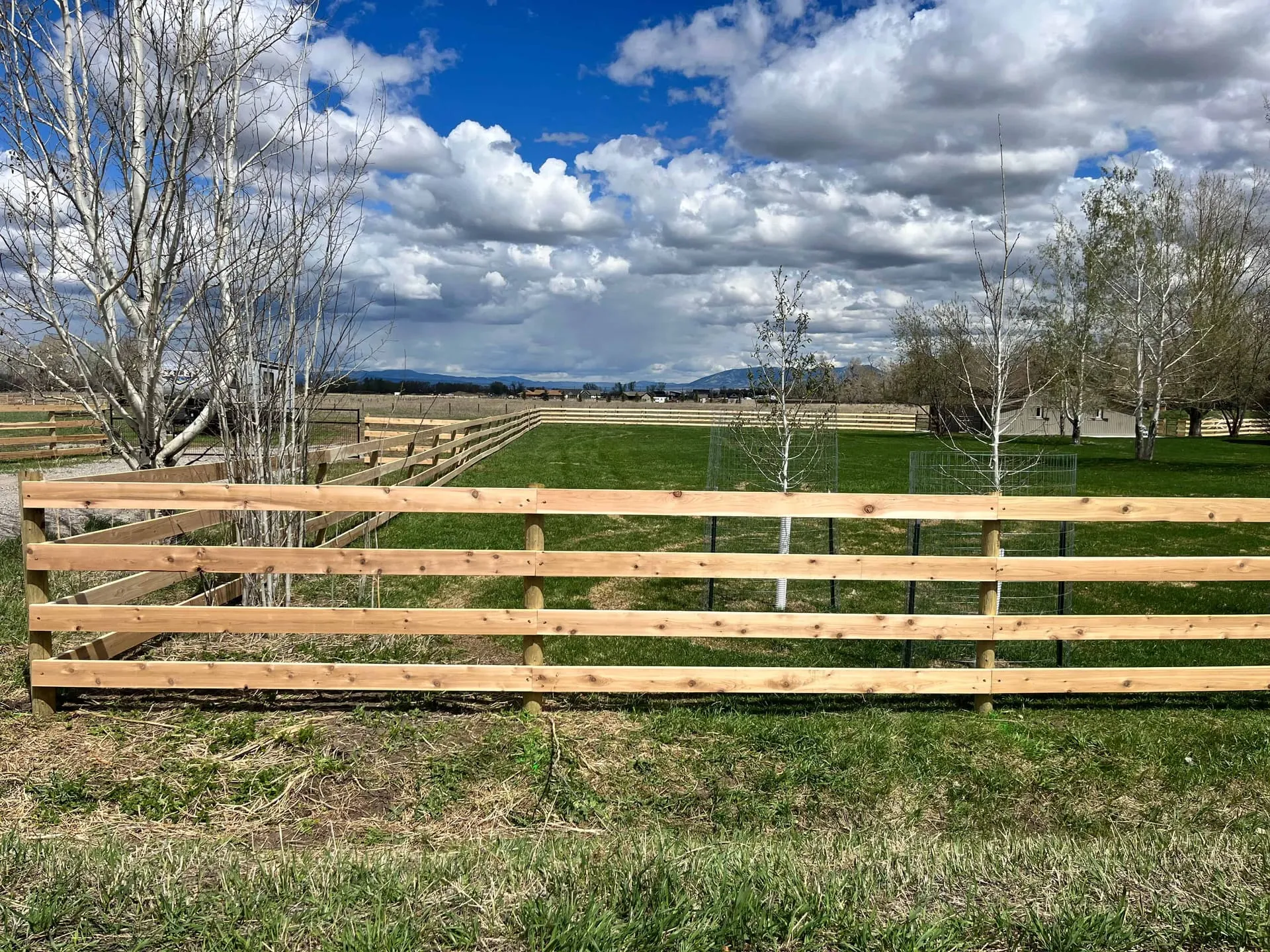 Visible board fencing along a horse property, with mesh reserved for the paddocks.
Water: the piece that shapes the daily routine
Horses need reliable water more than they need almost anything else, and where the water sits shapes how the whole property works. Freeze-proof waterers, frost-depth supply lines, and thoughtful placement relative to shelter and paddocks turn winter chores from a daily battle into a non-event. Running water lines is utility excavation, and it wants to happen before fences and footing lock the layout in place.
Arenas, round pens, and turnout footing
Once the basics are handled, the working surfaces are what turn a place with horses into a horse property you can actually use through the seasons. All three come down to footing, which is really a drainage-and-base question in disguise.
Round pens are the smallest and simplest, but the footing still matters. A pen built on native ground turns to soup in spring and concrete-hard dust in August. A modest excavated base with the right footing material on top drains, cushions, and stays usable far more of the year.
Arenas are a bigger earthwork project than most people expect, and the surface everyone admires is the least of it. Underneath a good arena is graded, compacted base built to drain, because standing water is what destroys an arena and injures horses. Get the base and drainage right and the footing on top performs; skip them and no amount of expensive surface material saves it. Orientation matters too, since wind and low sun affect how usable an outdoor arena is.
Turnout and high-traffic zones are where Montana mud does its worst, and the fix is the same footing logic applied at gateways, run-in entries, and around waterers: excavate, stabilize, and surface the spots where hooves and moisture concentrate. It’s drainage and site work that pays back every wet season.
The common thread is that horse footing is built from the ground down, and the visible surface is the last and smallest decision. Planning arenas, pens, and turnout as earthwork projects, sequenced with the water lines and drainage before fences lock the layout, is how they end up usable instead of seasonal.
A sensible build order
If you’re starting close to bare ground, this sequence tends to work:
- Plan the whole layout on paper first, paddocks, shelter, water, gates, and traffic flow, so the pieces serve each other
- Rough in water lines and any utility trenching before surfaces and fences fix the layout
- Establish footing and drainage in the high-traffic zones
- Build the fencing, safe types where horses concentrate, handsome types where they’re seen
- Set the shelter oriented to the wind you’ve now watched for a season
- Finish the entrance and frontage once the working property is sound
The thread through all of it: horses reward planning and punish shortcuts, and the properties that work beautifully were thought through as a system rather than assembled one panicked project at a time.
Plan a structure or fence: tell us about your horse property and we’ll walk the layout with you, or start with the fencing comparison to weigh the safe options. Free estimates across Southwest Montana.