Southwest Montana property comes in every size from a Belgrade horse acre to a Paradise Valley cattle operation, but it all answers to the same landlord: this specific climate, on this specific ground. Whether you’ve owned your place for thirty years or thirty days, improving it well means working with what the region actually is — not what the brochure implied.
This is the regional field guide: what the land demands, which improvements matter most, and how the seasons want your projects sequenced.
What this region asks of everything you build
Four realities shape every project between the Bridgers and the Absarokas:
Frost runs deep and works hard. Freeze-thaw cycles heave shallow footings, eject fence posts, and destroy roads built without real bases. Everything structural here starts with the same question — what’s below frost depth? — whether it’s a stone entrance column, a gate post, or a deck footing.
Wind is a design input, not weather. Livingston’s reputation is earned, and every valley has its own version. Wind orients livestock shelters, loads gates and signs, builds the snow drifts your road plan has to answer, and decides which deck gets used.
Water writes the schedule. Spring breakup turns roads to pudding (here’s why), seeps appear where August showed nothing, and drainage (not traffic) is what kills rural roads (the warning signs).
Wildlife shares the deed. Deer and elk pressure shapes fence choices, garden plans, and the difference between a fence that coexists with migration and one that gets rebuilt every spring.
The improvement hierarchy: where value concentrates
After enough projects across Gallatin and Park counties, a pattern emerges in what owners are glad they did:
1. Access first. A property you can’t reach in March is a seasonal property, whatever the deed says. Roads, culverts and drainage, and a winter plowing plan come before everything, because everything else arrives over that road.
2. Boundaries and containment. Fencing is the working skeleton of a property — livestock in, wildlife managed, lines legible. The planning questions and fence comparison cover this world.
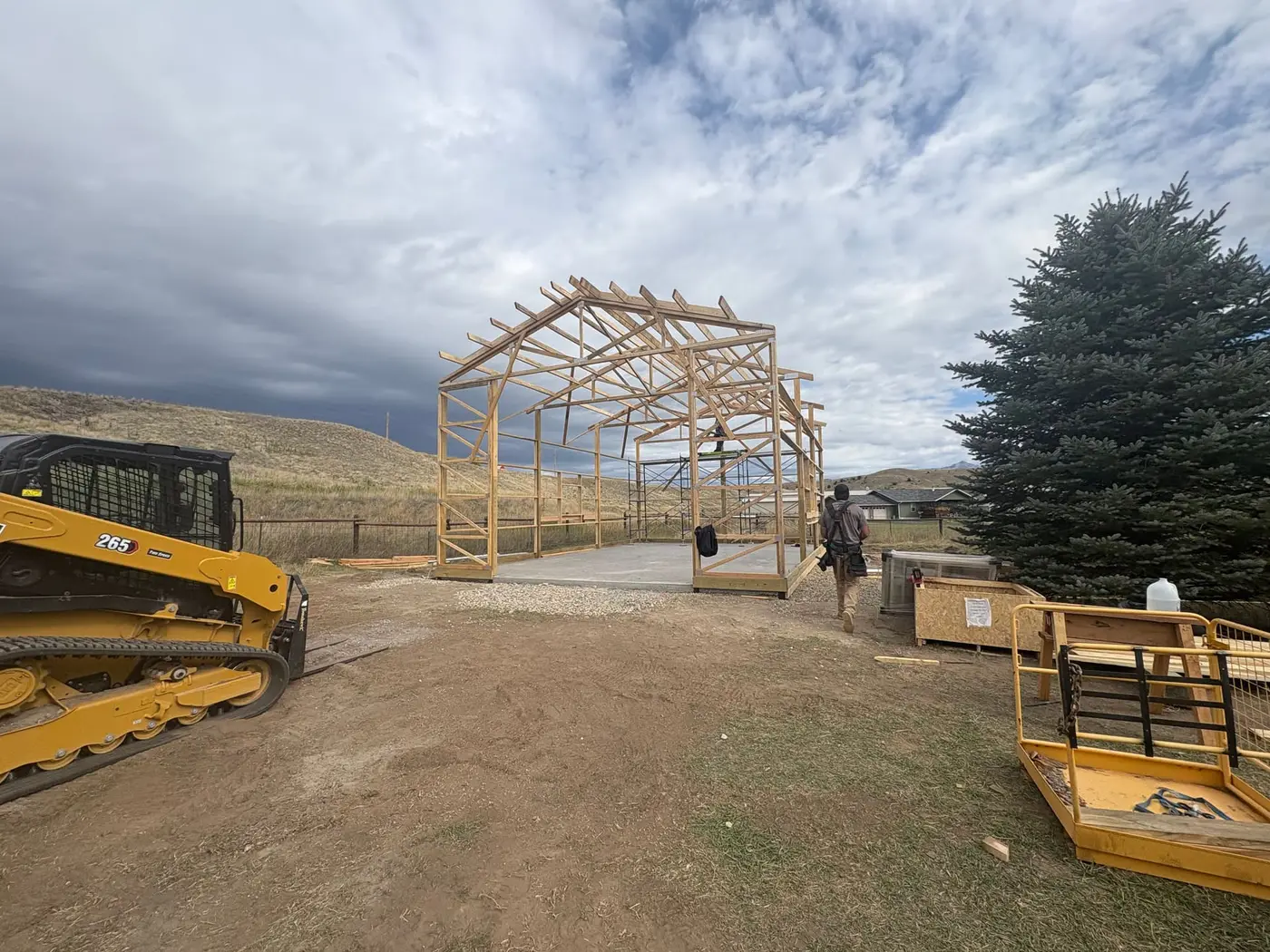
3. Shelter for what you value. Equipment, feed, and animals all degrade outdoors. The barn/shed/shelter decision is usually the biggest single-structure choice an owner makes.
4. The entrance. First impression, daily convenience, and (with a gate) security. The entrance planning guide walks the decisions from siting to signage.
5. The living layer. Decks, stone stairs, patios, finish concrete — the projects that convert a property you run into one you enjoy.
Most owners intuitively want to start at 4 or 5. The ones happiest at year five started at 1 and 2.
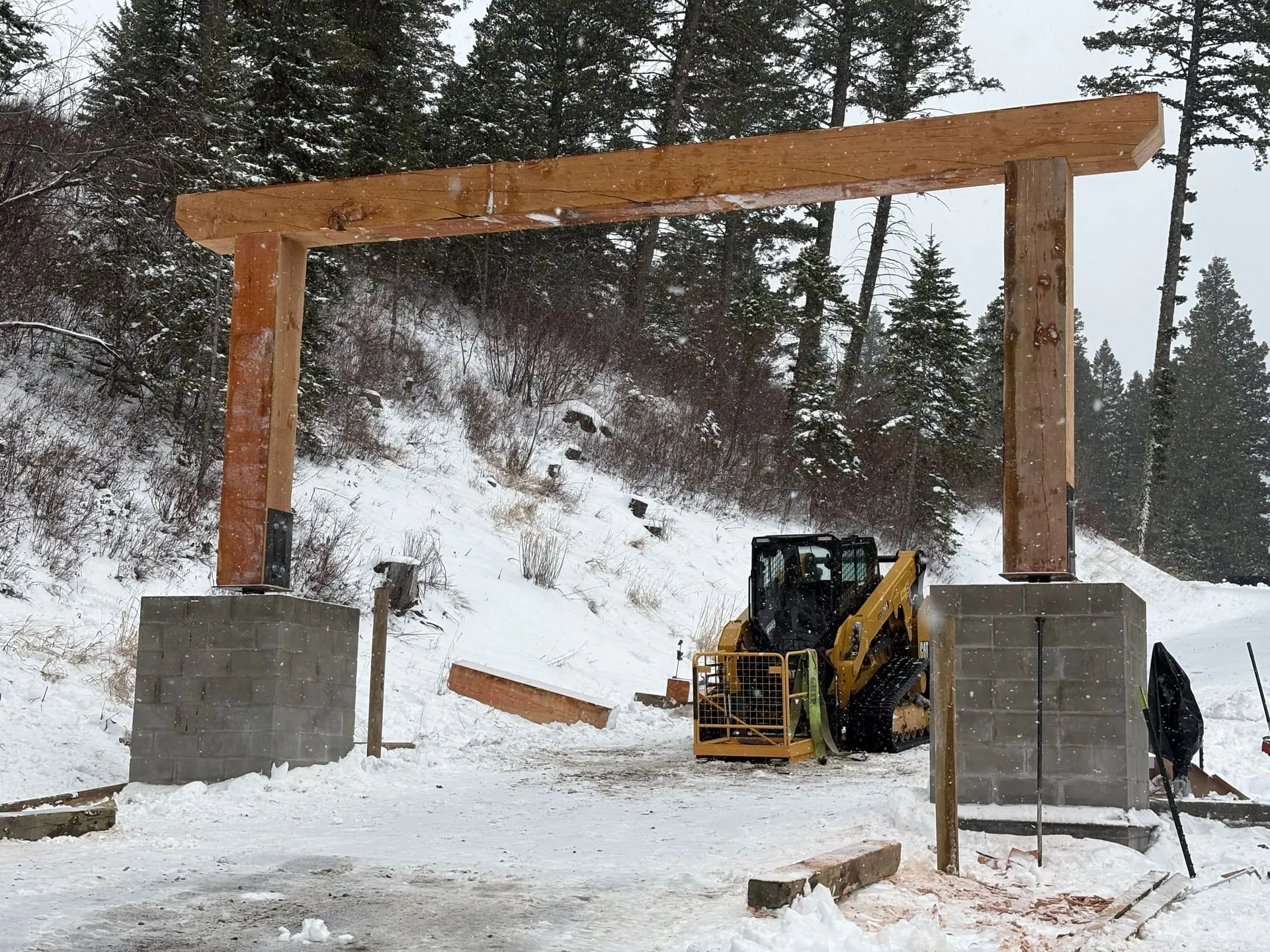 Entrance, gate, and fence working together — improvement layers built in the right order.
The regional project calendar
Season is strategy here:
- Winter (Dec–Mar): jackleg fence builds (no post holes, no problem), welding and fabrication, demolition on frozen ground, planning and estimates for the year
- Spring (Apr–May): damage assessment season — roads confess, fences report; book summer work now while calendars are open
- Summer (Jun–Sep): earthwork, roads, concrete, structures, driven-post fencing — the compaction-and-cure season everything structural wants
- Fall (Oct–Nov): fence tear-outs on firm ground, winter prep, snow contracts, and the last comfortable concrete window
The most efficient owners run a rolling eighteen-month view: walk and plan in spring, build in summer and fall, jackleg and fabricate through winter, repeat.
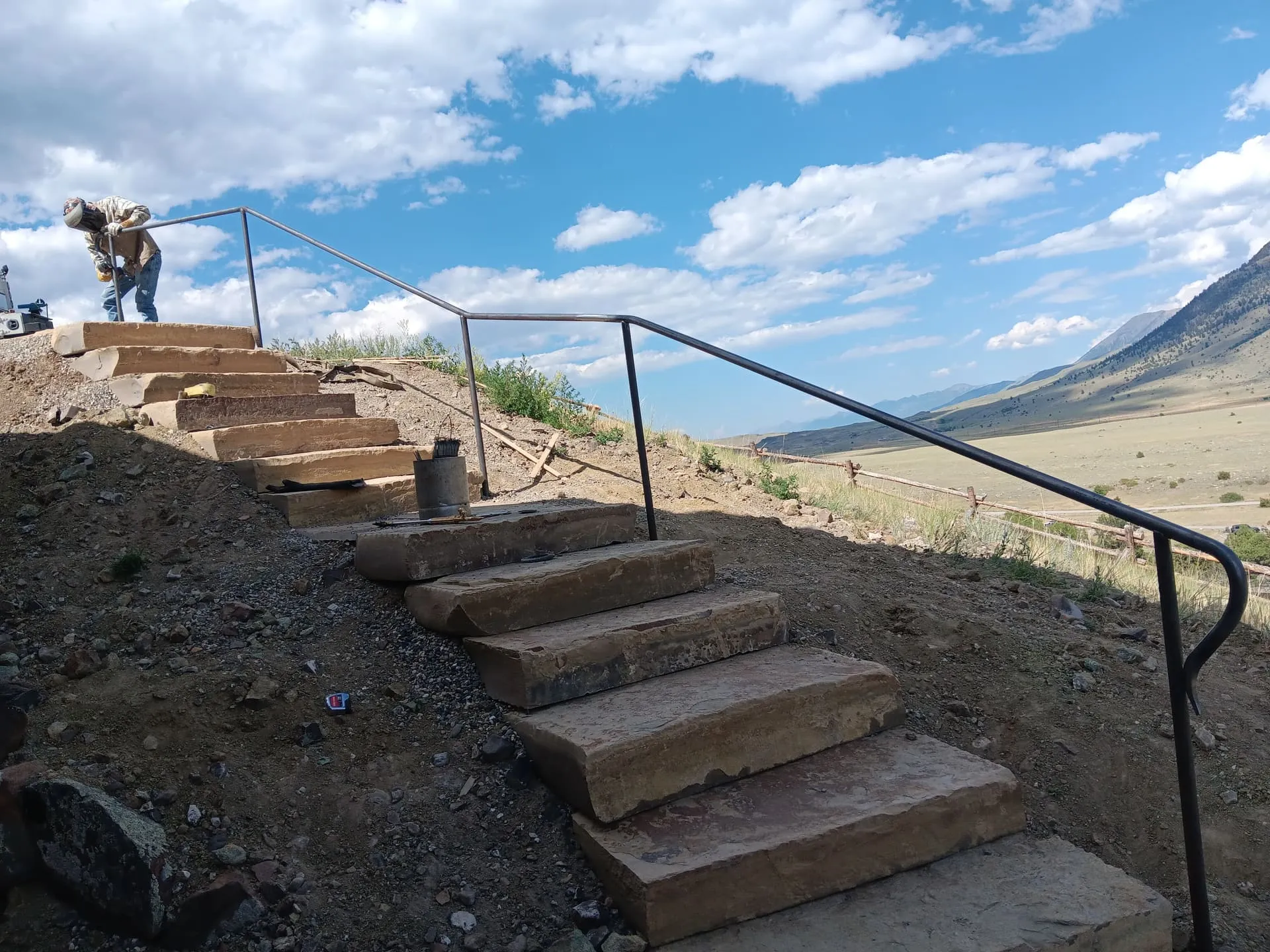 The living layer: hillside stairs from the gallery — permanence as a design goal.
A note on doing it once
The consistent thread through every guide in this library — fences, roads, entrances, structures — is that this climate punishes shortcuts on a schedule. The base under the road, the footing under the column, the drainage beside everything: the invisible work is the product. Built right, improvements here genuinely last generations; built fast, they last until about the third spring.
That’s also the honest sales pitch for professional evaluation: not that owners can’t judge their own ground, but that someone who has opened up a hundred local sites knows where this valley hides its surprises. The cost-variables guide explains what that walk-through settles.
The five most common first projects — and what they teach
Across the region, new owners’ first calls cluster remarkably tightly. In rough order of frequency:
- Fix the driveway. Usually after the first spring proves the seller’s gravel was cosmetic. The lesson owners take away: base and drainage were the product all along.
- Replace the perimeter fence. Inherited fence is a mystery of unknown age; livestock plans force the question. The fence planning questions turn this from a like-for-like rebuild into a property upgrade.
- Build the shop or barn. Montana equipment ownership grows to fill available storage, then exceeds it. The structure comparison helps right-size the first building — the one whose mistakes teach the second.
- Automate the gate. Often triggered by the first winter of manual gate service in the wind. The cold-weather gate guide exists because this project done half-right fails in February.
- The entrance statement. Frequently last chronologically and first emotionally — held until the property’s identity has settled, then built once, properly, with the entrance planning sequence.
There’s a pattern in the order: function first, identity after — the same hierarchy this guide recommends on purpose.
A first-year playbook for a new property
If you just closed on a place, the temptation is to fix everything before the first winter. A calmer sequence gets more done and wastes less. Here is a first year that consistently works well for new Southwest Montana owners:
First season (whatever season you arrive): Resist building. Watch instead. Note where water sits after rain, where the wind stacks snow if it’s winter, where the afternoon sun lands, where the game trails cross. This costs nothing and informs every project that follows. Walk your fences and roads and simply write down what’s failing.
First spring: This is the property’s confession. Roads reveal their soft spots during breakup, fences show which posts heaved, and drainage problems announce themselves while the ground is saturated. Spring is the season to diagnose and to book summer work, because good crews fill their calendars early.
First summer: Build the access and boundary items the spring exposed. Roads, culverts, and the perimeter fence are the working bones of the property, and summer is when earthwork, driven-post fencing, and concrete all want to happen. If a structure is on the list, this is its season too.
First fall: Handle the winter-prep items. Fence tear-outs go smoothly on firm ground, snow-removal arrangements want to be locked before the first storm, and it’s the last comfortable window for concrete. Fall is also a fine time to build jackleg sections, which then carry into winter.
First winter: The planning-and-fabrication season. Jackleg fence goes up without post holes, welding and gate fabrication happen in the shop, and you sketch next year’s projects with a full season of observation behind you.
A few first-year cautions worth stating plainly:
- Find your buried lines early. The power to the well, the septic field, the old irrigation main. Knowing where they run before any digging saves a dangerous and expensive surprise.
- Don’t inherit the previous owner’s fence plan by default. The fence that’s there was built for a property that may no longer exist. A fresh look, using the fence planning questions, often turns a like-for-like rebuild into a real upgrade.
- One good project beats three rushed ones. This climate punishes shortcuts, so a well-built driveway or a properly footed entrance returns more than a scramble to touch everything before snow.
Where to start, practically
- Walk your property with the hierarchy above and list what fails first — access, boundary, shelter, entrance, living layer
- Read the specific guides linked throughout for whatever tops the list
- Look at real local work: the project gallery spans fences, entrances, roads, stone, and structures across these exact valleys
- Get numbers on the top item. Estimates and measurements are free, and the site walk usually clarifies the next three projects too
We’re based in Bozeman and build across Gallatin and Park counties — Belgrade to Big Sky, Livingston through Paradise Valley to Gardiner. If you’re improving ground anywhere in that country, we’ve probably solved your exact problem a few miles from you.
Start here: Plan your project or call (406) 551-6772.